Constantly Refilling Your Pool Could Point to a Hidden Leak
Constantly Refilling Your Pool Could Point to a Hidden Leak
Adding water to your pool occasionally is normal, especially during hot weather or after heavy use. But if you keep reaching for the garden hose and the water level keeps falling, the pattern deserves a closer look.
“Could your pool be losing water through a hidden leak rather than ordinary evaporation?“
Leaks in the liner, fittings, or underground plumbing can escape notice because the water loss is not always visible around the pool. Before you refill it again, understanding the signs can help you decide whether pool leak detection and repair should be your next step.
Key Takeaways
- Frequent pool refilling may indicate leaks.
- Bucket tests distinguish leaks from evaporation.
- Automatic fillers can conceal ongoing leaks.
- Professional testing helps locate hidden leaks.
- Some repairs avoid draining your pool.
Occasional Refilling Is Normal, but a Pattern Deserves Attention
Pools lose water through evaporation, splashing, and certain maintenance tasks, including backwashing filters. The concern is a change that these activities cannot reasonably explain.
Evaporation varies with wind, humidity, water temperature, and cover use. Rather than relying on one daily water-loss limit, compare your pool’s behavior under similar conditions. Watch for:
- More frequent refilling despite similar weather and swimming activity.
- Falling water levels during days without swimmers.
- An automatic filler supplying water more frequently.
- Higher water use without another clear household cause.
An automatic filler can conceal the problem by replacing escaping water. A steady pool level does not rule out a leak if the fill system keeps replenishing it.
A Bucket Test Can Help Separate Evaporation From a Leak
A bucket test compares water loss from the pool with water loss from a nearby control sample. It can indicate whether further investigation is needed, but it cannot identify the leak’s location.
Set Up Properly
Choose a period without rain or strong winds. Place a stable bucket of pool water on a pool step, with much of the bucket submerged and its rim safely above the surface. Mark the water level inside the bucket and the pool level outside it.
Turn off the automatic filler and pool systems for this initial comparison. Avoid testing during freezing conditions or whenever shutting equipment down would conflict with equipment requirements.
Compare Water Loss
Leave the pool unused for approximately 24 hours. Do not add water, backwash, or perform maintenance that changes the level. Measure how far the water dropped from each mark.
If the pool drops noticeably more than the bucket, a leak is possible. Similar drops suggest evaporation may explain the loss during that test period. Small differences or disrupted conditions call for another test.
Recognize Test Limits
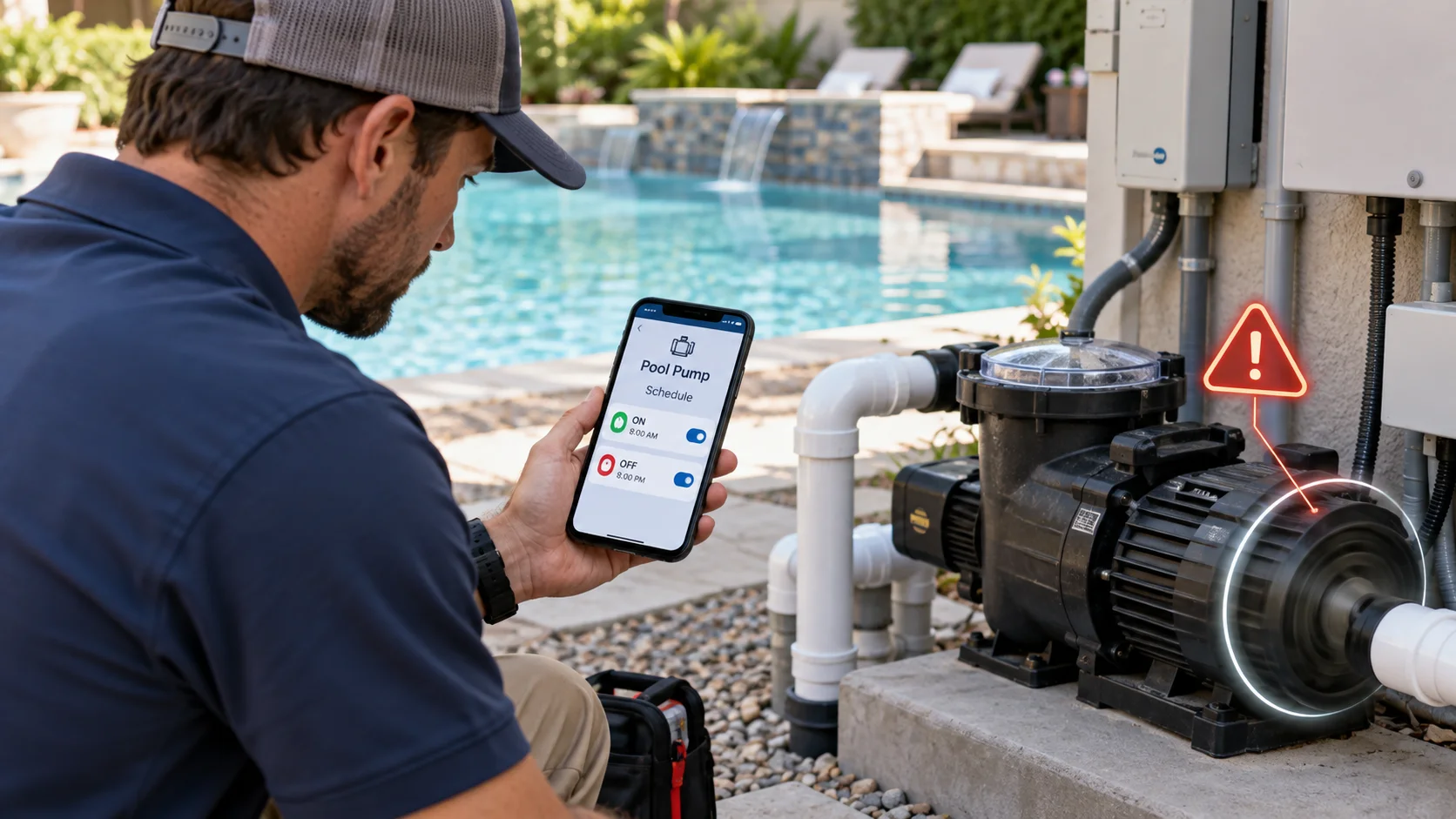
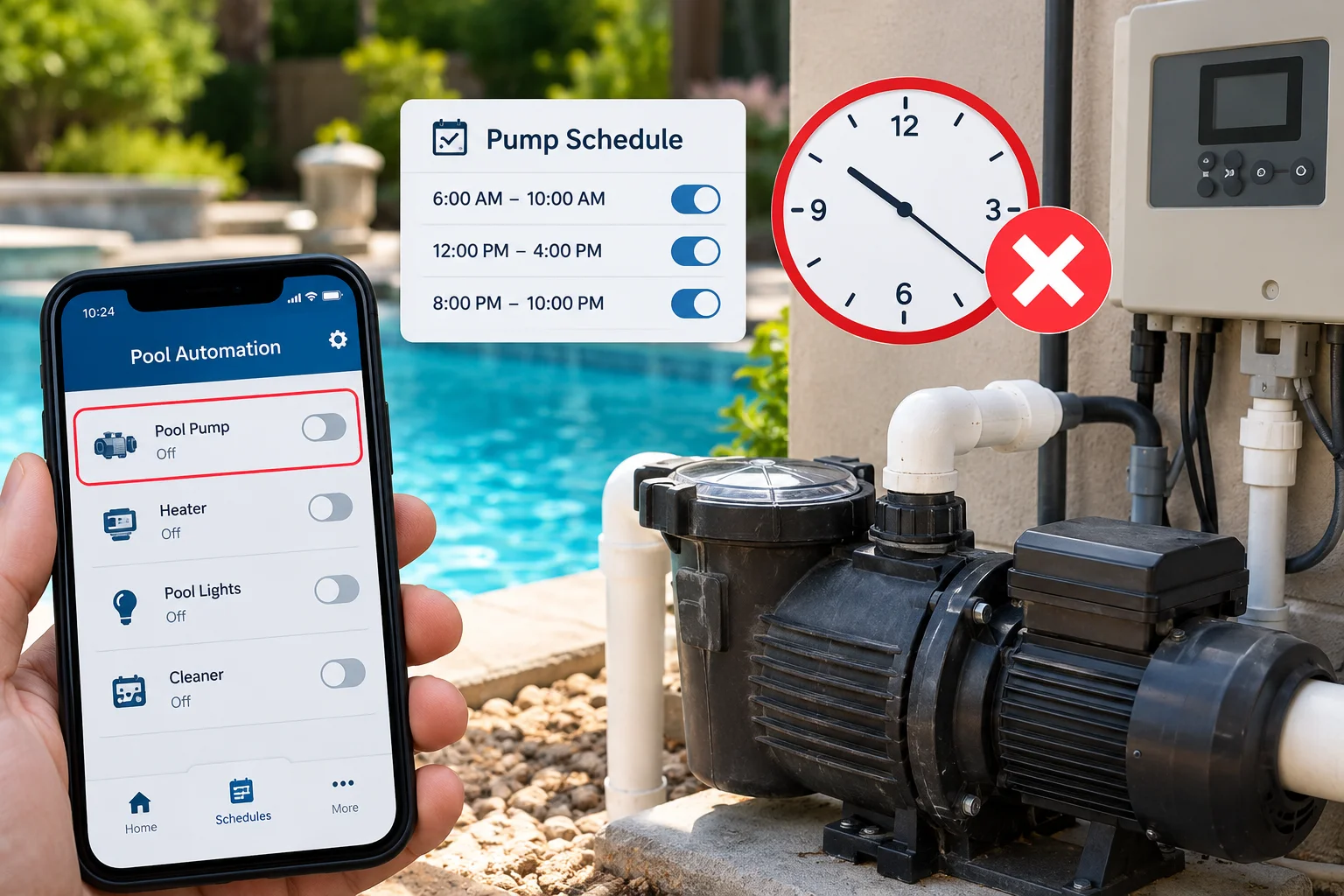
A test with the pump off can miss a leak that occurs mainly during operation. Tell your technician if water loss seems linked to the pump schedule. Further comparisons may be needed under controlled operating conditions.
Hidden Pool Leaks Can Start in Several Places
Water does not always collect beside the pool after escaping. It may enter surrounding soil or travel away from its source.
Liners and Shells
Vinyl liners can leak through punctures, tears, or failed seams. Concrete pools may leak through certain cracks or openings, although a visible plaster crack alone does not prove water is escaping.
A repair must match the affected material. Covering a surface mark will not resolve a leak located elsewhere.
Skimmers and Fittings
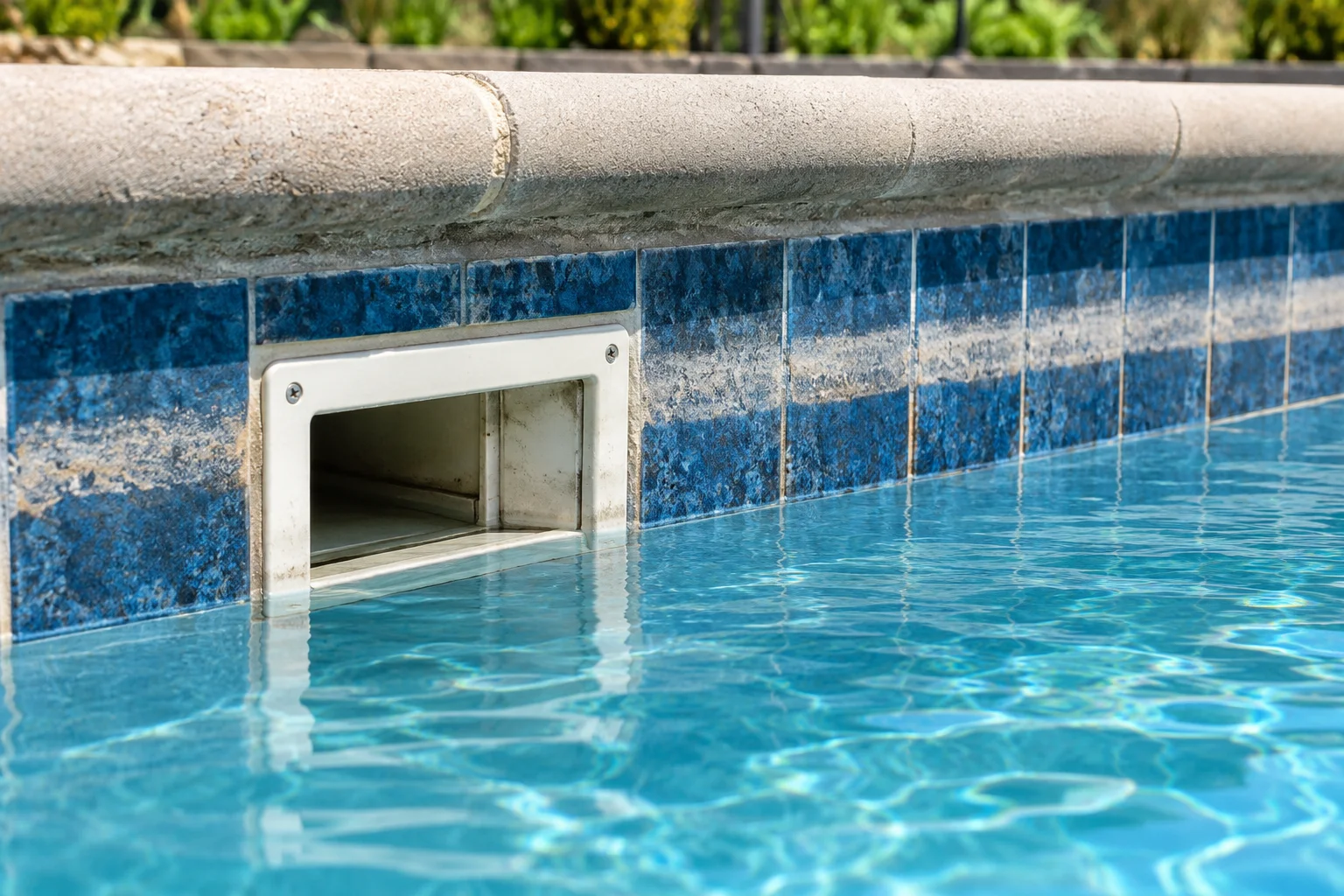
Skimmer connections, return fittings, and light assemblies create connections through the pool wall. Deteriorated seals or separation around these areas can provide escape routes.
Water settling near a fitting’s height is useful information, but technicians still need to confirm the source.
Plumbing and Equipment
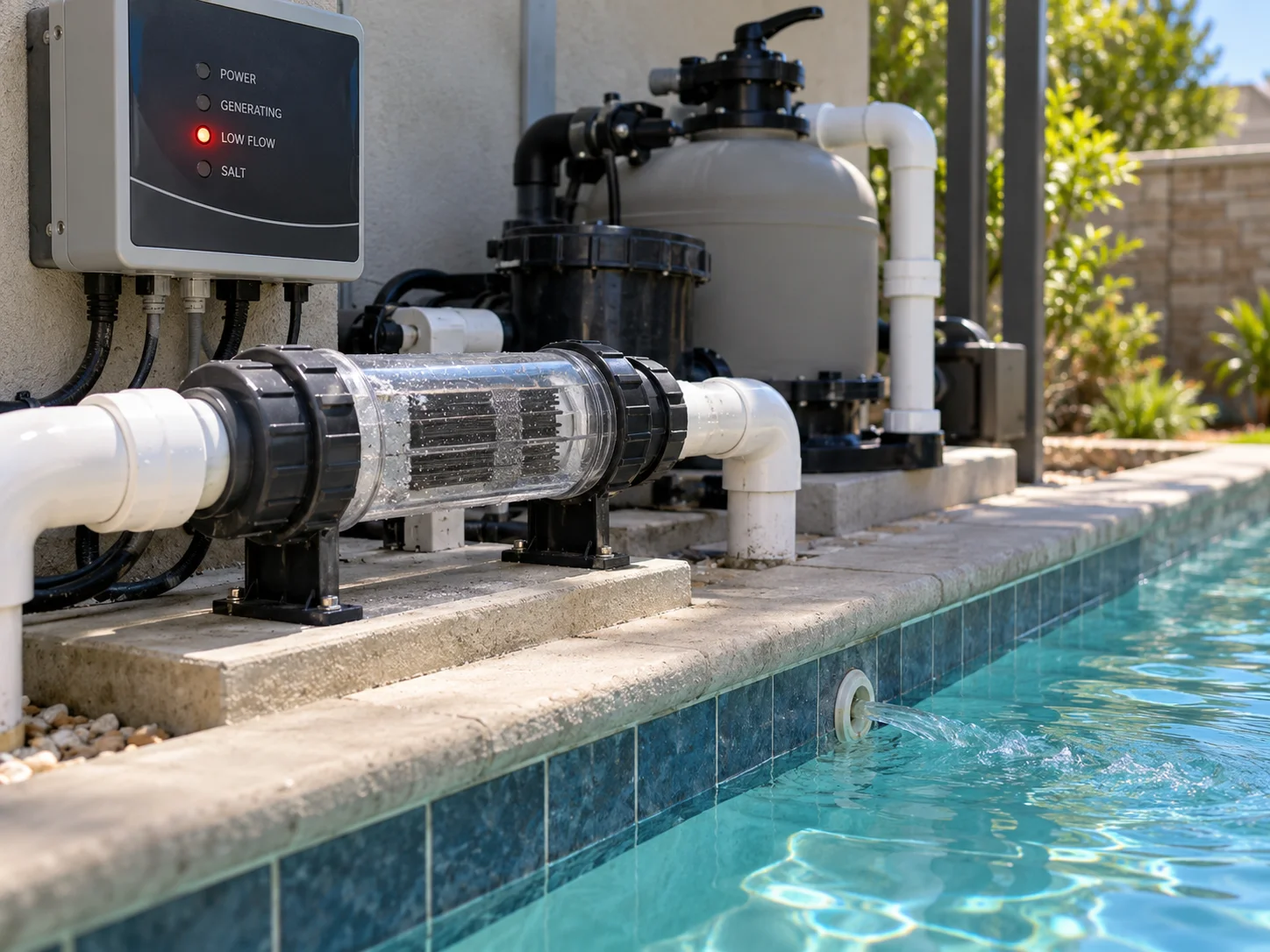
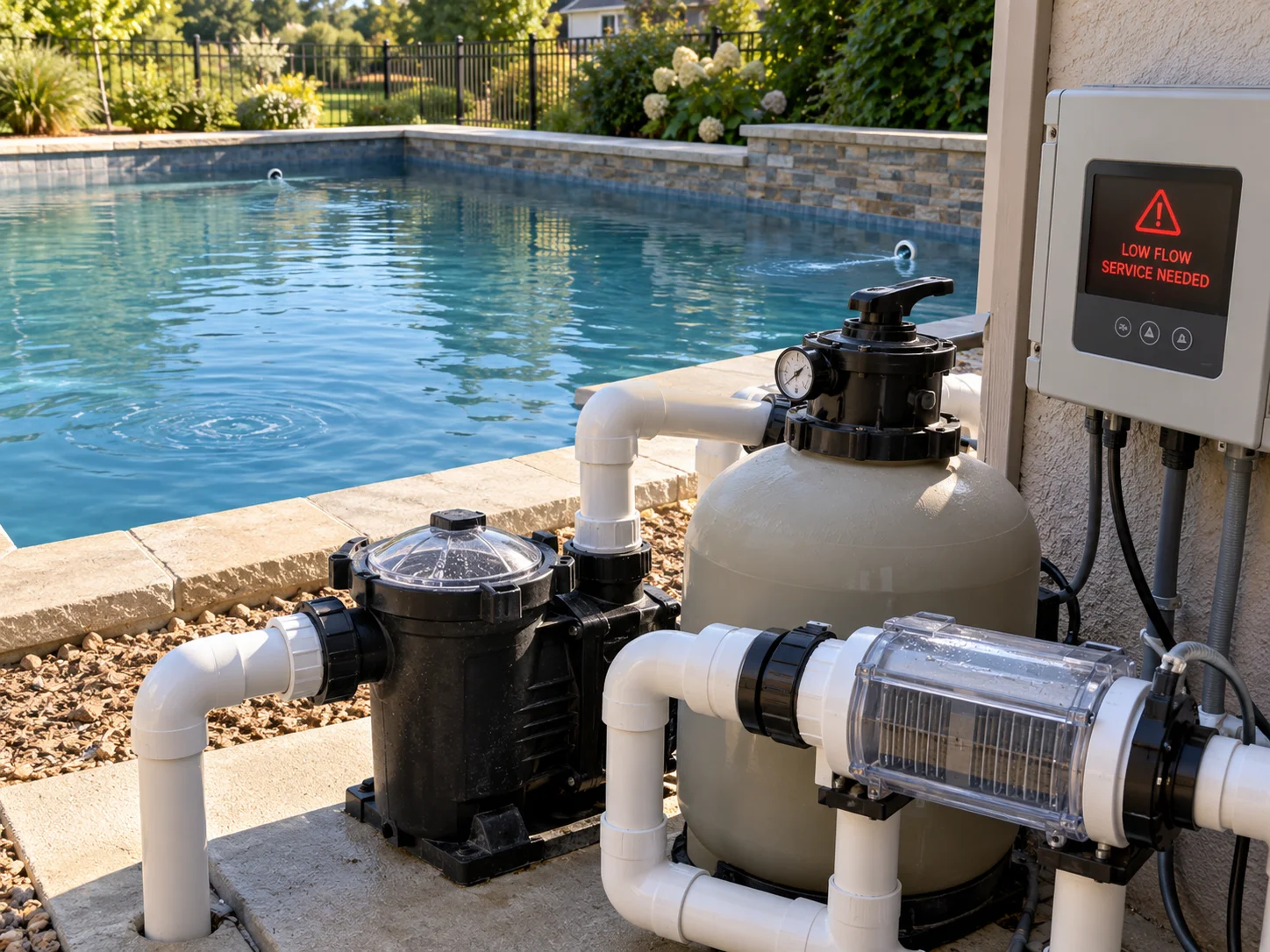
Underground plumbing can leak at damaged pipes or connections. Above ground, pump seals, filter components, heater connections, and valves may also lose water.
Check accessible areas for persistent drips or dampness without opening equipment. Leave electrical components and pressurized assemblies to qualified technicians.
Water-Loss Patterns Can Guide the Investigation
Your observations can help narrow the inspection. These patterns suggest possibilities; none confirms a diagnosis on its own.
| Observation | Possible Explanation | Useful Next Step |
|---|---|---|
| Pool loses more water than the bucket | Loss beyond evaporation | Schedule leak detection |
| Loss increases during pump operation | Possible pressure-side or equipment leak | Record operating times and level changes |
| Water repeatedly settles near a fitting | Possible opening near that elevation | Have the fitting inspected |
| Ground stays wet during dry weather | Pool plumbing, irrigation, or another source | Investigate nearby water lines |
| Autofill runs often despite a steady level | Replacement water may conceal loss | Review refill activity and water use |
Do not deliberately let the pool fall to an unsafe level to find where it stops. Falling water can affect skimmer operation and expose equipment to air.
Repeated Refilling Can Hide a Growing Problem
Adding water restores the level, but it leaves the cause unresolved. Depending on the leak’s location and severity, continued loss can create additional problems.
- Higher water costs: Repeated top-ups increase consumption.
- Changing chemistry: Replacement water can change hardness, alkalinity, and sanitizer levels.
- Soil erosion: Escaping water may wash away supporting material near buried plumbing or the pool.
- Equipment trouble: Low water can allow air into the circulation system and interfere with pump operation.
Unlike evaporation, a leak carries dissolved pool chemicals out with the water. Test the water after substantial refilling instead of adding chemicals by guesswork.
Pro Tip: Keep a water-loss log for several days if conditions allow. Record levels at the same time, along with rainfall, swimming, refilling, and pump schedules.
Professional Leak Detection Helps Locate the Source
A professional investigation combines observations with targeted testing. The appropriate method depends on the pool’s construction, plumbing layout, and symptoms.
Visual Inspection First
The technician examines accessible surfaces, fittings, and equipment. A leaking connection or water escaping through a waste line may explain the loss without extensive testing.
Targeted Dye Testing
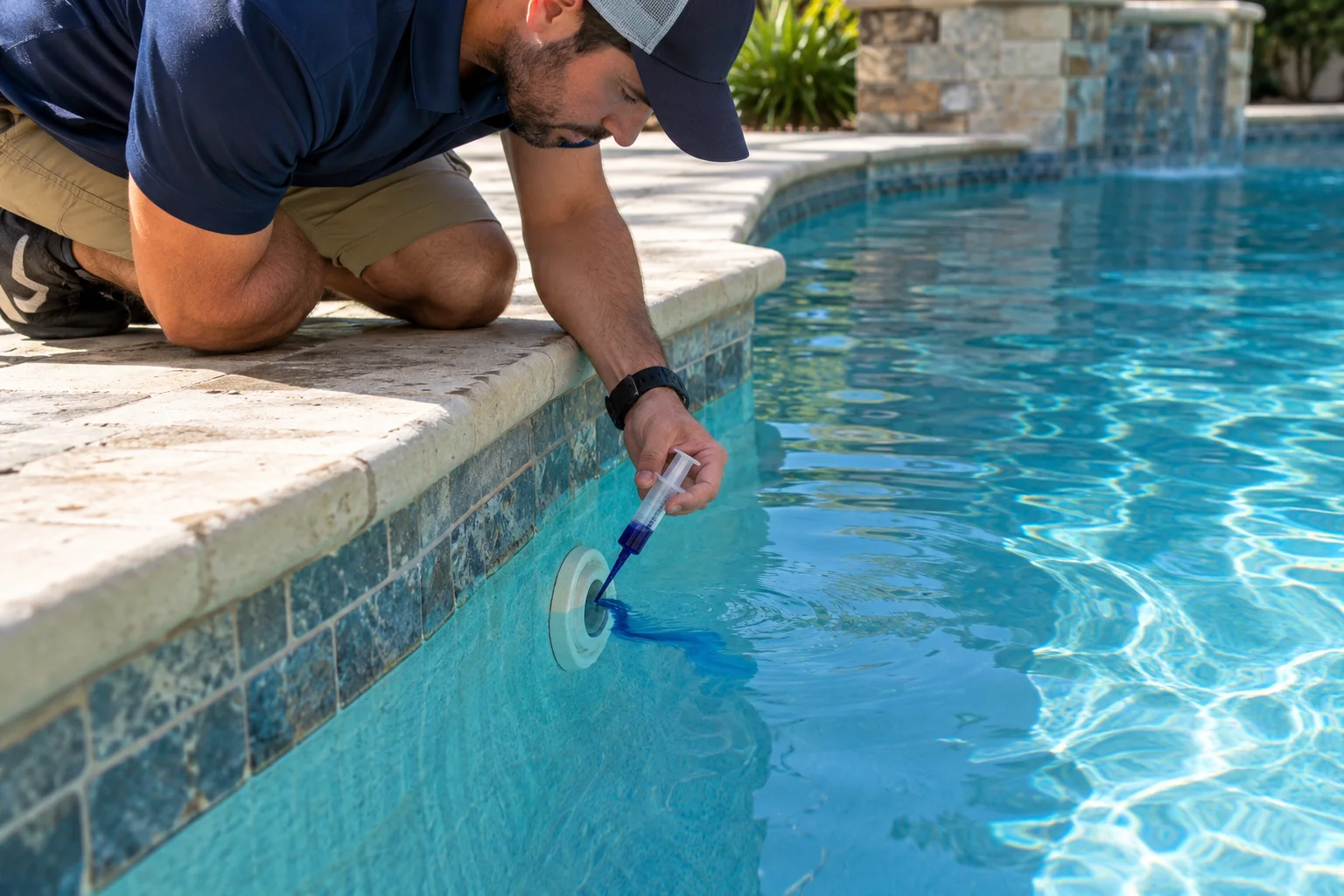
With the water still, a technician places dye close to a suspected opening and watches its movement. Dye drawn into an opening can help confirm a localized leak.
Plumbing Pressure Testing
Technicians isolate plumbing sections and test whether they hold pressure. Results help identify a suspect line, although additional work may be needed to locate the precise break.
Acoustic Leak Detection
Listening equipment may help locate sounds from concealed plumbing leaks. Its usefulness depends on pipe material, access, surrounding noise, and conditions at the leak.
The Right Repair Depends on the Leak
Accurate detection helps determine what needs repair and how to reach it. Draining the entire pool is not automatically necessary.
Certain vinyl liner tears can receive suitable underwater patches. Leaking seals or fittings may require replacement, while damaged underground plumbing may need targeted excavation and pipe repair. Shell leaks require an assessment of the opening and any underlying movement.
Avoid draining the pool yourself. Groundwater pressure can damage or lift an emptied pool, and some liners can shift or shrink. A professional should determine whether lowering the water is necessary and safe.
Confirm the Repair Before Returning to Normal Use
A completed repair should be followed by verification. Depending on the work, this may involve repeat plumbing tests, inspection during operation, or water-level monitoring.
Follow the repair material’s curing instructions before swimming or restarting affected equipment. Once the pool is at its proper operating level, check circulation and test the water chemistry. Continued unexplained loss deserves another assessment.
Stop the Refill Cycle and Find the Cause
Repeated refilling deserves attention when weather, swimming, and maintenance do not explain the loss. Identifying the source helps you choose an appropriate repair.
Contact Us at Residential Pool Service LLC to schedule pool leak detection and repair in Sterling, VA.