
Black Algae Spots in Your Pool Require More Than Brushing
Black algae can appear as small dark spots on pool walls, steps, and floors, but it is much harder to remove than ordinary green algae.
“Why do these stubborn patches keep returning even after repeated brushing and chlorine treatments?”
Black algae forms a protective outer layer and attaches firmly to porous pool surfaces, allowing it to survive basic cleaning methods.
Successful removal requires more than scrubbing the visible spots. Homeowners must confirm the problem, test the water, expose the growth beneath its protective coating, apply the correct treatment, clean the filtration system, and continue monitoring the pool after the spots begin fading.
Key Takeaways
- Black algae survives brushing without treatment.
- Protective coatings shield deeply rooted growth.
- Balanced chemistry improves chlorine treatment effectiveness.
- Filters and equipment require thorough cleaning.
- Professional removal helps prevent recurring infestations.
What Black Algae Looks Like
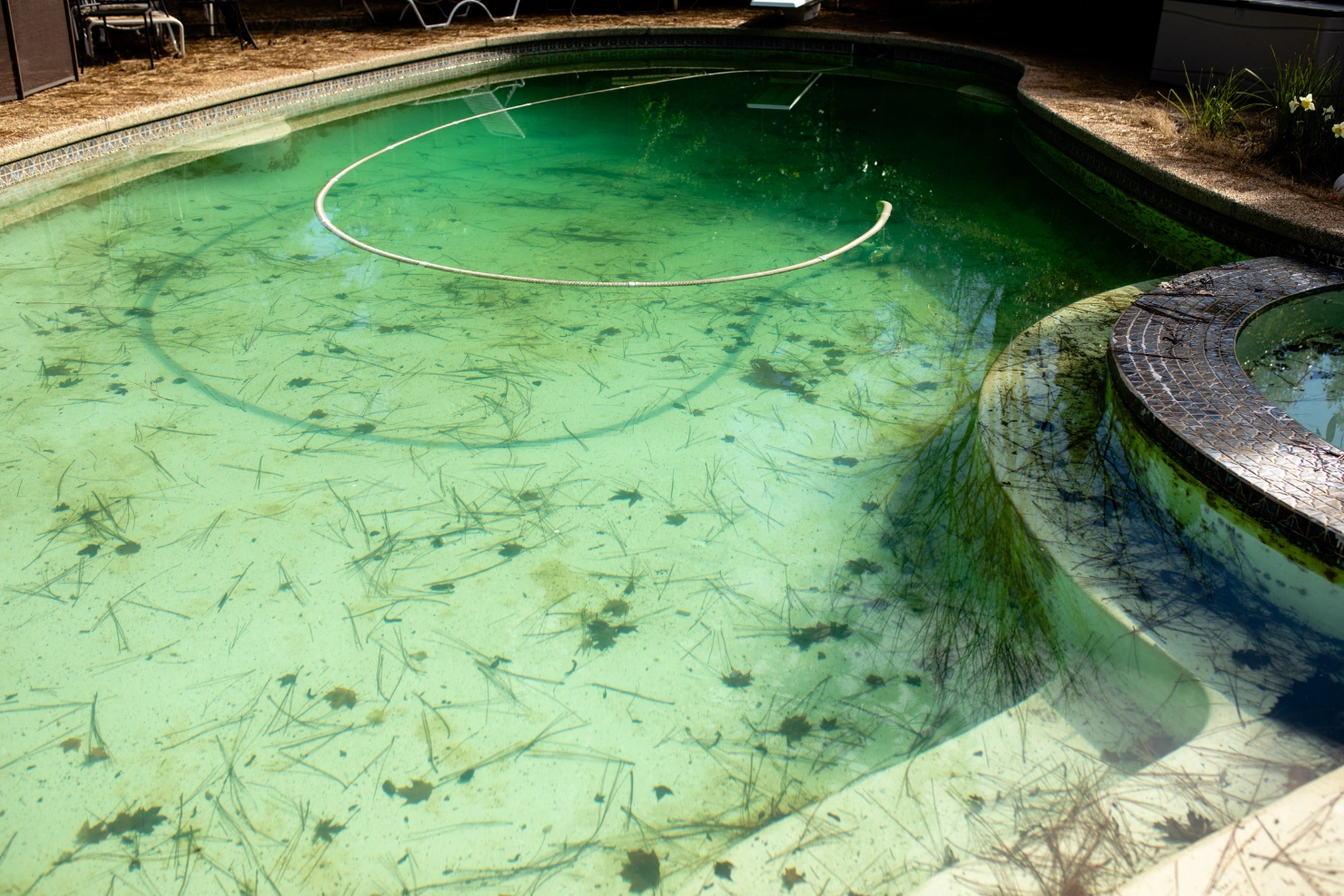
Black algae usually develops as small black, dark blue, or deep green spots. The affected areas may look like scattered dots at first, but untreated growth can expand into irregular patches across the pool surface.
The spots often feel rough or raised and remain attached after normal brushing. They frequently develop in shaded areas, corners, steps, grout lines, cracks, around pool lights, and places where circulation is weak.
Common warning signs include:
- Dark spots that resist regular brushing
- Rough patches on plaster or concrete
- Growth concentrated in cracks or corners
- Spots returning shortly after cleaning
- Dark centres surrounded by lighter discoloration
- Slippery areas near the affected surface
Black algae is more commonly associated with porous pool finishes than smooth vinyl or fibreglass. However, contamination can still remain on fittings, equipment, grout, and damaged surfaces in almost any pool.
Why Black Algae Is Difficult To Remove
Black algae is more persistent than common green algae because it protects itself and attaches strongly to the pool finish. Removing the visible colour does not always eliminate the growth underneath.
Root-Like Attachment
Black algae is commonly described as having root-like structures that penetrate tiny openings in porous materials. These attachments help it remain embedded in plaster, concrete, gunite, and rough grout.
Brushing may remove the upper portion while leaving growth inside surface pores. The remaining material can then develop into another visible spot.
Protective Outer Coating
Established black algae develops a slimy protective layer, often described as a biofilm. This coating reduces direct contact between the algae and the pool sanitiser.
Brushing is still important because it breaks open that layer. However, brushing must be followed by properly managed sanitiser treatment or the algae may survive beneath the damaged coating.
Sheltered Pool Areas
Black algae often gains a foothold in locations that receive limited brushing or weak water movement. Steps, corners, light niches, ladders, drains, returns, and rough surface repairs can provide shelter.
These areas may receive less consistent exposure to circulating chlorinated water. Treating the main pool walls without checking hidden locations can allow the problem to return.
Black Algae Versus Pool Stains
Dark pool marks are not always caused by algae. Metals, organic debris, dirt, damaged plaster, and mineral deposits can produce similar-looking discoloration.
Correct identification matters because stain removers will not eliminate living algae, while aggressive algae treatment may be unnecessary for a metal stain.
| Surface Mark | Typical Appearance | Response To Brushing | Possible Cause |
|---|---|---|---|
| Black algae | Raised black, blue-green, or dark spots | May lighten but rarely disappears immediately | Attached biological growth |
| Metal staining | Rust, brown, purple, grey, or blue marks | Usually remains unchanged | Iron, copper, or manganese |
| Organic staining | Brown, tan, or greenish patches | May gradually fade | Leaves, acorns, berries, or debris |
| Dirt buildup | Grey or dark surface film | Usually loosens easily | Poor cleaning or settled debris |
| Surface damage | Mottled, rough, or discoloured finish | Does not brush away | Worn plaster, scaling, or etching |
A professional pool technician can inspect the colour, texture, location, and reaction to brushing before selecting a treatment. This reduces unnecessary chemical use and lowers the risk of damaging the pool surface.
Common Causes Of Black Algae Growth
Black algae does not usually appear because of one isolated mistake. Several water-care or circulation problems often occur together.
Common contributing conditions include:
- Low or inconsistent free chlorine
- Poor circulation near steps and corners
- Irregular wall and floor brushing
- Dirty or poorly maintained filters
- High swimmer and debris loads
- Rough, cracked, or ageing plaster
- Contaminated pool tools or swimwear
- Long periods without water testing
- Incorrect pH that reduces sanitiser performance
The Centers for Disease Control and Prevention recommends routinely testing residential pool chlorine and pH. It notes that sunlight, dirt, sweat, and other contaminants can reduce available chlorine, while excessively high pH makes chlorine less effective.
Why Brushing Alone Does Not Work
Brushing is an essential part of black algae treatment, but it is only one step. Its purpose is to loosen surface growth and break through the protective coating so the sanitiser can reach the organisms underneath.
A homeowner may brush until a spot looks lighter and assume the algae has been removed. The remaining attached growth can survive inside pores and become visible again once chlorine levels fall.
Brushing also does not correct the condition that allowed the algae to grow. Low sanitiser, restricted circulation, dirty filter media, damaged plaster, or contaminated equipment must still be addressed.
The correct brush depends on the pool finish. A stiff brush may be appropriate for some plaster or concrete surfaces, while metal bristles can damage vinyl, fibreglass, painted finishes, and certain delicate surfaces. Surface manufacturer guidance should always be followed.
Professional Black Algae Removal Steps
Professional treatment begins with diagnosis rather than immediately adding large quantities of chemicals. The pool finish, water balance, algae severity, equipment condition, and affected locations all influence the treatment plan.
Inspect The Pool
The technician checks walls, steps, floors, fittings, ladders, lights, drains, and low-circulation areas. The inspection also identifies cracks, rough plaster, scale, or damaged finishes that may be sheltering the growth.
Dark marks are evaluated to determine whether they are algae, metal stains, organic stains, or surface deterioration.
Test The Water
Free chlorine, combined chlorine, pH, alkalinity, stabiliser, and other relevant levels are measured before treatment. These results help determine whether the sanitiser can work effectively and whether chemical adjustments are needed first.
CDC guidance recommends maintaining residential pool pH between 7.0 and 7.8. It also recommends at least 1 part per million of chlorine in pools, or at least 2 parts per million when cyanuric acid is used. Local requirements and product instructions may call for different operating levels.
Expose The Growth
Each affected area is brushed with a tool suitable for the pool surface. Extra attention is given to cracks, corners, steps, fittings, and other areas where the protective coating may remain intact.
Brushing may need to be repeated during treatment because one pass may not fully expose established growth.
Apply Targeted Treatment
The technician adjusts the water and applies an appropriate chlorine or algae-control treatment according to the product label, pool volume, finish, and severity of the infestation.
More chemical is not automatically better. Improper doses can bleach surfaces, stain finishes, damage equipment, irritate swimmers, or create unsafe handling conditions. The CDC advises never mixing different pool chemicals and stresses following label directions and chemical safety procedures.
Circulate And Filter
The circulation system moves treated water into affected areas and carries loosened material toward the filter. Returns may need adjustment when steps, benches, or corners receive weak flow.
The filter must operate correctly throughout the cleanup. Restricted flow, dirty cartridges, clogged grids, channelled sand, or damaged internal components can slow algae removal.
Clean The Filter
Dead algae and loosened debris collect in the filtration system. Cartridges may require rinsing or approved deep cleaning, while sand and diatomaceous earth filters must be serviced according to their operating requirements.
Ignoring the filter can leave a large amount of contaminated material inside the circulation system. Pressure readings should be monitored, and cleaning should follow the equipment manufacturer’s instructions.
Repeat And Monitor
Severe black algae rarely disappears after one brushing session. The technician may need to brush, test, filter, and retreat the pool several times.
Treatment continues until the spots stop returning and the pool maintains its required sanitiser level. Swimming should remain restricted whenever chemical levels, visibility, or treatment instructions make the water unsuitable.
Pool Surfaces Most At Risk
Black algae can grow in different pools, but porous, rough, and damaged surfaces provide more attachment points. The condition of the finish can strongly influence how difficult removal becomes.
Plaster Pool Finishes
Older plaster often becomes rough, pitted, or worn. These small surface openings give black algae more places to attach and protect itself from brushing.
Repeated algae growth may indicate that the finish needs repair or resurfacing rather than stronger chemical treatment alone.
Concrete And Gunite
Concrete-based pool structures are commonly covered with plaster or another finish, but exposed or deteriorated sections can be highly porous. Black algae can become deeply established in these rough areas.
A complete inspection should look for cracks, delamination, worn patches, and failed repairs.
Grout And Cracks
Tile grout, expansion joints, chips, and cracks often collect debris and receive less direct circulation. These areas can continue harbouring growth after the larger visible patches have been treated.
Repairing damaged surfaces removes hiding places and makes future brushing more effective.
Pro Tip: Disinfect pool brushes, vacuum heads, poles, toys, floats, removable ladders, and swimwear that have contacted an affected pool.
Mistakes That Let Black Algae Return
Black algae frequently returns because treatment stops when the spots begin fading. A lighter colour does not always mean the attached growth has been eliminated.
Other common mistakes include:
- Treating every dark mark as algae
- Using the wrong brush for the finish
- Brushing without correcting chlorine levels
- Ignoring hidden growth behind fittings
- Failing to clean the pool filter
- Allowing chlorine to fall after treatment
- Using algaecide without reading the label
- Leaving rough or cracked surfaces unrepaired
- Placing contaminated tools back into the pool
Copper-based algaecides also require care. CDC’s Model Aquatic Health Code annex notes that copper-containing products can stain pool surfaces when they are not used correctly and that proper pH control helps reduce staining risk.
Preventing Future Black Algae
Prevention depends on consistent sanitation, circulation, filtration, cleaning, and surface care. Occasional heavy chemical treatment cannot replace routine maintenance.
Homeowners can reduce the risk by:
- Testing chlorine and pH regularly
- Maintaining sanitiser within the appropriate range
- Brushing walls, floors, steps, and corners
- Emptying baskets and removing debris
- Cleaning the filter when required
- Checking circulation in low-flow areas
- Inspecting ladders, lights, and fittings
- Repairing cracked or deteriorating finishes
- Cleaning equipment before moving it between pools
- Testing more frequently during heavy use
Sunlight, swimmer waste, dirt, and debris increase chlorine demand. Maintaining a stable level is easier when contaminants are removed promptly and the pool is tested before the water becomes cloudy or discoloured.
When Professional Treatment Is Necessary
Professional service is appropriate when dark spots continue returning, cover multiple areas, or cannot be confidently identified. It is also valuable when the pool has ageing plaster, damaged surfaces, circulation problems, or an algae issue that has survived previous chemical treatments.
A technician can determine whether the marks are algae or stains, select surface-compatible tools, calculate chemical quantities, inspect the equipment, and monitor the water throughout treatment. This approach reduces guesswork and helps prevent unnecessary surface damage.
Protect Your Pool From Lasting Damage
Black algae spots require a complete treatment process, not repeated brushing alone. The protective coating must be opened, water chemistry must support effective sanitation, and the filter and circulation system must remove the loosened material.
Residential Pool Services LLC provides professional pool algae and stain removal for homeowners in Sterling, Virginia. Our technicians inspect the pool, test the water, identify the source of dark spots, and apply a treatment plan based on the pool’s finish and condition. Contact us to restore a cleaner pool and reduce the chance of recurring black algae.



