
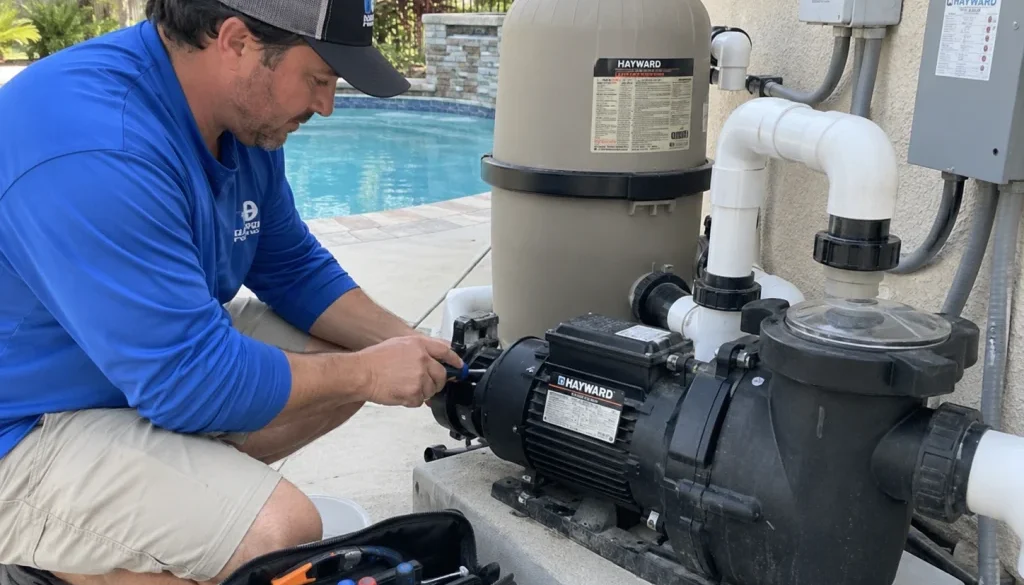
A Burning Smell From Your Pool Pump Motor Needs Immediate Attention
A burning smell coming from your pool pump motor is never something to ignore. It can point to overheating, damaged wiring, failing electrical components, or a motor operating under excessive strain.
“What should you do when that burnt odor appears while the pump is running?”
Continuing to operate the system could worsen the damage and may create an electrical safety concern.
Recognizing the warning signs early can help protect the pump, prevent circulation problems, and reduce the chance of a more expensive repair or complete motor replacement.
Key Takeaways
- Burning smells require immediate pump shutdown.
- Overheating can damage critical motor components.
- Grinding noises may indicate bearing failure.
- Repeated breaker trips need professional inspection.
- Early repairs can prevent motor replacement.
What A Burning Smell Usually Means
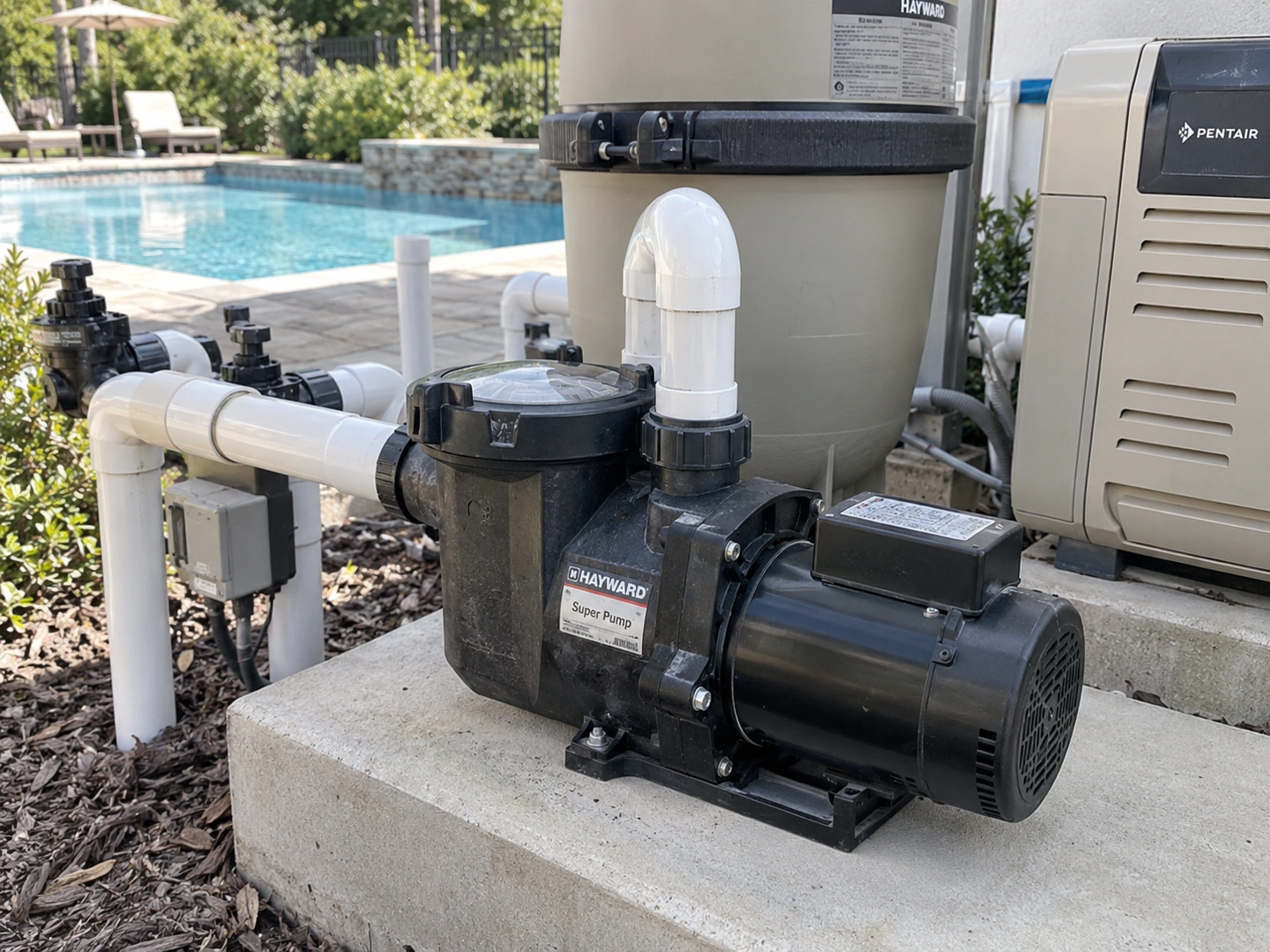
A pool pump motor converts electrical energy into the mechanical power needed to move pool water through the circulation system. Excessive heat, electrical resistance, or mechanical friction can cause components inside or around the motor to deteriorate.
A noticeable burning odor means something is becoming hotter than it should. The source may be electrical insulation, wiring, motor windings, bearings, or another component under abnormal stress. Turning off the equipment until the cause is identified is safer than repeatedly restarting it.
Common Causes Of A Burning Pool Pump Motor
Several problems can create a similar burnt smell. The odor alone cannot confirm which component has failed, so other symptoms such as humming, grinding, shutdowns, or breaker trips are important clues.
Overheated Motor Windings
Motor windings contain insulated electrical conductors. Excessive operating temperatures can damage that insulation and produce a noticeable electrical or burnt odor.
Poor ventilation, incorrect electrical conditions, excessive loading, and internal motor deterioration can all contribute to overheating. Pentair troubleshooting guidance also identifies inadequate ventilation and electrical supply problems among possible causes of motor overheating.
Failing Motor Bearings
Bearings allow the motor shaft to rotate smoothly. As bearings deteriorate, friction increases and the motor may begin making grinding, squealing, or rough mechanical sounds.
A badly worn bearing can eventually restrict shaft movement or prevent the motor from turning. Manufacturer troubleshooting guidance specifically lists a locked motor shaft caused by a bad bearing as a possible motor failure condition.
Electrical Connection Problems
Loose, damaged, or improperly sized electrical connections can create excessive resistance and heat. This can affect terminals, wiring insulation, and other electrical components.
A persistent burning electrical smell, discoloration around wiring, or repeated breaker trips should be treated seriously. Electrical troubleshooting and repairs should be handled with the circuit de-energized and by someone qualified to perform that work.
Faulty Start Capacitor
Certain pool pump motors use capacitors to help provide the electrical characteristics required during startup or operation. When a capacitor fails, a common symptom can be a motor that hums but struggles or fails to start.
Repeatedly allowing a stalled motor to attempt startup can produce additional heat. The underlying problem should be diagnosed instead of repeatedly cycling power.
Warning Signs That May Appear With The Smell
A burning odor is often accompanied by changes in motor performance. Paying attention to these symptoms can help homeowners recognize a developing problem before complete failure occurs.
Common warning signs include:
- Motor housing becoming unusually hot
- Humming without normal pump startup
- Grinding, squealing, or buzzing sounds
- Motor shutting off unexpectedly
- Circuit breaker repeatedly tripping
- Pump starting slower than normal
- Reduced water circulation
- Motor running inconsistently
- Visible discoloration around electrical connections
One symptom does not automatically identify the failed component. For example, weak water flow can result from a clogged basket, blocked impeller, suction leak, or restriction rather than a damaged motor itself.
What Homeowners Should Do Immediately
Continuing to operate equipment that produces a burning smell can allow heat or electrical damage to progress. The safest approach is to stop operation until the equipment can be evaluated.
Take these steps:
- Turn the pool pump off.
- Disconnect power at the appropriate breaker.
- Do not repeatedly restart the motor.
- Keep water away from exposed electrical equipment.
- Check for obvious debris restricting motor ventilation.
- Avoid opening electrical motor components yourself.
- Arrange a professional diagnosis before returning the pump to normal operation.
If the breaker trips immediately after being reset, avoid repeatedly resetting it. A breaker may be reacting to an electrical fault or overload that requires further diagnosis.
Burning Smell Symptoms And Possible Causes
Different combinations of symptoms can help narrow down what needs to be inspected. They should be treated as diagnostic clues rather than definitive diagnoses.
| Symptom | Possible Cause | Appropriate Response |
|---|---|---|
| Burning smell with humming | Starting component or stalled motor problem | Turn pump off and inspect |
| Burning smell with grinding | Worn bearing or shaft problem | Stop motor operation |
| Extremely hot motor housing | Overheating or poor ventilation | Keep motor off until checked |
| Repeated breaker trips | Electrical fault or excessive load | Avoid repeated resets |
| Weak water flow | Restriction, impeller issue, air leak, or pump problem | Inspect entire circulation system |
| Unexpected motor shutdown | Thermal protection or electrical issue | Diagnose before restarting |
Several different faults can produce overlapping symptoms. Inspecting both the motor and the surrounding circulation system prevents a flow restriction from being mistaken for an electrical motor failure.
Pool Conditions That Can Increase Motor Strain
Sometimes the motor is reacting to another problem in the pool equipment system. Water-flow restrictions, air leaks, and blocked pump components can interfere with normal circulation.
Restricted Water Flow
A dirty filter or clogged basket can reduce normal system flow. Restrictions on the suction or return side can also affect pump performance.
Keeping skimmer baskets, pump baskets, and filters clean helps the circulation system operate under normal conditions.
Pump Losing Prime
A pool pump needs an adequate supply of water. Low pool water levels or suction-side air leaks can interfere with priming and reduce circulation.
Persistent air entering the pump should be investigated rather than compensated for by simply running the pump longer.
Blocked Pump Impeller
Leaves and other debris can sometimes enter the pump and obstruct the impeller. A clogged impeller can result in low flow even though the motor continues running.
Pentair’s troubleshooting guidance identifies clogged impellers, clogged baskets, suction leaks, and suction restrictions as potential causes of low flow.
Pro Tip: If your pool pump suddenly develops a burning smell along with low flow, do not assume the motor alone is responsible. Have the complete pump system inspected. A clogged impeller, airflow restriction, electrical problem, or failing internal component may be contributing to the symptoms.
Can A Burnt-Smelling Pump Keep Running?
A pump may continue running temporarily even after a burning smell develops, but that does not mean continued operation is safe. Motors sometimes keep rotating while internal insulation, bearings, wiring, or electrical components are deteriorating.
Allowing the equipment to continue operating can turn a repairable problem into a larger failure. If overheating damages motor windings extensively, replacing the motor or complete pump assembly may become necessary.
Repairing The Motor Versus Replacing It
Not every burning smell means the entire pump must be replaced. The correct decision depends on the failed component, motor condition, equipment age, repair history, and compatibility of replacement parts.
Repair May Work
Professional repair may make sense when the problem is isolated and the rest of the equipment remains in good condition. Possible repairable issues can include:
- Replaceable motor bearings
- Loose electrical connections
- Certain capacitor failures
- Accessible wiring problems
- Minor component damage caught early
A technician should also determine whether another problem caused the component to fail. Replacing a damaged part without correcting the underlying cause could lead to another breakdown.
Replacement May Make Sense
Motor replacement becomes more practical when internal damage is extensive or when several major components are deteriorating at the same time.
Replacement may be considered when there are burned windings, severe corrosion, recurring overheating, repeated repairs, seized internal components, or an aging motor approaching the end of useful service.
If replacing a dedicated-purpose pool pump motor, homeowners should also be aware that federal efficiency requirements now apply to many replacement motors. DOE standards include variable-speed control requirements for covered motor categories, with compliance dates depending on motor size.
Preventing Future Pool Pump Motor Overheating
Basic equipment maintenance can reduce operating stress and make developing problems easier to catch. Motor problems should be investigated when symptoms first appear instead of waiting for complete failure.
Homeowners can reduce avoidable problems by:
- Keeping pump and skimmer baskets clear
- Maintaining the correct pool water level
- Cleaning filters at appropriate intervals
- Keeping motor ventilation openings unobstructed
- Removing leaves and debris around equipment
- Watching for new humming or grinding noises
- Addressing suction leaks promptly
- Checking unexplained reductions in water flow
- Having repeated breaker trips professionally investigated
- Scheduling service when motor performance changes
Do not cover the motor in a way that restricts airflow. Pool equipment needs protection from inappropriate water exposure while still maintaining the ventilation required by its manufacturer.
Do Not Ignore A Burning Pool Pump Motor
A burning smell from your pool pump motor is an early warning that something may be overheating, failing electrically, or developing excessive mechanical friction. Turning the equipment off promptly can help prevent additional damage and protect other parts of the circulation system.
Residential Pool Service LLC can inspect the motor, identify the source of the problem, and determine whether repair or replacement is appropriate.



