
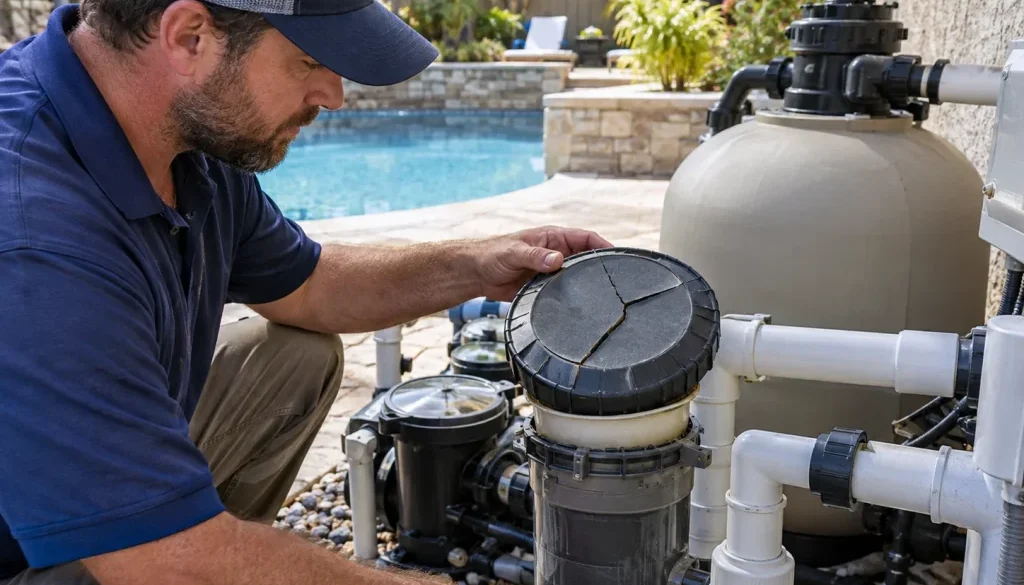
Cracked Chlorine Feeder Lids Can Lead to Water and Air Leaks
A cracked chlorine feeder lid may seem like a small equipment issue, but it can interfere with proper pool chlorination and circulation. Even a minor crack can compromise the seal, allowing chlorinated water to leak or air to enter the feeder under certain operating conditions.
“Have you noticed moisture around the feeder, unusual air inside the unit, or chlorine levels that seem harder to maintain?“
These symptoms can indicate a damaged lid, worn seal, or another problem affecting the feeder.
Ignoring the problem can lead to inconsistent sanitizer delivery, chemical residue around the equipment, and additional feeder damage. Identifying the source early can help keep the chlorination system operating properly.
Key Takeaways
- Cracked lids can cause chlorine leaks.
- Air leaks disrupt consistent feeder performance.
- Worn O-rings may mimic lid damage.
- Excess pressure can worsen feeder leaks.
- Early repairs protect equipment and water.
What Happens When A Chlorine Feeder Lid Cracks
A chlorine feeder lid does more than provide access for adding tablets. Together with its O-ring or gasket, it seals the feeder so water can move through the unit as intended.
Automatic feeders are installed differently depending on their design. Some are placed directly in the return plumbing, while off-line models use smaller bypass tubing. A damaged lid can interfere with either design.
Water Can Escape
When a pressurized feeder develops a crack that passes through its lid, chlorinated water may seep or spray through the damaged area while the circulation system operates. Small leaks may first appear as dampness around the lid rather than a noticeable stream.
Because the leaking water contains pool chemicals, dried residue may accumulate around the feeder. A leak should therefore be investigated rather than repeatedly wiped away.
Air Can Enter
Depending on the feeder’s design, installation, and operating state, a compromised seal can also allow air into the unit as pressure changes or the equipment drains. Air trapped inside a feeder may affect how consistently water contacts the chlorine tablets.
Air around pool equipment can have several possible sources, however. Finding bubbles does not automatically prove that the feeder lid is responsible, so the entire system may need inspection.
Common Signs Of A Cracked Chlorine Feeder Lid
A visible fracture is the clearest sign, but small cracks may be difficult to see until the feeder operates. Homeowners should pay attention to changes around the equipment pad as well as changes in feeder performance.
Possible warning signs include:
-
Dampness or dripping around the feeder lid
-
White chemical deposits near the lid
-
Visible hairline cracks in the plastic
-
A lid that no longer seats evenly
-
Water leaking after the pump starts
-
Air collecting inside the feeder
-
Chlorine tablets dissolving inconsistently
-
Chlorine readings becoming harder to maintain
Some of these symptoms can also result from worn O-rings, blocked feeder tubing, poor circulation, or valve problems. The location of the leak is important when diagnosing the cause.
Water Leaks Can Affect More Than The Feeder
A slow chlorine feeder leak can appear minor because relatively little water may escape. Over time, however, repeated exposure to chlorinated water can create problems around nearby equipment.
Equipment Corrosion
Chlorinated water repeatedly contacting susceptible metal components can contribute to corrosion. Connections, fasteners, electrical enclosures, or other nearby materials should not remain continuously wet.
Stopping the leak also helps prevent water from continually collecting around the equipment pad.
Chemical Residue Buildup
Water leaking from a chlorinator can evaporate and leave chemical or mineral deposits behind. Heavy buildup around the lid can make it harder to identify exactly where new moisture originates.
Residue should never be treated as proof that the lid itself is cracked. The O-ring, threaded connections, feeder body, and nearby plumbing should also be checked.
Feeder Performance Changes
A feeder depends on controlled water movement to dissolve tablets and carry sanitizer back into the pool. Problems with seals, valves, tubing, or flow can change the rate at which this occurs.
That may eventually appear as chlorine readings that are higher or lower than expected even though tablets remain inside the feeder.
Air Leaks Can Disrupt Chlorine Delivery
Water must contact chlorine tablets for an automatic tablet feeder to work. If a feeder does not fill or circulate correctly, tablets may remain relatively dry or dissolve more slowly than expected.
Before assuming the lid is causing the problem, check for other flow-related issues. A clogged control valve, restricted feeder line, poor circulation, closed valve, or obstruction may produce similar symptoms.
Air elsewhere in the circulation system can also come from unrelated suction-side problems. A correct diagnosis prevents homeowners from replacing a feeder lid that was never responsible for the original symptom.
Cracked Lid Versus Damaged O-Ring
Leaks around the top of a feeder do not always require a new lid. The O-ring beneath the cover is another common sealing point and should be inspected before parts are replaced.
| Problem | What You May Notice | Area To Inspect |
|---|---|---|
| Cracked Lid | Water emerging through visible plastic damage | Lid surface and edges |
| Worn O-Ring | Moisture appearing around lid perimeter | O-ring and sealing groove |
| Dirty Seal Surface | Intermittent seepage after closing feeder | O-ring seat and lid |
| Damaged Threads | Lid sits unevenly or will not secure correctly | Lid and feeder threads |
| Excessive Pressure | Leakage appears or worsens during operation | Filter, valves, plumbing, pressure gauge |
Manufacturer instructions commonly specify cleaning and properly lubricating feeder O-rings before reassembly. Lubricant requirements vary by product, so the feeder manufacturer’s instructions should always be followed rather than applying an unsuitable petroleum-based lubricant.
What Causes Chlorine Feeder Lids To Crack
Chlorine feeder components operate around strong chemicals, water, heat, and changing system conditions. Plastic components can eventually lose strength, especially after years of use.
Common contributing factors include:
-
Aging plastic components
-
Excessive force while tightening the lid
-
Damaged or improperly aligned threads
-
Long-term sun and heat exposure
-
Physical impact during maintenance
-
Freezing water left inside equipment
-
Abnormal system pressure
A lid that becomes difficult to close should never simply be forced tighter. Manufacturers specify particular closing procedures, and some feeder designs specifically warn against forcing their locking components.
Pro Tip: If a chlorine feeder leaks around the lid, shut the circulation system down and identify whether the lid, O-ring, threads, or sealing surface is damaged. Tightening a compromised plastic lid harder can worsen existing damage instead of restoring the seal.
Can You Keep Using A Feeder With A Cracked Lid?
A visibly cracked pressure-containing component should not be treated as normal wear. Continuing to operate the feeder can allow the crack or leak to worsen.
Chlorine feeders also contain concentrated chemicals and fumes. Manufacturer instructions direct users to shut down the pump and relieve feeder pressure before opening or servicing these units.
Never open, tighten, or attempt repairs on pressurized pool equipment while the circulation system is running. If the condition of the feeder is uncertain, keep it out of service until it can be inspected safely.
What To Check Before Replacing The Lid
Not every leak at the top of a chlorine feeder comes from cracked plastic. A systematic inspection can determine which part has actually failed.
Inspect The Lid
Look closely around the lid surface, threaded sections, handle areas, and edges. Hairline cracks can become easier to spot once the part is clean and dry.
Do not attempt to seal structural cracks with improvised adhesives and return a pressurized feeder to normal use.
Examine The O-Ring
Remove the lid only according to the manufacturer’s shutdown instructions. Check the O-ring for cracking, flattening, stretching, cuts, or other deterioration.
Also inspect the sealing groove for grit and chemical deposits. Debris around a sealing surface can prevent an otherwise usable O-ring from seating correctly.
Check The Threads
Plastic threads can become damaged if a lid is cross-threaded or forced. Look for broken, distorted, or worn areas that prevent the cover from sitting correctly.
If the feeder body itself is damaged, replacing only the lid may not correct the problem.
Review System Pressure
If leaks repeatedly develop, check whether something else is causing unusual operating pressure. Filter restrictions, valve positions, or circulation problems may change system pressure.
The appropriate operating pressure depends on the pool system rather than one universal number. A useful reference is the system’s normal clean-filter pressure.
Replacing A Cracked Chlorine Feeder Lid
Replacement parts must match the specific feeder model. Lids that appear similar can use different thread patterns, dimensions, O-rings, or locking mechanisms.
A replacement should also include inspection of the sealing components. Installing a new lid against a damaged or incorrect O-ring may leave the original leak unresolved.
After installation, the feeder should be restarted according to its manufacturer’s instructions and checked carefully for leakage. Chlorine delivery should then be monitored through proper pool-water testing rather than assuming that a new lid automatically restores the correct sanitizer level.
Preventing Future Chlorine Feeder Lid Damage
Basic equipment care can reduce unnecessary stress on feeder components. The goal is to maintain a clean, correctly seated seal without placing excessive force on plastic parts.
Homeowners can help protect the feeder by:
-
Following the manufacturer’s opening procedure
-
Relieving pressure before servicing
-
Keeping lid sealing surfaces clean
-
Inspecting O-rings during tablet refills
-
Using only the recommended O-ring lubricant
-
Avoiding excessive lid tightening
-
Checking feeder tubing and valves for restrictions
-
Draining equipment correctly before freezing weather
-
Replacing visibly deteriorated components promptly
Feeder manuals commonly recommend cleaning and lubricating O-rings before closing the unit. Some also caution users not to use petroleum lubricants because those products may damage particular seals.
A Damaged Feeder Can Affect Pool Water Quality
A chlorine feeder is intended to provide a controlled supply of sanitizer, but it does not eliminate the need for routine water testing. Tablet dissolution changes with circulation, feeder settings, water conditions, and pool chlorine demand.
If a damaged lid accompanies poor feeder flow, chlorine delivery may become less predictable. Low sanitizer levels can allow algae and microorganisms to gain a foothold, while excessive chlorine can create its own water-balance and equipment concerns.
Test the water after feeder repairs and adjust chlorination based on measured chemistry. Avoid adding more tablets simply because the pool appears clear.
Fix Chlorine Feeder Leaks Before They Get Worse
Moisture, cracks, damaged seals, or unusual feeder performance are easier to address before they develop into larger equipment problems. A proper inspection can determine whether the lid, O-ring, feeder body, or circulation system needs attention.



