
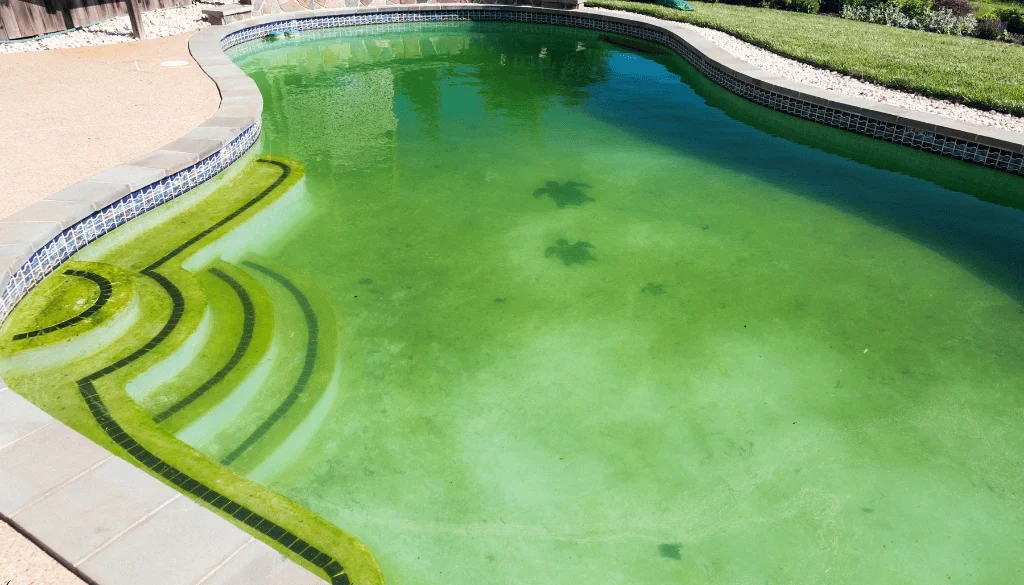
The Hidden Dangers of Pool Algae—and How to Get Rid of Them for Good
Have you ever stepped into your pool and noticed a faint green tint or slippery patches along the walls? What seems like a small cosmetic issue could actually be a serious threat to your pool’s health—and your safety. Pool algae doesn’t just make your water look uninviting; it can damage surfaces, disrupt water chemistry, and create hazardous conditions for swimmers.
“So, what causes algae to take over your pool, and how can you eliminate it once and for all?“
In this guide, we’ll uncover the real dangers behind algae growth and reveal how Residential Pool Service LLC helps Sterling homeowners keep their pools clear, balanced, and safe all season long.
Key Takeaways

Why Pool Algae Is More Than Just an Eyesore
Even a small amount of algae can spread rapidly, especially during Sterling’s warm and humid months. While it often starts as a green tinge on the water surface or pool walls, it can multiply within hours if left untreated.
Understanding How Algae Forms
Algae spores are microscopic organisms that naturally exist in the environment. They can enter your pool through wind, rain, leaves, or contaminated equipment. Once inside, they thrive when water chemistry is unbalanced—particularly when chlorine levels are too low or circulation is poor.
The three most common types of pool algae are:
- Green algae: The most frequent type, responsible for cloudy green water and slippery walls.
- Yellow (mustard) algae: Resistant to regular chlorine levels and usually forms in shaded areas.
- Black algae: The hardest to eliminate, known for its dark spots that root deeply into plaster or concrete.
Unchecked growth can turn a clear pool into a cloudy swamp in just a few days—especially when sunlight and heat accelerate the process.
The Health and Safety Risks of Ignoring Algae
It’s tempting to dismiss algae as merely unsightly, but the reality is more serious. Ignoring algae buildup can put your health—and your pool’s structure—at risk.
The Hidden Hazards Beneath the Surface
When algae multiply, they make pool surfaces slippery, increasing the risk of falls and injuries. Regular pool tile cleaning is crucial to prevent this buildup and maintain a safe swimming environment. Worse, algae serve as a breeding ground for bacteria and pathogens like E. coli or Pseudomonas, which can cause ear infections, rashes, and eye irritation.
Algae also interfere with your pool’s filtration and chemical balance, forcing pumps to work harder and shortening their lifespan. Over time, this can lead to costly repairs, clouded water, and unsafe swimming conditions.
Quick fact: Studies show that unbalanced pool water due to algae can reduce chlorine’s effectiveness by up to 70%, leaving your pool vulnerable to harmful microorganisms.
Understanding Pool Stains and What They Reveal
If you notice brown, green, or bluish discoloration around your pool’s steps, walls, or floor, you’re dealing with stains—another side effect of poor water balance or contamination.
Types of Pool Stains and Their Causes
Stains are not only unattractive but can signal deeper issues. Knowing the cause helps determine the right treatment.
| Type of Stain | Cause | Appearance | Treatment Approach |
|---|---|---|---|
| Organic | Leaves, algae, or plant matter | Brown or green patches | Oxidizing agents, enzyme cleaners |
| Metal | Iron, copper, or manganese in water | Reddish, blue, or black stains | Metal sequestrants or ascorbic acid |
| Algae-based | Dead algae buildup | Green-black specks | Brushing and algaecide treatment |



