
Family-Friendly Pool Features That Make Backyards More Fun And Useful
Family backyards are no longer just open spaces around the pool. More homeowners are adding features that make swimming areas safer, more comfortable, and more enjoyable for everyone.
“What makes a pool truly family-friendly instead of just nice to look at?”
The answer often comes down to smart additions like diving boards, pool platforms, shallow areas, safe entry points, and spaces where kids, guests, and adults can all enjoy the water with confidence.
For homeowners in Sterling, VA, the right pool features can turn a simple swimming pool into a more useful backyard space. A diving board can add energy and excitement. A pool platform can support younger swimmers, guests, and relaxed water activities. The key is choosing features that fit the pool’s structure, depth, layout, and safety needs.
Key Takeaways
- Family pools need safety and comfort.
- Diving boards require proper pool depth.
- Platforms improve access for cautious swimmers.
- Non-slip surfaces help reduce pool accidents.
- Professional installation supports safer backyard upgrades.
What Makes A Pool Family-Friendly?
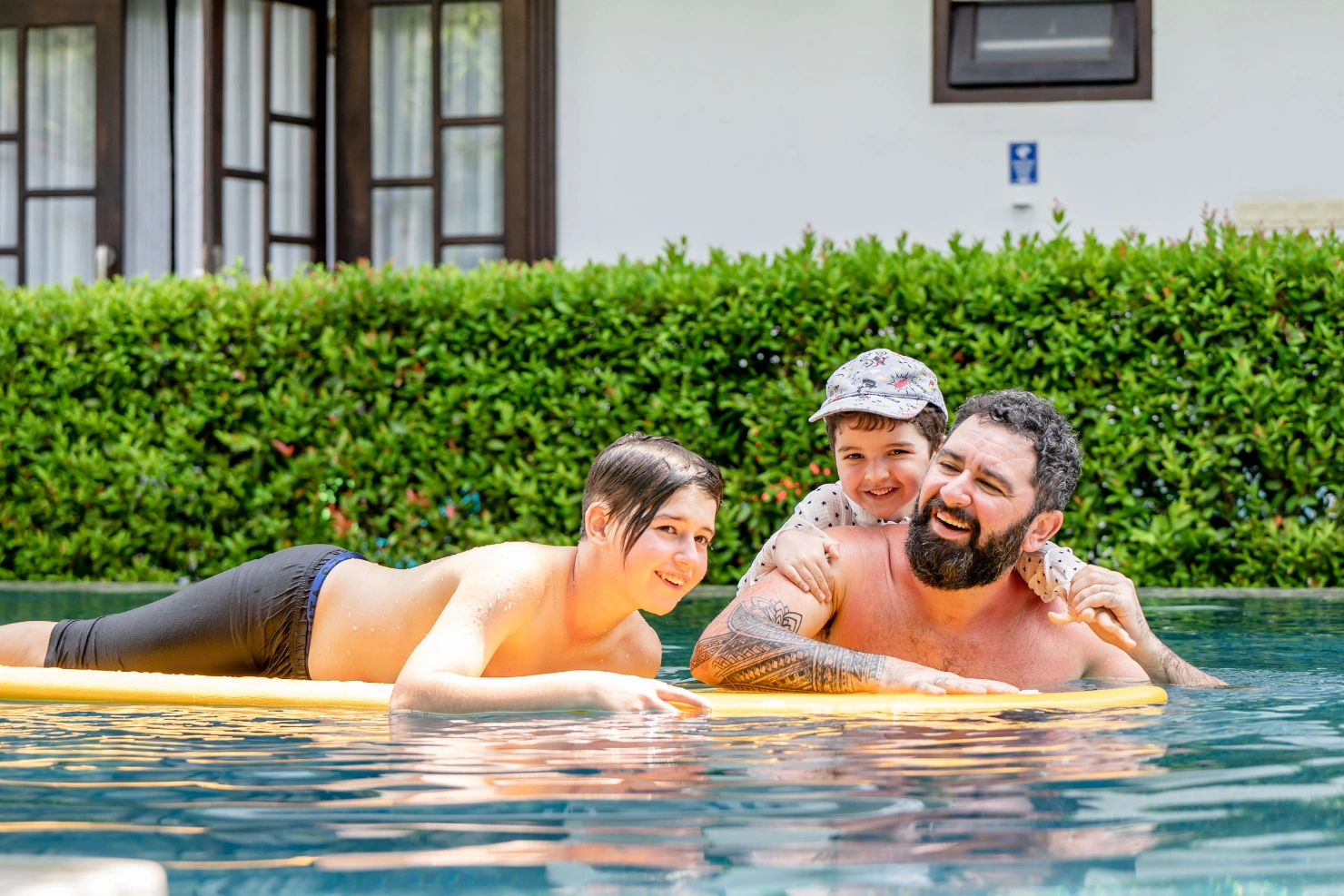
A family-friendly pool should feel fun, practical, and safe for different ages and swimming abilities. It should give active swimmers room to move while also supporting children, guests, and less confident swimmers.
The best family pool layouts usually include clear walking areas, safe entry points, visible depth changes, and features that match how the family actually uses the pool. A pool used mostly by young children may need shallow standing areas and secure handrails. A pool used by teens and active swimmers may benefit from a properly installed diving board, stronger deck safety, and better supervision zones.
Diving Boards That Add Safe Backyard Fun
A diving board can make a backyard pool more exciting, but it is one of the pool features that needs the most careful planning. It must match the pool’s depth, diving envelope, board type, and manufacturer guidelines.
For many families, a diving board adds a clear activity zone. Swimmers can take turns jumping, practicing basic dives, and enjoying a more active pool experience. Still, not every pool is built for diving. Pools need enough deep-water space, correct placement, and proper clearance so swimmers do not strike the pool bottom, walls, or slope.
Diving board safety depends on several factors:
- The pool must have a proper diving area.
- The board must be installed at the correct location.
- The board and stand must match each other.
- Anchors and mounting hardware must be secure.
- The walking surface should provide slip resistance.
- The board should follow manufacturer use limits.
- The area should have clear rules for one diver at a time.
The International Swimming Pool and Spa Code includes minimum diving water envelope requirements for residential inground pools. These requirements are based on pool type and are meant to reduce risks in diving areas.
Diving boards also require routine checks. Bolts, anchors, springs, board surfaces, and stands can wear over time. If a board feels loose, looks cracked, or has a worn surface, it should not be used until it is inspected.
Pool Platforms For Kids, Guests, And Better Access
Pool platforms can make a pool more useful because they create a stable space inside or near the water. They can help children rest, support casual water play, and give guests a more comfortable place to stand.
Platforms can be permanent or removable, depending on the pool design and the homeowner’s goals. Some platforms create a shallow lounging area. Others help with entry and exit. Some are used to support supervised play for younger swimmers.
Safer Shallow Areas
A platform can give children and less confident swimmers a shallow area where they can stand or pause. This does not replace supervision, but it can make the pool feel more manageable for families.
Shallow spaces are especially helpful when families have different swimmers using the pool at once. Younger children may want a low-depth area for play, while older swimmers may prefer deeper water. A platform helps separate these activities in a more organized way.
Better Pool Access
Pool platforms can also improve access. Guests who do not want to jump directly into deeper water may feel more comfortable stepping onto a platform before moving farther into the pool.
For some pools, platforms work well with handrails, wider steps, or benches. This can help older adults, cautious swimmers, and guests who need a slower entry point.
More Pool Activities
A platform can support more than standing. Families may use it for sitting, supervised play, water games, or simply cooling off without fully swimming.
This makes the pool more flexible during gatherings. Adults can relax near the water, kids can enjoy a defined play area, and guests can use the pool without feeling forced into deeper sections.
Safety Features Every Family Pool Should Include
A fun pool should still be easy to supervise and safe to use. Safety features help reduce avoidable risks around water, especially when children or guests are present.
Pool safety starts with barriers and supervision. The CDC states that proper pool fencing can help prevent young children from reaching the pool without a caregiver knowing. Pool Safely also stresses that children should never be left unattended in or near water.
Important family pool safety features include:
- Non-slip pool decking and board surfaces
- Secure ladders, rails, and steps
- Clear depth markers
- Proper pool lighting
- Self-closing and self-latching gates
- Pool covers when suitable
- Visible pool rules
- Routine equipment inspections
- Safe storage for toys and floats
- Rescue equipment near the pool area
The Consumer Product Safety Commission has also identified common pool accident patterns, including slips on decks, diving boards, and ladders, plus injuries from striking the pool bottom or sides due to insufficient depth. That is why safe feature placement matters as much as the feature itself.
Comfort Features That Make The Pool More Useful
A family pool is often used for more than swimming. It becomes a place for relaxing, hosting, cooling off, and spending time together outdoors.
Comfort features help make the pool area easier to use every day. Wide steps, benches, tanning ledges, shaded seating, storage areas, and safe walkways all help the backyard function better.
For families, comfort often comes down to small details. A shaded area gives adults a cooler place to supervise. A storage box keeps toys, towels, and safety gear nearby. Built-in benches give swimmers a place to rest without leaving the water.
Good lighting is another comfort and safety upgrade. It helps families use the pool area later in the day and makes steps, platforms, and deck edges easier to see. Lighting should be placed carefully so it improves visibility without creating glare.
Family-Friendly Pool Features And Their Best Uses
Some pool features are better suited for active swimming, while others support safety, comfort, or easier access. This table shows where each feature fits best.
| Pool Feature | Best For | Main Benefit |
|---|---|---|
| Diving Board | Older kids, teens, and active swimmers | Adds movement, excitement, and structured pool activity |
| Pool Platform | Children, guests, and casual swimmers | Creates a shallow standing or resting area |
| Wide Pool Steps | Families and frequent guests | Makes entry and exit easier |
| Handrails | Older adults and cautious swimmers | Adds support and stability |
| Non-Slip Decking | Everyone around the pool | Helps reduce slip risks |
| Pool Lighting | Evening use and visibility | Makes edges, steps, and water areas easier to see |
| Pool Rules Sign | Children and guests | Sets clear expectations for safer use |
A table is useful here because each feature has a different purpose. Homeowners can compare options based on who uses the pool most often and what the backyard needs most.
Choosing Features That Fit Your Pool Design
Not every feature works with every pool. Diving boards, platforms, rails, ledges, and steps must fit the pool’s size, depth, structure, and use.
Before adding a feature, homeowners should look at the pool as a full system. A diving board needs a proper deep end. A platform needs enough room and safe placement. Steps and handrails must be installed where they improve movement instead of creating obstacles.
Important design factors include:
- Pool depth and slope
- Pool shape and width
- Available deck space
- Existing anchors or mounting points
- Swimmer age groups
- Local safety rules
- Manufacturer requirements
- Long-term maintenance needs
- Backyard traffic flow
Manufacturer instructions matter because diving board stands, boards, and anchors are not universal. Installation manuals commonly require professional installation and compliance with local building and safety codes.
For Sterling homeowners, this is where professional planning helps. Residential Pool Service LLC can review the pool layout, discuss the family’s goals, and recommend features that match the pool instead of forcing the wrong upgrade into the space.
Professional Installation Matters For Pool Safety
Pool features must be installed correctly to stay secure, stable, and safe. Poor anchoring, wrong placement, weak materials, or incompatible parts can create serious hazards.
Professional installation is especially important for diving boards. The board must be placed in the correct area of the pool, and the base must be secured according to product instructions. Even a small placement error can affect how safely the diving area works.
Platforms also need careful installation. The material must handle pool chemicals, water exposure, sunlight, and regular use. Fiberglass, plastic, and metal options can all work, but the right choice depends on the pool design and the intended use.
Professional installation also helps homeowners avoid guesswork. A trained pool service team can check the condition of the deck, review pool depth, inspect mounting areas, and help determine whether a new feature is appropriate.
Pro Tip: Before adding a diving board, platform, or access feature, think about who uses the pool most often. A family with young kids may need shallow platforms, steps, and handrails first.
Maintenance Tips For Long-Term Safety
Pool features need regular care to stay safe and useful. Even strong materials can wear down from weather, pool chemicals, sunlight, and frequent use.
Homeowners should check diving boards and platforms throughout the swimming season. A quick visual inspection can help catch problems before they become bigger safety concerns.
Helpful maintenance steps include:
- Check diving board bolts and anchors.
- Look for cracks, chips, or bending.
- Clean slippery buildup from surfaces.
- Inspect platform stability.
- Watch for rust or corrosion.
- Replace worn non-slip surfaces.
- Confirm handrails feel secure.
- Keep depth markers visible.
- Follow manufacturer care instructions.
Maintenance should also include the surrounding pool area. Deck surfaces, ladders, rails, lighting, and fences all affect how safely the pool functions. A clean, organized pool area is easier to supervise and more enjoyable for guests.
Final Thoughts On Family-Friendly Pool Features
A family-friendly pool should make the backyard safer, more active, and more enjoyable. Diving boards, pool platforms, steps, rails, lighting, and non-slip surfaces can all improve the way families use their pool.
The most important step is choosing features that fit the pool’s design and the family’s needs. A diving board should only be added when the pool has the right depth and layout. A platform should be placed where it improves access, comfort, or supervised play.
Residential Pool Service LLC helps homeowners in Sterling, VA plan and install pool features that add real value to the backyard. From diving board installation to pool platform upgrades, professional service helps make each feature safer, cleaner, and more useful for everyday family swimming.



