
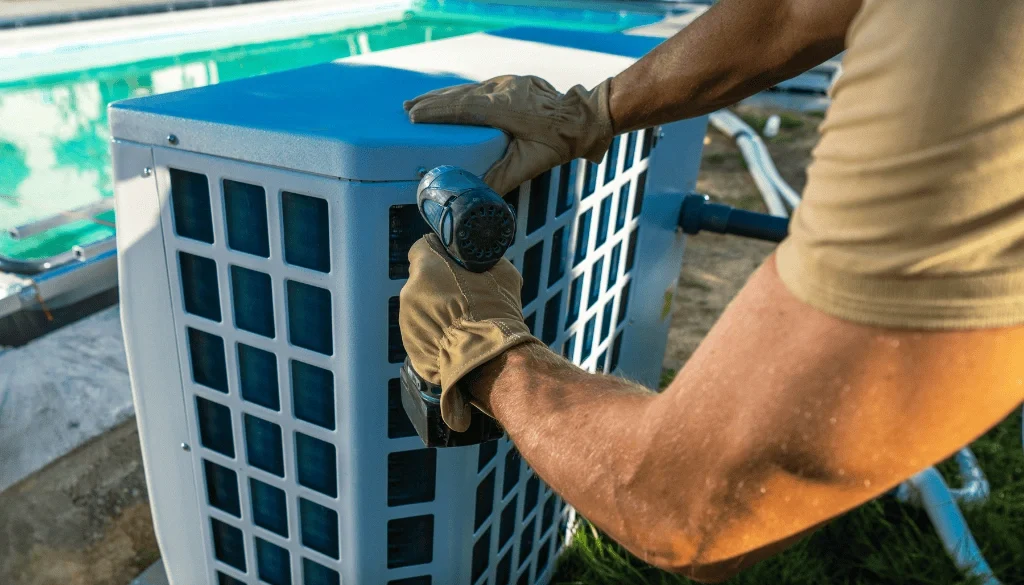
Heat Exchanger Scaling And Corrosion: Why Heaters Lose Performance
A pool heater can look “fine” from the outside and still lose performance because the real work happens inside the heat exchanger—the metal surface that transfers heat into your pool water. When that surface gets coated with mineral scale or eaten away by corrosion, the heater has to run longer, burn more energy, and may start tripping safety limits.
“Have you noticed slower heat-up times, inconsistent temperature, or utility bills rising without a clear reason?”
Those are common clues that heat transfer is being blocked or the exchanger is deteriorating, and it’s why water balance and flow matter as much as the heater’s age.
Key Takeaways
- Heat exchangers fail from scale buildup.
- Corrosion starts when water turns aggressive.
- Poor flow triggers overheating and shutdowns.
- Balanced chemistry prevents costly exchanger damage.
- Stop feeder backflow to protect heaters.
What The Heat Exchanger Does In Your Pool Heater
The heat exchanger is the “bridge” between your heater’s heat source and your pool water. Whether your unit is gas-fired or a heat pump design, the exchanger is where heat is delivered into the circulating water. Because it sits directly in the water path, it also sees everything your pool water carries—minerals, sanitizer byproducts, debris that slips past filtration, and whatever happens to your chemistry after storms, heavy use, or long idle periods.
Heat Transfer In Plain Terms
A heat exchanger works best when metal is clean and water moves steadily across it. Heat flows from a hot surface to a cooler one, and clean metal lets that happen efficiently. When minerals coat the metal, the coating acts like insulation, which means less heat reaches the water in the same amount of time. When corrosion pits or thins the metal, heat transfer becomes less predictable and the exchanger can eventually leak, which is one of the most expensive heater failures to repair.
Why Water Flow Is Non-Negotiable
Flow is a performance and safety issue, not just a comfort issue. Pool heaters are designed around minimum flow rates so the exchanger doesn’t get “too hot” in one area while water creeps through. Manufacturers warn that insufficient water flow can contribute to exchanger damage and premature failure, and low flow is also a common trigger for high-limit safety behavior and shutdowns.
Heat Exchanger Scaling Explained
Scaling is one of the most common reasons a heater starts heating slower over time, especially in areas with harder fill water or when water balance drifts upward in pH and calcium hardness.
The tricky part is that scaling can be developing for weeks before you notice anything dramatic. By the time the heater is obviously struggling, the buildup may be thick enough to cause overheating symptoms and repeated service calls.
What Scale Is And Why It Forms In Heaters
Scale is mineral deposit—often calcium carbonate—that precipitates out of water and sticks to hot surfaces. Heaters are a prime target because the exchanger runs warmer than the rest of the plumbing, and heat speeds up the tendency of certain minerals to form solids.
In simple terms, water that is “scale-forming” will leave deposits more readily when it’s heated, and those deposits attach to the exchanger tubes and reduce the effective heat transfer area.
Why pH, Alkalinity, And Calcium Hardness Matter
Pool water balance is not just about swimmer comfort—it’s about preventing equipment damage. Heater manufacturers commonly publish recommended ranges for pH, total alkalinity, and calcium hardness specifically to protect the heat exchanger, and they note that high levels can contribute to scaling in the exchanger.
Public health guidance also emphasizes water balance and the use of saturation index concepts to understand when water is likely to be corrosive or scale-forming.
Practical Signs Scaling Is Developing
Scaling doesn’t always announce itself with a single obvious symptom. A common pattern is “it heats, but it takes forever,” or the heater runs longer to reach the same setpoint. Some owners notice temperature swings because heat transfer isn’t consistent across the exchanger surface.
Others notice unusual sounds as water flow and heat transfer change. In many cases, the earliest “real-world” warning is simply that the system has to work harder than it used to for the same comfort.
Heat Exchanger Corrosion Explained
Corrosion is the opposite problem from scale: instead of minerals coating the metal, aggressive water and chemistry conditions attack it. Corrosion can happen quickly during brief chemistry events—like very low pH episodes—or slowly over time if the pool routinely runs outside recommended ranges. Either way, corrosion reduces exchanger life and can lead to leaks, poor heating, and more frequent parts failures.
Corrosion: When Water Becomes Aggressive
Most pool chemistry guidance keeps pH in a narrow comfort-and-equipment-safe band, commonly cited around 7.2–7.8 for bather comfort and equipment protection.
When pH and alkalinity are too low, water becomes more aggressive toward metals, which can accelerate corrosion in the heater’s water path. Manufacturers explicitly warn that improper water chemistry can promote corrosive action and cause premature heat exchanger damage or failure.
Chemical “Hot Spots” That Accelerate Damage
Even if your “overall” chemistry tests fine, localized chemical concentration can damage an exchanger fast. For example, placing chlorine or bromine tablets in the skimmer can send highly concentrated sanitizer through the heater, and manufacturers warn against it.
They also commonly require chemical feeders to be installed downstream of the heater with a check valve to prevent backflow of concentrated chemicals into the exchanger. This isn’t just best practice—it’s a protection measure tied directly to heat exchanger longevity.
How Scaling And Corrosion Reduce Heater Performance
Both scaling and corrosion reduce performance because they interfere with what the heater is supposed to do: move heat into water safely and efficiently. Scaling blocks heat transfer like insulation and can restrict water flow.
Corrosion damages metal surfaces and can create uneven heat transfer, leaks, and cascading component issues. In either case, what starts as “a little slower heating” can end up as a heater that short-cycles, trips limits, and costs significantly more to operate.
Less Heat Transfer Means Longer Heat Times
Scale and fouling increase resistance to heat transfer, which means the system needs more energy to accomplish the same heating job. Even relatively thin layers of scale can behave like insulation, forcing longer run times and higher energy use.
If your pool takes noticeably longer to warm up—without a change in weather, setpoint, or pool cover habits—reduced heat transfer from scaling is one of the most practical explanations to investigate.
Safety Trips, High-Limit Errors, And “Short Cycling”
Many heater “mystery shutdowns” come down to overheating protection doing its job. If water flow is reduced or heat can’t move into the water efficiently, temperatures in the heater can spike and trigger high-limit behavior.
Manufacturer troubleshooting information notes that erratic high limit operation is often linked to water flow problems, and it specifically lists lime scale accumulation in the heat exchanger as a potential cause. That’s why repeated high-limit issues should prompt a serious look at flow, filtration, and exchanger condition—not just repeated resets.
Hidden Costs: Efficiency, Parts, And Premature Replacement
The costs of scaling and corrosion aren’t only about a single repair visit. A heater that runs longer uses more fuel or electricity and wears through components faster. Manufacturers also warn that damage from improper maintenance, excessive water hardness, or incorrect water chemistry may not be covered under warranty, which can turn a preventable water-balance issue into an expensive exchanger replacement. In other words, the “real” price of poor water balance often shows up later, when performance drops and repair options narrow.
How Pros Diagnose The Problem Correctly
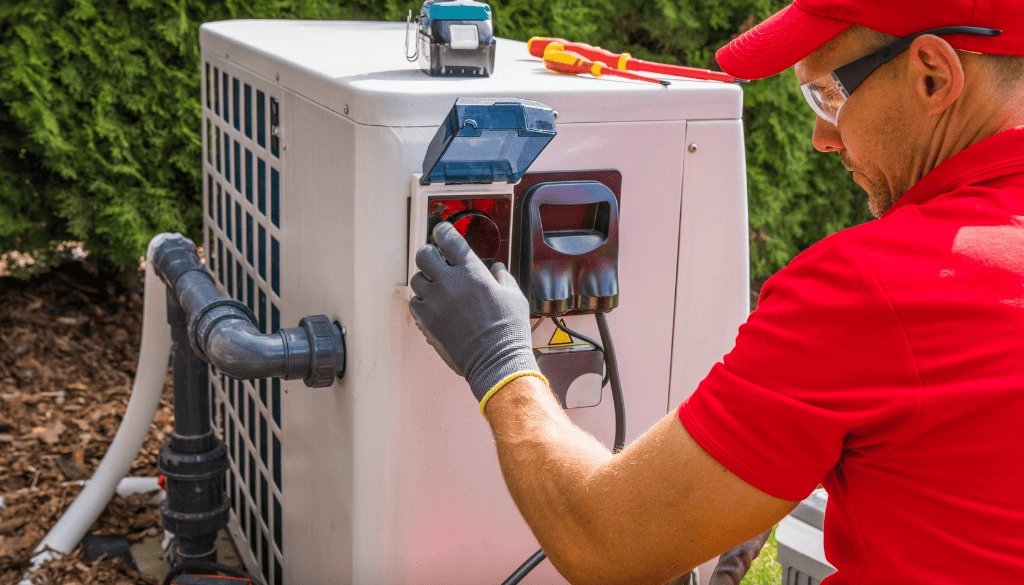
Good diagnosis avoids guessing. Because symptoms overlap—low flow, sensor issues, bypass problems, and exchanger issues can feel similar—professionals diagnose by combining inspection, water chemistry history, and system performance checks.
This approach prevents you from paying to replace parts that aren’t actually the root cause, and it’s especially important when the heater sometimes works and sometimes doesn’t.
Visual Inspection And Internal Evidence
A thorough inspection begins with a visual assessment of the visible condition, including signs of corrosion, leaks, soot on combustion-side surfaces (for gas heaters), and evidence of moisture exposure. Internally, technicians look for scaling patterns, corrosion pitting, and restrictions that suggest deposits inside exchanger tubes.
While homeowners can observe symptoms, the internal exchanger condition usually requires a trained inspection because disassembly and reassembly must be done to protect gaskets, sensors, and safety devices.
Water Chemistry History And Saturation Index
Chemistry snapshots are helpful, but trends are better. Pros often want to know whether the water has been consistently balanced or if it swings into scale-forming or corrosive conditions. Public health guidance discusses water balance factors (like pH, alkalinity, calcium hardness, temperature, and dissolved solids) and the use of saturation index concepts to evaluate risk.
In practice, that helps explain why two pools with the same “current” test strip reading can have very different equipment outcomes based on what happened over the last month.
Flow And System Checks That Rule Out False Alarms
Before blaming the heat exchanger, a competent diagnosis verifies basics like filter condition, pump performance, valve positions, and bypass behavior. Manufacturer troubleshooting notes that reduced flow may be caused by things as simple as a clogged filter/strainer or excessive bypass flow, and it includes exchanger scale as another cause to evaluate. This is why “it’s the heater” is rarely a complete answer—your heater’s performance depends on what the entire circulation system is doing.
Fix Options: Cleaning, Repair, Or Replacement
The right fix depends on severity, exchanger material, and whether scaling/corrosion has progressed into structural damage. In mild to moderate scaling cases, cleaning may restore performance. In advanced cases, the exchanger may be too restricted or damaged to justify cleaning attempts.
Corrosion is often less forgiving, because metal loss and pitting can’t be “cleaned away”—it can only be addressed by repair or replacement of affected parts.
| Issue | What’s Happening | Common Early Symptoms | What A Tech Typically Checks | What Usually Solves It |
|---|---|---|---|---|
| Scaling | Mineral deposits insulate and restrict flow | Slower heating, inconsistent temps, higher energy use | Water balance history, flow/pressure, exchanger restriction | Cleaning (if safe), flow corrections, rebalance water |
| Corrosion | Metal is attacked by aggressive water or chemical concentration | Unreliable heating, leaks, repeated component issues | pH/alkalinity history, feeder placement, internal pitting | Correct chemistry/feeder setup, repair or replace exchanger |
When Cleaning Makes Sense And When It Doesn’t
Cleaning can be effective when scale is the main problem and the exchanger is structurally sound. The key is to follow manufacturer-appropriate procedures and avoid “DIY acid experiments” that can damage components or void warranty coverage.
In many cases, the safer approach is professional evaluation first, because the wrong chemical or contact time can worsen corrosion risk. If scale is severe enough to cause repeated safety trips and restrictions, cleaning may not restore reliable performance and replacement may be the more durable fix.
Repair Paths For Corrosion
With corrosion, the decision often hinges on where the damage is and how advanced it is. Minor corrosion on external parts may be manageable, but internal heat exchanger corrosion is a high-stakes issue because it can lead to leaks and unsafe operation.
If corrosion has compromised the exchanger, replacement of the exchanger (or sometimes the entire heater, depending on model and labor economics) is the typical long-term solution. The most important step is correcting the underlying cause—water balance and chemical delivery—so the new parts don’t fail the same way.
Replacement Decision Factors
Replacement becomes more likely when the exchanger is leaking, heavily restricted, or repeatedly triggers limits even after flow and chemistry corrections. Age, parts availability, and efficiency goals also matter.
The practical question is whether you can restore safe, reliable heat transfer at a reasonable cost. If you’re paying for repeated diagnostics and minor parts while performance keeps declining, that’s often the point where a replacement plan saves money over the next few seasons.
Prevention That Keeps Heat Exchangers Healthy
Prevention is mostly about consistency. A heater doesn’t need “perfect” water every hour of the year, but it does need you to avoid the extremes that cause scale-forming or corrosive conditions, and it needs steady flow when heating.
Manufacturers specifically recommend frequent testing and provide chemistry ranges intended to protect the heat exchanger, which is a strong clue about what matters most for long-term performance.
Maintain Balanced Water Weekly
Treat weekly testing as equipment insurance. Heater documentation commonly recommends checking water frequently (at least weekly) and staying within ranges that reduce scaling and corrosion risk, including guidance for pH, alkalinity, and calcium hardness. This isn’t busywork—water chemistry changes daily from sun, rain, bather load, and chemical additions, and small drifts can compound into exchanger damage over time.
Avoid Concentrated Sanitizer Through The Heater
One of the most preventable exchanger killers is concentrated sanitizer exposure. Keep tablets out of the skimmer, and ensure any chlorinator is installed downstream of the heater with a check valve to prevent backflow into the heater.
Those installation choices directly reduce the chance of chemical “hot spots” that trigger corrosion damage. If you only change one habit or plumbing detail to protect your heater, make it this one.
Protect Flow: Filter, Valves, And Bypass Habits
Flow problems often masquerade as heater problems. Clean filters, unobstructed strainers, and correctly set valves matter because they keep water moving fast enough to pull heat away from the exchanger.
Manufacturer troubleshooting guidance links erratic limit behavior to reduced flow and notes scale accumulation as another factor, which is a reminder that flow and exchanger cleanliness work together. Keeping flow healthy reduces overheating risk and helps prevent the very scaling patterns that start with hot, slow-moving water.
Pro Tip: If your heater is acting up and you suspect exchanger scaling or corrosion, don’t start by swapping sensors or resetting limits. Start by confirming water balance is in-range and verifying you’re not feeding tablets through the skimmer or allowing a chlorinator to backflow into the heater.
Conclusion
Heat exchangers lose performance for two main reasons: they get coated with scale that blocks heat transfer, or they get damaged by corrosion that weakens metal and disrupts safe heating. The common thread is that both problems are strongly tied to water balance, chemical delivery, and water flow—factors you can control with consistent testing, smart feeder placement, and good circulation habits.
If you want help improving the home conditions that affect outdoor equipment longevity—like moisture management, drainage, and ventilation—Residential Pool Services LLC can help with the building-envelope side of the equation, and you should also consult a qualified pool professional for heater-specific inspection and repair.



