
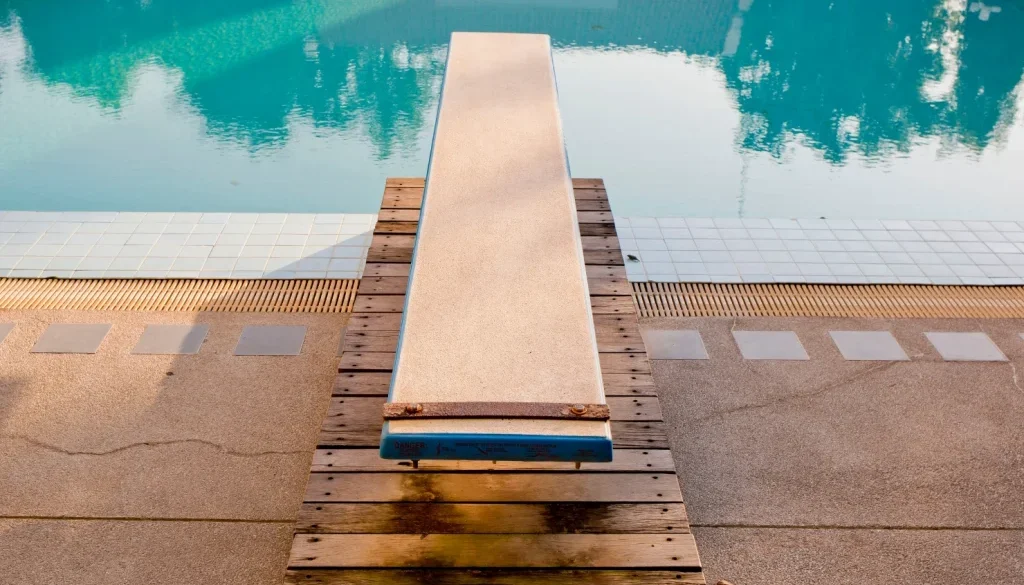
A Loose Diving Board Base Can Turn Pool Fun Into a Safety Risk
A diving board should feel stable every time someone steps onto it. Even a small amount of movement at the base can signal loose hardware, worn anchors, or problems with the mounting area.
“But what happens if a loose diving board base is ignored for too long?”
The issue can worsen with repeated use and increase the risk of slips, instability, or damage around the pool deck. Catching the problem early can help keep your pool safer and prevent a minor repair from becoming a bigger concern.
Key Takeaways
- Loose bases can signal hidden damage.
- Board flex differs from base movement.
- Damaged anchors may require professional repair.
- Cracked concrete can reduce mounting stability.
- Early inspections help prevent larger problems.
What A Loose Diving Board Base Really Means
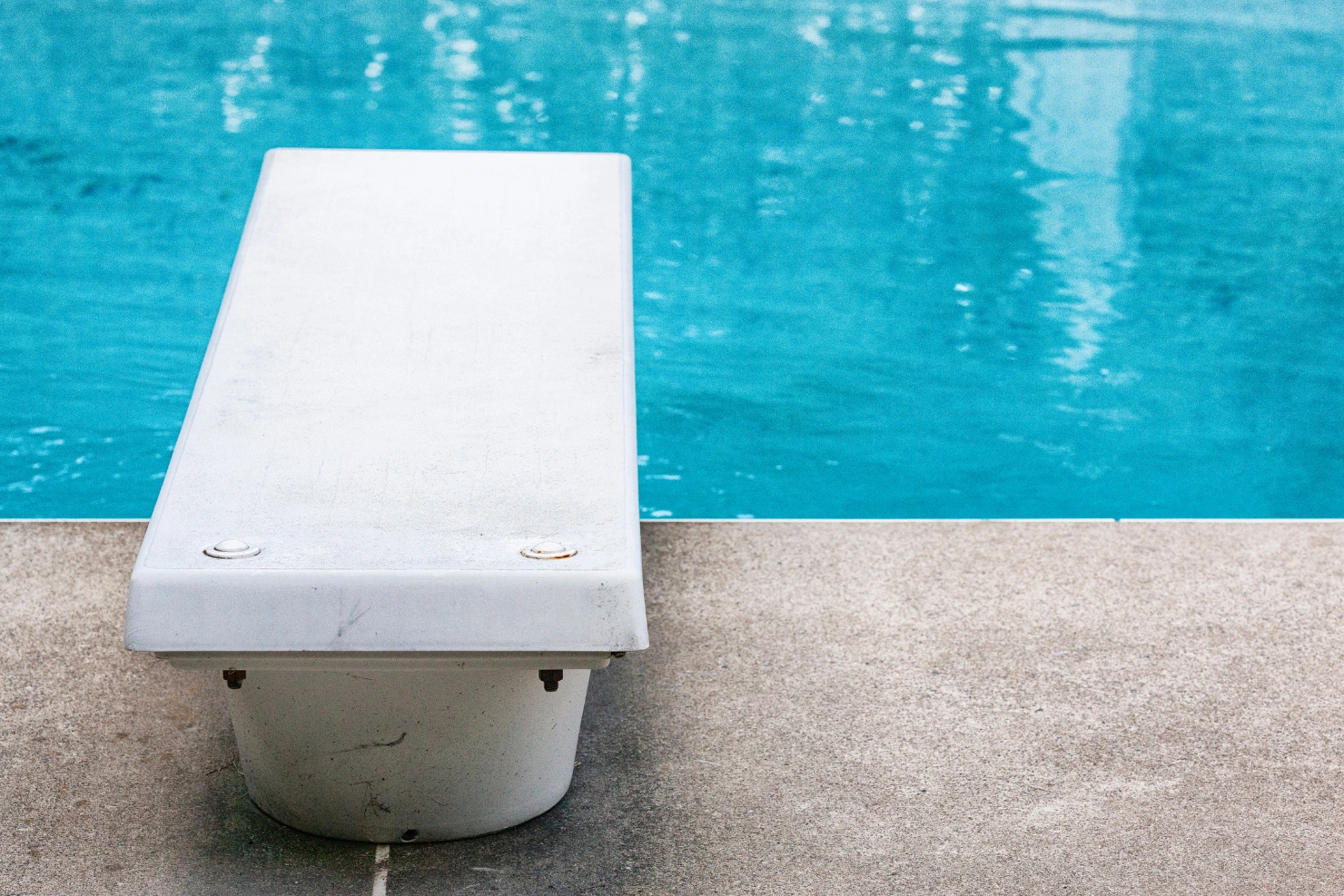
Diving boards are made to flex under a swimmer’s weight, but the stand and mounting base should remain firmly secured to the pool deck. Movement at the base is different from normal board flex and deserves attention.
A shifting stand may indicate a problem with the fasteners, anchors, concrete, or mounting components below the visible surface. Continuing to use the board without finding the cause can place additional stress on parts that are already loose or deteriorating.
Common Reasons A Diving Board Base Becomes Loose
Diving board bases experience repeated loads throughout the swimming season. Over time, wear, moisture, chemicals, and movement can affect the hardware and surrounding deck.
Several issues can cause a base to become unstable.
Loose Mounting Hardware
Bolts, nuts, and other fasteners hold the diving board stand securely in position. Repeated use can contribute to hardware loosening, particularly if components were not installed or maintained according to the manufacturer’s specifications.
Simply tightening a bolt may not solve the problem if the anchor underneath it has already become damaged.
Worn Deck Anchors
Anchors transfer the forces created by diving into the pool deck structure. If an anchor becomes loose, corroded, damaged, or separated from the surrounding concrete, the stand may begin rocking.
Older systems can be especially difficult to assess because replacement components may differ from the original hardware.
Cracked Pool Deck
Cracks around a diving board base should not automatically be assumed to be cosmetic. Concrete surrounding the anchor points plays an important role in keeping the stand secure.
Movement, freeze-thaw cycles, moisture intrusion, and normal aging can contribute to concrete deterioration. Damage near the mounting points should be evaluated before the board is used again.
Corrosion And Wear
Diving board hardware regularly encounters water, humidity, weather, and pool chemicals. Metal components can corrode over time, particularly where protective finishes have worn away.
Corrosion can reduce the strength of bolts, anchors, stands, and other components even if the damage initially looks minor.
Signs Your Diving Board Base Needs Attention
Some diving board problems are obvious, while others develop slowly. Checking the mounting area regularly can help homeowners notice changes before the condition becomes more serious.
Warning signs may include:
- Rocking or shifting when someone steps onto the board
- Visible movement where the stand meets the deck
- Bolts that repeatedly become loose
- Rust around fasteners or mounting plates
- Cracks forming near anchor locations
- Gaps between the stand and pool deck
- Unusual squeaking, clicking, or movement
- Bent, damaged, or deteriorated mounting components
If movement appears suddenly or becomes worse, stop using the diving board until the system has been inspected.
Loose Base Versus Normal Diving Board Flex
Not every movement means the diving board is failing. Diving boards are engineered to provide a certain amount of flex, depending on their type and design.
The important distinction is where the movement occurs. The board itself may flex, while the stand, base, and anchors should remain securely attached.
| What You Notice | Usually Normal? | Needs Attention? |
|---|---|---|
| Board flexes during a dive | Often | Usually not if within normal design |
| Board tip moves under weight | Often | Monitor for changes |
| Stand rocks on the deck | No | Yes |
| Mounting bolts visibly shift | No | Yes |
| Cracks form around anchors | No | Yes |
| Base separates from deck | No | Yes |
Homeowners should also remember that different diving board systems have different operating characteristics. Manufacturer instructions remain the best reference for acceptable movement and maintenance requirements.
Safety Risks Of Continuing To Use A Loose Diving Board
A loose base changes the way forces are transferred through the diving board system. Instead of remaining securely supported, the stand may shift each time someone steps, jumps, or dives.
That movement can create several concerns:
- A swimmer could lose balance before entering the water.
- Repeated movement can increase stress on bolts and anchors.
- Mounting holes may enlarge or deteriorate.
- Concrete around the anchors can become damaged.
- Corroded or weakened components may continue deteriorating.
- The diving board may no longer perform as intended.
The safest response to noticeable base movement is to stop using the board until the cause has been identified.
Tightening Bolts May Not Solve The Problem
Loose bolts are easy to see, so homeowners may assume tightening them is the complete repair. In some cases, however, the visible bolt is only one part of a larger mounting problem.
Repeatedly tightening hardware without inspecting the surrounding system can leave hidden damage unresolved.
Damaged Anchor Points
The bolt may appear secure while the anchor beneath the deck is moving. If the anchor cannot hold properly, tightening the top hardware will not restore the original mounting strength.
Anchor repair or replacement may require more extensive work than simply replacing a bolt.
Deteriorated Deck Concrete
Anchors depend on structurally sound material around them. Cracked, crumbling, or deteriorated concrete can prevent a mounting system from remaining stable.
The surrounding deck condition should therefore be considered when evaluating a loose diving board.
Incorrect Replacement Hardware
Not every bolt, anchor, or stand component is interchangeable. Diving board manufacturers specify compatible parts, hardware, and installation requirements for their systems.
Using incorrect replacement components can affect fit, stability, and performance.
What A Professional Inspection Should Check
A diving board inspection should look beyond the one component that appears loose. The complete assembly works as a system, so each major part should be evaluated.
An inspection may include checking:
- Diving board surface and underside
- Board attachment points
- Stand condition
- Base stability
- Bolts, nuts, and washers
- Anchor condition
- Corrosion or rust
- Cracks surrounding mounting points
- Signs of previous repairs
- Compatibility between the board and stand
- Condition of the surrounding pool deck
Pool dimensions and the intended diving area also matter when replacing or installing diving equipment.
When Repair Or Replacement Makes More Sense
A loose diving board does not always require complete replacement. The correct solution depends on the cause of the movement, the condition of the system, and whether compatible parts remain available.
A professional evaluation can help determine which approach is appropriate.
Repair May Work
Repair may be possible when the board and stand remain structurally sound and the problem is limited to serviceable components.
Examples can include replaceable hardware, minor mounting issues, or components specifically designed to be serviced.
Replacement May Help
Replacement may become the better option when several parts have deteriorated or when the system can no longer be repaired according to the manufacturer’s requirements.
Severe corrosion, cracked stands, extensive anchor damage, discontinued components, or multiple areas of deterioration can make replacement more practical.
Pool Depth And Compatibility Still Matter
A secure diving board base does not automatically mean the diving setup is appropriate for every swimming pool. Diving equipment must be compatible with the pool’s dimensions, diving area, stand, and board configuration.
Pools vary significantly in depth, slope, shape, and available diving envelope. A diving board should never be added simply because there is enough deck space for the stand.
Installation should follow the diving board manufacturer’s requirements and applicable safety standards. Existing pools may need to be evaluated before replacing an older board with a different model.
Pro Tip: If your diving board base begins moving, avoid repeatedly tightening visible bolts and continuing to use it. Have the entire mounting system checked, including anchors, concrete, stand, and hardware.
Preventing Diving Board Base Problems
Routine observation can help homeowners catch diving board problems earlier. You do not need to disassemble the system to notice changes in stability, corrosion, or surrounding concrete.
Make these checks part of regular pool maintenance:
- Look for movement before heavy swimming-season use.
- Check mounting areas for new cracks.
- Watch for rust around bolts and metal components.
- Pay attention to changes in board stability.
- Keep the area around the base clean and visible.
- Follow manufacturer maintenance recommendations.
- Address loose or damaged components promptly.
Avoid applying coatings, fillers, or temporary repairs that could hide cracks or mounting problems without correcting their cause.
Keep Your Diving Board Secure Before The Next Swim
A loose diving board base should be treated as a warning sign rather than normal wear. The cause may be as simple as serviceable hardware, but it can also involve anchors, corrosion, damaged concrete, or an aging stand.
Stopping use and addressing the problem early gives homeowners a better opportunity to repair the system before additional movement causes more damage. It also helps ensure that the board remains properly supported whenever swimmers use it.



