
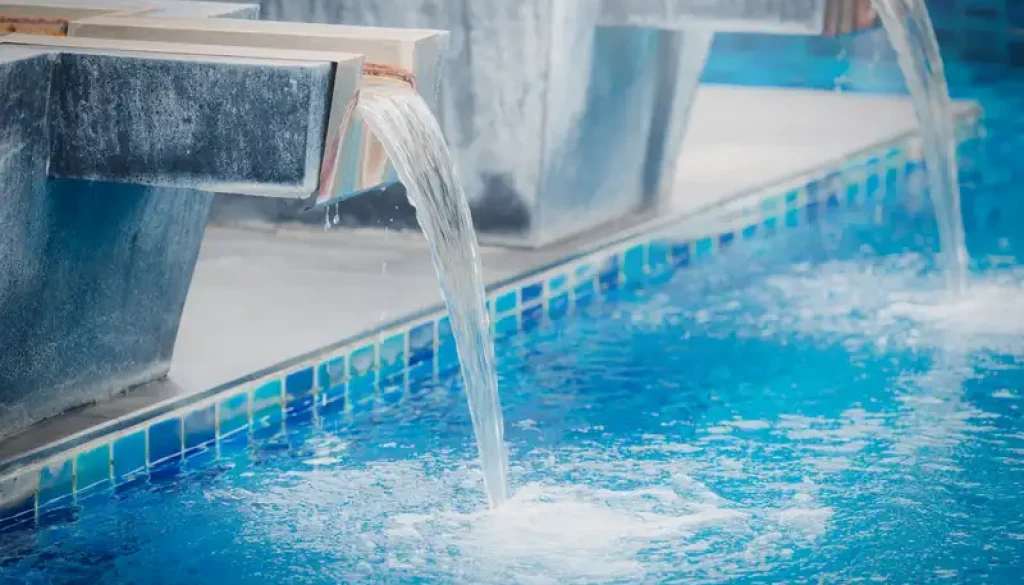
Old Pool Water Features Can Make Your Backyard Look Outdated
Old pool water features can quickly make an otherwise attractive backyard feel dated. Faded finishes, weak water flow, bulky designs, and worn components can take attention away from the rest of your pool area.
“But what happens when the pool itself still looks good while the jets, bubblers, or fountains no longer match the space?”
Updating these features can improve movement, sound, and visual appeal without requiring a complete pool renovation.
Modern water jets and bubblers can give an older pool a cleaner, more current appearance while making shallow areas and lounging spaces more enjoyable. With the right placement and design, they can help refresh the entire backyard.
Key Takeaways
- Outdated water features can age backyards.
- Weak flow may indicate plumbing problems.
- Bubblers refresh shallow pool lounging areas.
- Proper placement reduces splash and noise.
- Selective upgrades can avoid full renovations.
Signs Your Pool Water Features Look Outdated
Water features naturally become more noticeable when the rest of a backyard has been updated. New decking, furniture, landscaping, or pool finishes can make aging fountains and jets stand out for the wrong reasons.
Appearance is not the only concern. Changes in water flow or recurring maintenance problems can also indicate that an older feature needs attention.
Common signs include:
- Faded, stained, or deteriorating finishes
- Weak or inconsistent water streams
- Bubblers that produce uneven plumes
- Cracked fittings or damaged nozzles
- Excessive splashing around the pool
- Older designs that no longer complement the pool
- Features that frequently clog or stop operating properly
A feature does not necessarily need replacement simply because it is old. Its condition, plumbing, performance, and compatibility with the rest of the pool should all be evaluated first.
Outdated Water Features Can Affect The Entire Pool Area
A pool water feature acts as a focal point because movement naturally attracts attention. When the feature looks worn or operates poorly, it can affect the overall impression of the pool even if the shell and surrounding deck remain in good condition.
An oversized fountain, stained bubbler fitting, or weak stream can also clash with newer landscaping and outdoor furniture. Improving the feature can create a more cohesive appearance without changing every part of the backyard.
Poor performance may create practical problems as well. Water that shoots beyond the pool edge can wet surrounding surfaces and contribute to unnecessary water loss, while improperly adjusted features may create more noise or turbulence than homeowners want.
Modern Water Features That Can Refresh An Older Pool
Modern pool water features can be incorporated into different parts of a pool depending on the existing layout and plumbing. The goal is usually to create movement and interest without making the area feel crowded.
Pool Bubblers
Bubblers are commonly installed in shallow areas such as tanning ledges, sun shelves, benches, or wide steps. They send water upward to create a compact plume and gentle sound.
Water depth matters because it affects the height and appearance of the plume. Manufacturer specifications vary by model. For example, some modern bubblers are specifically engineered for shallow water, and flow can be adjusted to achieve different plume heights.
Custom Water Jets
Water jets can produce arcs or streams that travel into the pool. Their direction and water pressure can often be adjusted to suit the dimensions of the pool and the desired effect.
Multiple jets can also be arranged to create symmetry along a pool wall or another architectural feature. Correct positioning is important because poorly directed streams can splash onto coping or nearby decking.
Integrated Pool Lighting
Some modern bubbler systems can incorporate low-voltage LED lighting. This allows the moving water to become more visible after sunset and can coordinate with compatible pool lighting systems.
Any electrical components used around a swimming pool must be installed according to applicable electrical codes and the equipment manufacturer’s instructions.
Problems That May Be Hiding Behind Weak Water Features
A weak water feature does not automatically mean the decorative fixture has failed. The problem may be elsewhere in the circulation or dedicated water-feature system.
Finding the actual cause before replacing components can prevent unnecessary work.
Possible causes include:
- Debris restricting a nozzle or outlet
- A valve that is partially closed
- Insufficient water flow
- Air entering the plumbing
- Damaged fittings
- Plumbing restrictions
- Pump-related performance problems
Air entering the suction side of a pump, for example, can interfere with consistent water movement. Manufacturer troubleshooting guidance commonly recommends checking water level, fittings, unions, and suction plumbing when air appears in the system.
Updating Water Features Without Rebuilding The Entire Pool
A complete pool renovation is not always necessary just because the water features look dated. Some existing systems can be repaired, adjusted, or selectively upgraded.
The options depend heavily on plumbing access. A pool with usable supply lines in the correct locations may provide more upgrade possibilities than one requiring new plumbing beneath finished decking.
Existing electrical infrastructure must also be evaluated if lighting is being added. New lighted bubblers may require appropriate transformers, conduit, junction locations, and electrical connections that comply with current installation requirements.
For this reason, the condition of the existing pool should be assessed before deciding that a particular new feature can simply replace an old one.
Choosing The Right Water Feature For Your Pool
Different water features work better in different locations. Matching the feature to the pool area helps keep the design proportional while reducing unnecessary splash.
| Pool Area | Suitable Feature | Primary Purpose |
|---|---|---|
| Sun shelf | Bubbler | Adds vertical movement in shallow water |
| Wide pool step | Small bubbler | Creates a compact decorative focal point |
| Pool perimeter | Water jet | Produces controlled streams or arcs |
| Long pool wall | Multiple jets | Creates repeated visual movement |
| Shallow lounging zone | Lighted bubbler | Combines water movement with nighttime lighting |
The table provides general design ideas rather than fixed installation rules. Actual suitability depends on water depth, plumbing, manufacturer specifications, pool dimensions, and the desired water effect.
Placement Matters As Much As The Water Feature
A good water feature should feel like part of the pool instead of an attachment added afterward. Placement affects appearance, splash, sound, and performance.
Bubblers need enough surrounding space for water to move without creating excessive turbulence. Manufacturers may also specify minimum distances between bubblers, walls, or other surfaces. Jandy, for example, provides recommended spacing and installation-depth guidance for its TruFit bubbler system.
Jets require similar planning. Their angle, distance from the landing point, flow rate, and wind exposure can influence where the stream falls. A stream that looks attractive at low flow may overshoot the pool once pressure increases.
Pro Tip: Test the intended water height and direction before finalizing adjustable jets or bubblers. A slightly lower flow setting can often create a cleaner effect while reducing excessive splash, noise, and water landing outside the pool.
Water Flow Should Match The Look You Want
Water pressure and flow directly affect the appearance of a water feature. A homeowner looking for gentle bubbling needs a different setup than someone who wants a tall, prominent plume.
Depth can also change the result. Manufacturer performance data for some bubblers shows that the same flow rate produces different plume heights at different water depths. Deeper installation generally requires more flow to create the same visible effect above the surface.
Adjustable valves can help control water flow to certain features when the plumbing system is designed for that purpose. Some water-feature installation guides specifically call for control valves so flow can be adjusted after installation.
The pump and plumbing must still be capable of supplying the required flow. Increasing water-feature demand without accounting for the rest of the pool’s hydraulic system can lead to poor performance.
When Repairing An Old Water Feature Makes Sense
Replacement is not always the first step. An older feature that still suits the pool may only need routine correction or a small repair.
Cleaning a restricted nozzle, adjusting a valve, replacing a damaged fitting, or correcting an accessible plumbing issue may restore normal operation. Cosmetic cleaning may also improve components that are stained but otherwise structurally sound.
Repair tends to make the most sense when the feature remains compatible with the pool, replacement parts are available, and the surrounding plumbing is in good condition.
Persistent problems deserve closer inspection. Repeated clogs, leaks, loss of flow, or failing components can make ongoing repairs less practical.
When Replacement May Be The Better Option
Some water features eventually reach a point where replacing them provides a better result than continuing to repair aging components.
This may be the case when fittings are significantly deteriorated, plumbing connections repeatedly leak, components are obsolete, or the feature no longer fits the style of an updated backyard.
Replacement can also make sense when homeowners want capabilities the original system never had. Adjustable bubblers, more compact fittings, improved nozzle configurations, or compatible lighting can create a noticeably different appearance.
However, replacement options still depend on the existing plumbing layout. A new feature should be selected based on what the pool can safely and effectively support rather than appearance alone.
Small Water Feature Upgrades Can Change The Feel Of Your Backyard
Water features occupy relatively little physical space, but their movement can strongly influence the atmosphere around a pool. That makes them useful when homeowners want a noticeable visual change without modifying the entire pool shell.
A pair of bubblers on a sun shelf can bring movement to an otherwise flat shallow area. Neatly aligned jets can add architectural interest along the pool perimeter. Lighting can make those effects visible during evening swimming and backyard gatherings.
The best upgrades remain proportional to the pool. Too many features can create visual clutter, while excessive flow can make the area louder and splashier than intended.
Give Your Older Pool A More Current Look
An aging water feature does not mean the entire pool needs to be replaced. Sometimes the biggest visual distraction comes from one fountain, bubbler, or jet system that no longer performs or looks the way it once did.
Updating the right features can restore cleaner water movement and create a more cohesive backyard. Residential Pool Service LLC provides custom water jets and pool bubblers in Sterling, VA, helping homeowners choose practical upgrades that work with their existing pool layout.



