
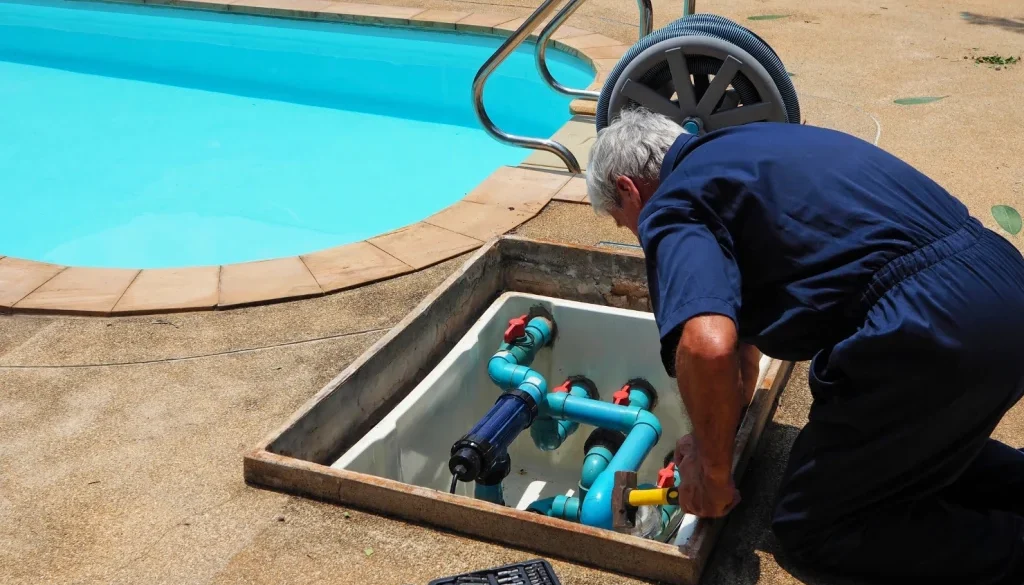
Pool Equipment Repair Versus Replacement for Aging Backyard Systems
Pool pumps, filters, heaters, and cleaning systems work together to keep backyard pools safe, comfortable, and ready to use. As this equipment ages, performance can decline, energy costs may rise, and repairs can become more frequent.
“But when does another repair stop making sense and replacement become the better long-term choice?”
The answer depends on the equipment’s age, condition, repair history, efficiency, and the availability of replacement parts. Understanding these factors helps homeowners avoid repeated breakdowns, control long-term costs, and keep the entire pool system operating reliably.
Key Takeaways
- Aging equipment often causes repeated breakdowns.
- Repairs suit isolated, serviceable equipment problems.
- Replacement helps reduce long-term operating costs.
- System compatibility matters before upgrading components.
- Professional inspections support smarter equipment decisions.
Understanding How Pool Equipment Ages
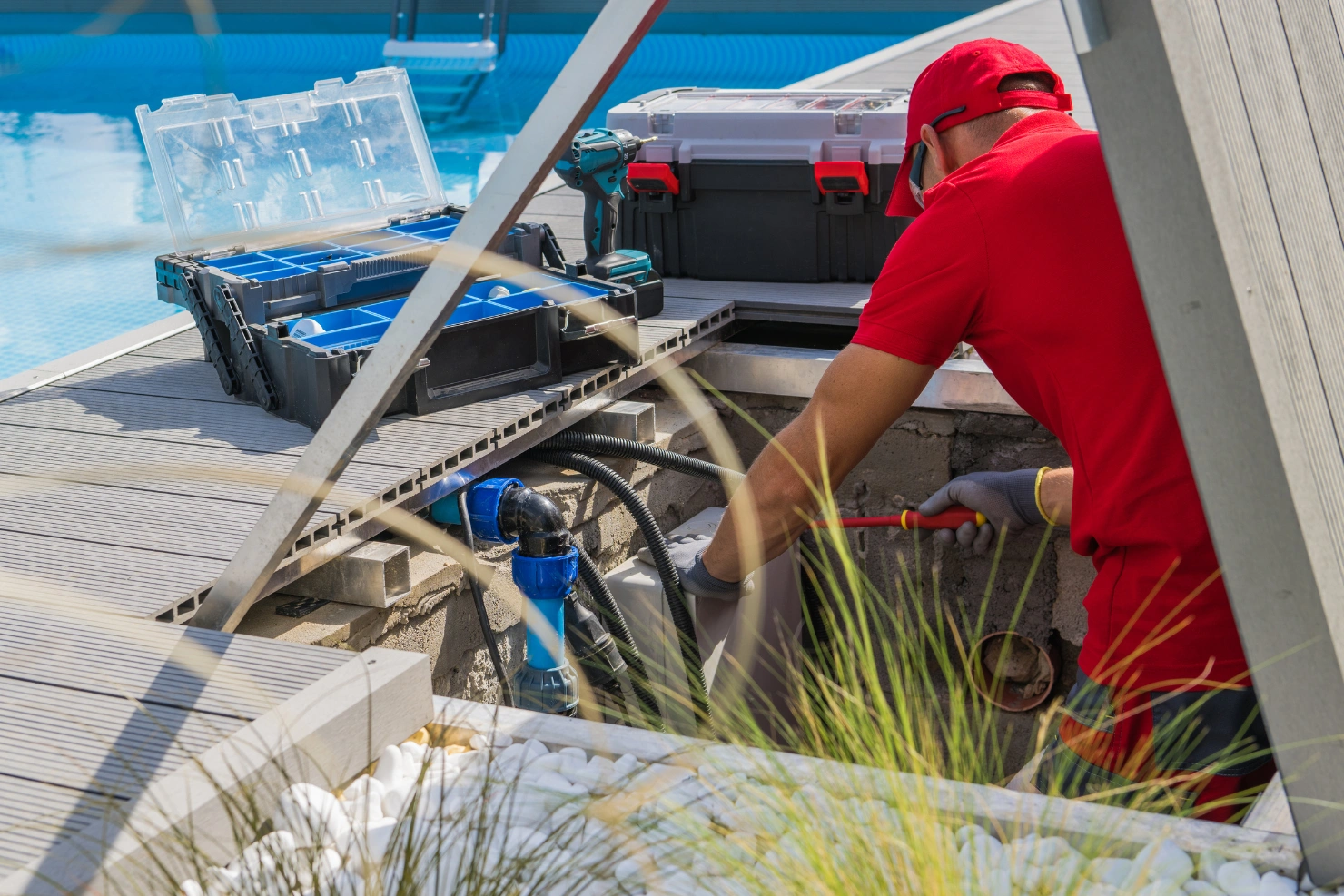
Pool equipment operates in a demanding environment. Pumps move thousands of gallons of water, filters collect debris, heaters manage high temperatures, and cleaners work across rough pool surfaces.
Water, sanitizing chemicals, heat, freezing conditions, sunlight, and daily operation gradually affect equipment condition. Seals can become brittle, metal parts may corrode, motors can lose efficiency, and electrical connections may deteriorate.
Normal aging may appear as:
- Increasing pump noise
- Small leaks around seals
- Higher filter pressure
- Slower water circulation
- Inconsistent heater performance
- More frequent equipment shutdowns
- Longer cleaning cycles
- Rising electricity or fuel costs
One symptom does not always mean the entire unit needs replacement. A professional inspection can determine whether the problem is limited to a serviceable component or reflects broader equipment failure.
Signs Pool Equipment May Need Repair
Repair is often reasonable when the equipment is still relatively young, has worked reliably, and has one clearly identified problem. Replacing a worn seal, capacitor, pressure gauge, valve, switch, or minor plumbing connection may restore normal operation.
Good repair candidates generally have:
- Limited visible corrosion
- Readily available replacement parts
- No major housing or tank damage
- A short repair history
- Stable energy consumption
- Proper sizing for the pool
- Several years of expected service remaining
A pump that loses prime because of a leaking lid O-ring may need a simple seal replacement rather than a new pump. A filter with dirty media may require cleaning instead of replacement.
Repairs make the most sense when they correct the root cause and restore dependable performance. Repeatedly replacing small components without identifying a larger hydraulic, electrical, or structural issue can increase costs without creating a lasting solution.
Signs Replacement Makes More Sense
Replacement becomes more practical when the equipment has reached an advanced age or several major parts are failing at once. Severe corrosion, cracked housings, unavailable parts, and recurring electrical failures often make continued repairs less economical.
Replacement should be considered when:
- The same problem keeps returning
- Repair costs approach replacement costs
- The equipment regularly interrupts pool use
- Major structural components are damaged
- Replacement parts are discontinued
- The unit no longer matches the pool’s needs
- Energy consumption remains unusually high
- The equipment cannot support newer controls
- Multiple connected components are deteriorating
Safety also matters. Cracked filter tanks, damaged electrical systems, gas leaks, and severely corroded heater components require immediate professional attention. These problems should not be treated as routine cosmetic wear.
Comparing Repair And Replacement
The lowest initial price is not always the least expensive choice over several swimming seasons. Homeowners should compare current condition, future reliability, operating costs, and the possibility of additional failures.
| Decision Factor | Repair May Be Practical | Replacement May Be Practical |
|---|---|---|
| Equipment Age | Unit is relatively new | Unit is near its expected service life |
| Repair History | First major problem | Several repairs have already occurred |
| Damage Level | One serviceable part failed | Structural or multiple parts failed |
| Parts Availability | Correct parts remain available | Parts are obsolete or difficult to source |
| Energy Use | Operating costs remain stable | Energy use has increased significantly |
| Performance | Repair can restore full operation | Performance remains poor after service |
| Compatibility | Equipment works with the full system | Unit limits automation or efficiency upgrades |
| Long-Term Cost | Repair should provide lasting value | Replacement may prevent repeated expenses |
No single factor should control the decision. A newer pump with an isolated electrical problem may be worth repairing, while an older pump with recurring leaks, bearing noise, and inefficient operation may be a stronger replacement candidate.
Evaluating Individual Pool Components
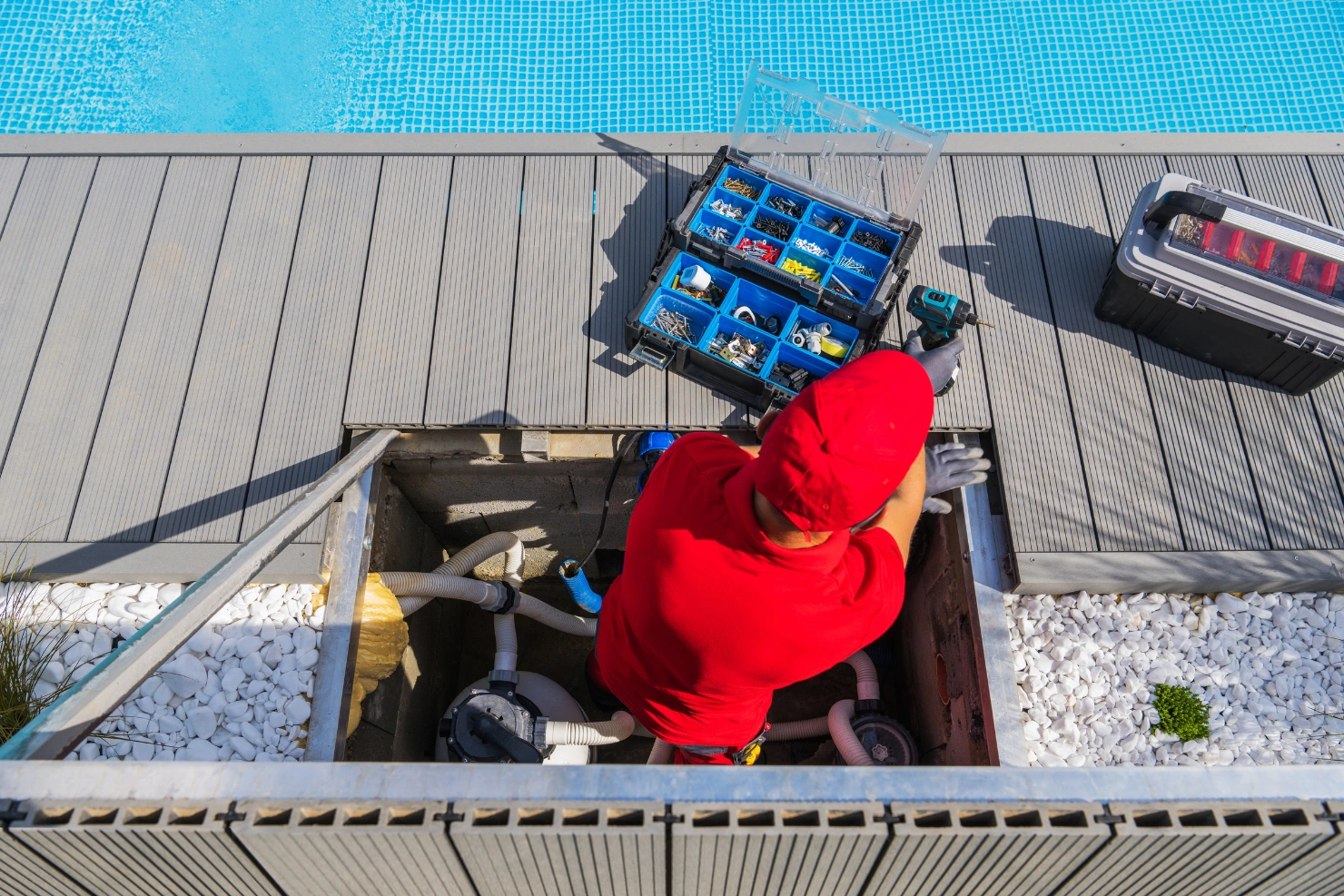
Different types of pool equipment experience different forms of wear. Each component should be tested individually and then reviewed as part of the complete circulation system.
Pool Pump Condition
The pool pump creates the water movement needed for filtration, heating, sanitation, and many water features. Low flow can result from a clogged basket, suction leak, blocked line, worn impeller, failing motor, or incorrectly programmed speed.
Grinding, screeching, or rattling may indicate worn bearings, debris inside the pump, cavitation, or loose components. Water leaking between the motor and pump housing often points to a failing mechanical shaft seal.
Replacement may provide additional value when an aging single-speed pump requires major repair. ENERGY STAR notes that variable-speed pumps can be programmed for different pool functions instead of operating at one high speed for every task. Slower circulation can also reduce strain on filters, plumbing, and other system components.
Pool Filter Performance
A filter should capture debris without severely restricting water movement. Rising pressure, weak return flow, short cleaning intervals, damaged internal parts, and cloudy water can signal a filter problem.
Filter pressure should be compared with the clean starting pressure recorded after servicing. Some manufacturers recommend cleaning when pressure rises approximately 10 psi above that starting level, although owners should follow the instructions for their specific model.
Cleaning or replacing cartridges, sand, grids, gauges, or internal assemblies may solve the problem. A cracked tank, damaged clamp assembly, severe corrosion, or repeated internal failure may justify full replacement.
Pool Heater Reliability
Pool heaters combine water flow, fuel or electricity, controls, and heat-transfer components. Problems can come from low flow, dirty filters, failed sensors, ignition components, wiring issues, scale buildup, or corrosion.
A repair may be appropriate when the heater is structurally sound and the failed component is available. Replacement becomes more reasonable when the heat exchanger is severely corroded, the cabinet has extensive damage, or repair expenses continue to rise.
Correct diagnosis is important because a heater error may originate elsewhere. Low circulation from a clogged filter or weak pump can prevent the heater from operating properly even when the heater itself remains functional.
Cleaning System Problems
Automatic cleaners may experience worn wheels, damaged hoses, weak suction, clogged internal passages, or failed motors. Many of these issues can be corrected with component replacement.
Repeated breakdowns may indicate that the cleaner no longer matches the pool surface, shape, plumbing, or circulation setup. Replacement offers an opportunity to select equipment that provides better coverage and works properly with the existing system.
The Cost Of Repeated Repairs
A low repair estimate may appear attractive, but several small repairs can eventually exceed the value of the equipment. The total cost includes more than replacement parts.
Homeowners should consider:
- Technician service calls
- Diagnostic fees
- Emergency scheduling costs
- Lost swimming time
- Higher utility use
- Extra chemical consumption
- Water loss from unresolved leaks
- Damage to connected equipment
- Reduced reliability during peak season
For example, a weak pump can reduce filtration and heating performance. The filter may become harder to manage, the heater may shut down from inadequate flow, and water quality may become less stable.
This is why equipment should be evaluated as one operating system rather than a collection of unrelated machines.
Pro Tip: Add together every repair, service call, and replacement part purchased for the equipment during the previous two or three seasons.
Energy Efficiency And Modern Upgrades
Equipment replacement can improve more than reliability. Newer pumps, heaters, filters, and controls may offer better scheduling, quieter operation, more precise settings, and improved energy management.
Variable-speed pool pumps can operate at lower speeds for filtration and higher speeds only when a specific task requires added flow. The U.S. Department of Energy explains that reducing pump speed can lower power demand substantially because power use falls faster than pump speed under pump affinity principles.
Modern upgrades may include:
- Variable-speed pump programming
- More efficient pump motors
- Updated automation controls
- Remote equipment monitoring
- Properly sized filters
- High-efficiency heating options
- Improved hydraulic connections
- Compatible sanitation equipment
An upgrade must still be selected carefully. Installing an oversized pump or mismatched filter can create high pressure, unnecessary energy use, noise, and premature wear.
Connected Equipment Problems
Pool equipment does not operate independently. A problem with one component can create symptoms or stress throughout the entire system.
A clogged filter can restrict flow and force the pump to work under difficult conditions. An air leak on the suction side may cause loss of prime, noisy operation, weak returns, and heater flow errors.
Common connections include:
- Low pump flow reducing filtration
- High filter pressure affecting circulation
- Plumbing leaks introducing air
- Poor circulation limiting heater operation
- Faulty controls interrupting equipment schedules
- Incorrect valve positions restricting water movement
- Mismatched equipment creating unstable pressure
Replacing one unit without checking the rest of the system may leave the original cause unresolved. A complete equipment inspection helps identify restrictions, leaks, electrical problems, and compatibility concerns before repair or replacement begins.
Questions To Ask Before Approving Work
A good equipment decision should be based on testing, not guesswork. Homeowners should understand what failed, what caused it, and how long the recommended solution is expected to last.
Useful questions include:
- What is the exact cause of failure?
- Is the problem limited to one component?
- Are replacement parts still available?
- Is the equipment correctly sized?
- Are other components showing wear?
- Could restricted flow have caused the problem?
- Does the repair include a warranty?
- Will replacement lower operating costs?
- Is new plumbing or electrical work required?
- Can the equipment support future automation?
Clear answers make it easier to compare immediate cost with long-term value.
Planning A Complete Upgrade
Several aging components do not always need to be replaced at the same time. A phased plan can spread costs while addressing the most urgent problems first.
The pump may receive priority if weak circulation affects filtration, heating, and sanitation. A damaged filter tank or unsafe heater condition may require immediate action regardless of age.
A practical upgrade plan should:
- Address safety concerns first.
- Correct active leaks and electrical faults.
- Identify the component affecting other equipment.
- Confirm plumbing and power compatibility.
- Match equipment capacity to the pool.
- Consider future automation needs.
- Record model numbers, dates, and warranties.
Planning also helps avoid purchasing equipment that will need modification when another component is replaced later.
Schedule A Professional Equipment Inspection
The right choice depends on more than equipment age. Condition, maintenance history, usage, installation quality, repair frequency, efficiency, and parts availability all affect the final decision.
Residential Pool Services LLC provides pool equipment inspection and repair for homeowners in Sterling, Virginia. Our technicians examine pumps, filters, heaters, cleaning systems, pressure readings, water flow, visible leaks, corrosion, and operating performance.
A professional inspection can reveal whether a focused repair will restore reliable operation or replacement offers better long-term value. Contact Residential Pool Services LLC to schedule an equipment inspection and protect your backyard pool from avoidable breakdowns.



