
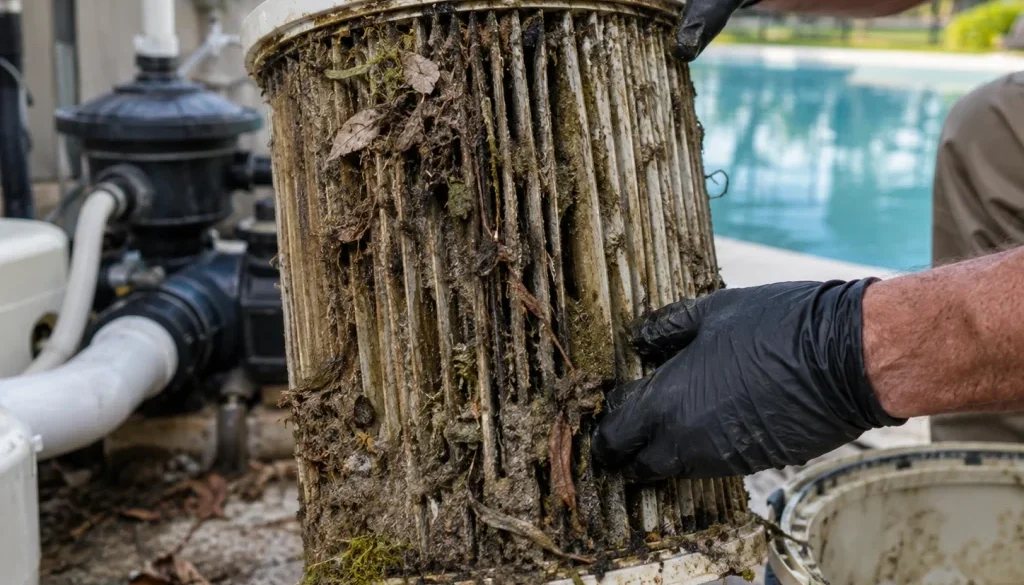
How Improper Pool Filter Maintenance Can Shorten Equipment Lifespan
A pool filter plays a major role in keeping water clear while supporting steady circulation throughout the system. When cleaning, backwashing, or routine inspections are neglected, debris can build up and force other pool equipment to work harder than necessary.
“Could improper pool filter maintenance actually shorten the lifespan of your pump and filtration equipment?”
Restricted water flow, excessive pressure, damaged filter media, and prolonged strain can gradually contribute to premature wear.
Understanding how poor filter care affects the entire circulation system can help homeowners prevent unnecessary repairs, maintain better water quality, and get more years of dependable performance from their pool equipment.
Key Takeaways
- Dirty filters can restrict proper circulation.
- Rising pressure often signals filter restriction.
- Poor maintenance can strain connected equipment.
- Damaged media requires timely filter replacement.
- Routine inspections help prevent premature wear.
Why Pool Filter Maintenance Affects More Than Water Clarity
A pool filter does more than remove visible debris. It works as part of a circulation system that includes the pump, plumbing, skimmers, returns, and other equipment that depends on steady water movement.
As water moves through the filter, dirt, oils, leaves, pollen, and other particles are captured by the filter media. Over time, this material increases resistance to water flow. Routine maintenance removes accumulated debris before it begins interfering with normal system performance.
Poor filter maintenance can contribute to:
- Reduced water circulation
- Higher filter pressure
- Weak flow from return jets
- Longer filtration cycles
- Cloudy or poorly filtered water
- Increased strain on circulation equipment
Ignoring these symptoms can allow a simple maintenance issue to develop into a more expensive equipment problem.
What Happens When A Pool Filter Becomes Too Dirty
Filters naturally become dirty as they collect contaminants. Problems begin when excessive debris remains trapped long enough to significantly restrict the amount of water passing through the system.
Water Flow Drops
A heavily loaded filter creates greater resistance. Less water may move through the filtration system, which homeowners may notice as weaker flow from pool return jets.
Reduced circulation can also create areas where water moves poorly, making it harder to distribute chemicals and move suspended debris toward the filter.
Pressure Starts Rising
Many filter systems include a pressure gauge that measures pressure inside the filter tank. As debris accumulates and restricts flow through the media, filter pressure commonly rises above its clean operating level.
A sustained pressure increase is often a sign that cleaning or backwashing is needed. Homeowners should follow the filter manufacturer’s recommendations because acceptable pressure ranges and cleaning procedures differ between systems.
Filtration Performance Declines
A neglected filter may eventually struggle to maintain effective circulation. Damaged, improperly cleaned, or deteriorated filter media can also allow fine particles to remain in the pool or return through the circulation system.
Cleaning the filter alone will not correct damaged cartridges, broken grids, cracked internal parts, or other mechanical problems.
How Poor Filter Maintenance Can Strain The Pool Pump
The pump is responsible for moving water through the plumbing and filtration system. Conditions that restrict normal flow can interfere with the hydraulic balance the equipment was selected to operate under.
A severely clogged filter increases resistance on the discharge side of the pump. Although pump behavior differs by pump type and system design, prolonged operation under abnormal flow conditions is undesirable and should be corrected.
Homeowners may notice:
- Reduced water movement at return fittings
- Changes in filter pressure
- Poor skimmer performance
- Longer periods needed to circulate water
- Difficulty maintaining normal water clarity
Running a pool longer does not fix an underlying filtration restriction. Identifying the cause is more effective than simply increasing pump operating time.
Common Maintenance Mistakes That Can Shorten Equipment Life
Pool filters require different maintenance depending on their design. Neglect is not the only problem. Cleaning too aggressively or using the wrong procedure can also damage filter components.
Ignoring Filter Pressure
Homeowners should become familiar with the pressure reading immediately after the filter has been properly cleaned.
This clean pressure becomes a useful reference point. A meaningful increase above that baseline can indicate that debris is restricting water movement through the filter.
Delaying Necessary Cleaning
Waiting until circulation becomes noticeably weak allows more debris to accumulate within the filter.
Cartridges can become heavily coated, while sand and D.E. systems can experience increasing resistance as contaminants accumulate in the media.
Backwashing Too Often
Backwashing should be performed when system conditions indicate it is necessary, not simply because several days have passed.
Unnecessary backwashing wastes water and, in applicable systems, can remove filter media that must be replaced afterward. Owners should use pressure readings and manufacturer guidance when deciding when to backwash.
Cleaning Cartridges Incorrectly
Cartridge filters usually require careful rinsing between the pleats. Extremely aggressive pressure washing can damage the filter material.
Some contaminants, including oils and mineral deposits, may also require appropriate cleaning methods rather than stronger water pressure.
Ignoring Damaged Media
Filter media eventually wears out. Torn cartridges, damaged D.E. grids, broken laterals, or other internal problems can reduce filtration effectiveness even after cleaning.
Recurring debris in the pool after proper maintenance can indicate that inspection or replacement is needed.
Signs Your Pool Filter Is Affecting Other Equipment
Filter problems often produce symptoms elsewhere in the circulation system. Watching for changes can help homeowners respond before performance becomes significantly worse.
| Warning Sign | Possible Filter Issue | Possible System Effect |
|---|---|---|
| Weak return flow | Dirty or restricted filter | Reduced circulation |
| Higher filter pressure | Excess debris in media | Increased system resistance |
| Cloudy water | Poor filtration or circulation | Longer clearing time |
| Debris returning to pool | Damaged filter media | Reduced filtration quality |
| Frequent pressure changes | Restriction or system issue | Unstable circulation |
| Persistent filtration problems | Worn internal components | Continued poor performance |
These symptoms do not automatically prove the filter is responsible. Closed valves, clogged baskets, blocked plumbing, low water levels, pump problems, or air entering the system can produce similar signs.
A complete inspection is often necessary when symptoms continue after normal filter maintenance.
How Different Filter Types Require Different Maintenance
Residential swimming pools commonly use cartridge, sand, or diatomaceous earth filters. Each removes debris differently, so maintenance procedures should match the equipment.
Cartridge Filter Care
Cartridge filters use pleated elements that trap particles as water passes through them.
Cartridges should be removed and rinsed when pressure or performance indicates cleaning is necessary. They should also be inspected for torn fabric, cracked end caps, collapsed pleats, or other physical deterioration.
Eventually, cartridges require replacement because repeated use and cleaning gradually wear the material.
Sand Filter Care
Sand filters direct water through a bed of specially graded filter sand. Dirt becomes trapped as water moves through the media.
These systems are commonly cleaned through backwashing, which reverses water flow and carries accumulated debris out through a waste line.
Sand itself lasts for years in many systems, but damaged laterals, channeling, improper sand levels, or deteriorated media can eventually require service.
D.E. Filter Care
Diatomaceous earth filters use a fine filter powder spread across internal grids or elements.
After backwashing, the correct amount of fresh D.E. must generally be added according to the manufacturer’s specifications. Operating the filter without the appropriate coating can expose internal grids to contaminants and reduce proper filtration.
Grids should also be inspected periodically for tears or damage.
Why Filter Pressure Should Guide Maintenance Decisions
A calendar can remind homeowners to inspect their pool equipment, but filter condition depends heavily on actual pool use and environmental conditions.
Heavy pollen, storms, landscaping debris, algae cleanup, and frequent swimming can load a filter faster than usual. A lightly used covered pool may accumulate debris more slowly.
Monitoring the filter gauge provides a practical way to identify changes in system resistance. The most useful comparison is the filter’s own clean baseline rather than a universal pressure number.
Pro Tip: Record the pressure reading immediately after a thorough filter cleaning or backwash. Write it near the equipment so you can quickly recognize unusual increases and schedule maintenance before circulation becomes severely restricted.
A sudden pressure change that does not improve after proper cleaning may indicate another circulation problem requiring inspection.
How Proper Filter Care Can Help Protect Pool Equipment
Consistent filter maintenance supports the entire circulation system rather than simply improving the appearance of the water.
Keeping the filter in proper operating condition helps:
- Maintain stronger circulation
- Reduce excessive filter resistance
- Support normal pump operation
- Improve debris removal
- Distribute treated water throughout the pool
- Reduce unnecessary filtration problems
- Identify equipment damage sooner
Routine inspections also give homeowners an opportunity to notice cracked housings, leaking fittings, damaged seals, worn cartridges, or unusual pressure readings before conditions become more serious.
When Cleaning Is No Longer Enough
A dirty filter can often be restored through proper cleaning, but damaged or deteriorated components cannot always be corrected with maintenance alone.
Replacement or repair may become necessary when homeowners find recurring problems after the filter has been thoroughly cleaned.
Common warning signs include:
- Torn or collapsed filter cartridges
- Cracked filter tanks or housings
- Damaged internal grids
- Broken sand filter laterals
- Persistent debris returning to the pool
- Repeated abnormal pressure readings
- Leaks around filter components
- Filtration problems that quickly return after cleaning
Filter tanks operate under pressure and should be handled carefully. A cracked or structurally damaged pressure vessel should not be treated as a minor cosmetic problem.
Building A Better Pool Filter Maintenance Routine
Good filter care does not require constant cleaning. It requires regular observation and maintenance based on the condition of the equipment.
Check the filter pressure regularly and compare it with the established clean reading. Empty pump and skimmer baskets before excessive debris restricts water flow.
Inspect filter components whenever the system is opened for maintenance. Look for tears, cracks, flattened pleats, damaged seals, or loose internal parts.
Homeowners should also watch the pool itself. Weak return flow, cloudy water, debris bypassing the filter, or rapidly changing pressure can signal a problem before complete filtration failure occurs.
Always follow the equipment manufacturer’s instructions for cleaning, backwashing, servicing, and replacing filter media. Different models have specific requirements that should take priority over general maintenance schedules.
What We Can Do
We inspect, clean, repair, and replace pool filtration equipment while identifying circulation problems that affect performance. We help keep your pool filter, pump, and water circulation working properly year-round.
Protect Your Pool Equipment With Proper Filter Maintenance
Pool filter maintenance has a direct influence on circulation, water clarity, and the operating conditions of connected equipment. Allowing debris to accumulate for too long can restrict water movement, increase filter pressure, and contribute to ongoing system problems.
Regular pressure checks, proper cleaning, careful inspections, and timely replacement of worn filter components can help prevent avoidable problems and keep your filtration system operating as intended.



