
5 Signs You Need a Professional Pool Water Test Today
Keeping your pool water clean isn’t just about appearances—it’s about safety. Even crystal-clear water can hide imbalances that irritate skin, damage equipment, or create the perfect environment for harmful bacteria.
“But how do you know if your pool water is truly safe, or if it’s time to call in a professional for testing?”
In this post, we’ll uncover five warning signs that signal when expert water testing is the best step to protect both your pool and your family.
Key Takeaways
- Cloudy water signals hidden safety risks.
- Strong chlorine smell means poor balance.
- Stains or scaling damage pools long-term.
- Algae growth shows unstable water chemistry.
- Professional testing ensures accurate, reliable results.
Top 5 Warning Signs Your Pool Water Isn’t Safe

Even if your pool looks inviting, hidden imbalances can make the water unsafe. Watch for these five warning signs that signal it’s time to schedule a professional test.
1. Cloudy or Discolored Water
Crystal-clear water is the standard of a healthy pool. When water turns cloudy, hazy, or takes on a green or brown tint, it’s a red flag.
Why water clarity matters: Cloudiness makes it hard to see the bottom of the pool, creating safety hazards for swimmers. More importantly, it often signals chemical imbalance or contamination.
Common causes include:
- Unbalanced pH or chlorine levels
- Poor filtration or circulation
- Early-stage algae growth
- High calcium hardness or total dissolved solids (TDS)
Risks if ignored: Cloudy water may harbor harmful bacteria, increasing the risk of skin rashes, ear infections, and eye irritation. Left unchecked, it can also strain your filtration system.
2. Strong Chlorine Smell or Eye Irritation
Most people think a strong chlorine odor means a pool is clean—but the opposite is true.
The myth: “If it smells like chlorine, it must be sanitized.”
The reality: That odor comes from chloramines—byproducts formed when chlorine mixes with sweat, oils, or urine. This indicates that chlorine is not working effectively to kill bacteria.
Health effects include:
- Red, burning eyes
- Dry, itchy skin
- Breathing discomfort, especially in children or those with asthma
Properly balanced pools should have little to no chlorine odor. A pungent smell is your cue to seek a professional test and rebalance.
3. Stains or Scaling on Pool Surfaces
When stains or rough white deposits appear on pool walls, steps, or equipment, it’s more than an eyesore—it’s a water chemistry problem.
What stains reveal:
-
Brown, green, or black stains often point to excess metals like iron, copper, or manganese.
What scaling means:
-
White, crusty buildup suggests high calcium hardness or unbalanced pH.
Long-term risks:
-
Stains damage pool aesthetics and may permanently discolor finishes.
-
Scaling clogs filters, shortens equipment lifespan, and reduces circulation efficiency.
Professional testing identifies the exact chemical imbalance and prevents further costly damage.
4. Frequent Algae Growth
Algae is a stubborn intruder that thrives when water balance is off. If you’re constantly scrubbing green or yellow patches, something deeper is wrong.
Why algae keeps returning:
- Insufficient chlorine or sanitizer levels
- Improper cyanuric acid (stabilizer) balance
- Poor circulation in corners or shaded areas
Why this matters:
Algae itself is unsightly, but worse—it can harbor harmful bacteria and make surfaces slippery, raising the risk of accidents.
5. Inconsistent Test Results from DIY Kits
At-home test kits and strips are helpful, but they’re not always accurate. Results may vary depending on water sampling, lighting, or even strip expiration dates.
Limitations of DIY kits:
- Narrow testing range compared to professional labs
- Inconsistent readings if sampling isn’t done correctly
- Lack of testing for metals, TDS, or advanced parameters
Why expert testing matters: Professionals use calibrated electronic testers and standardized procedures. This ensures accurate readings of pH, chlorine, calcium hardness, alkalinity, cyanuric acid, and more—providing a complete picture of water health.
📊 Key Water Quality Parameters at a Glance
| Parameter | Ideal Range | Why It Matters |
|---|---|---|
| pH | 7.2 – 7.8 | Comfort for swimmers; protects equipment |
| Free Chlorine | 1 – 3 ppm | Kills bacteria and prevents algae |
| Total Alkalinity | 80 – 120 ppm | Stabilizes pH levels |
| Calcium Hardness | 200 – 400 ppm | Prevents scaling and corrosion |
| Cyanuric Acid (CYA) | 30 – 50 ppm (outdoor) | Protects chlorine from UV breakdown |
| Total Dissolved Solids | < 1,500 ppm | Ensures overall water balance |
Pro Tip: Many pool problems occur because testing is irregular. Even if the water looks fine, levels can shift quickly due to weather, heavy use, or chemical imbalances. Create a weekly schedule for at-home checks, but supplement with professional testing at least once a month during swim season. This balance keeps your pool both safe and cost-efficient.
Why Professional Testing Makes All the Difference
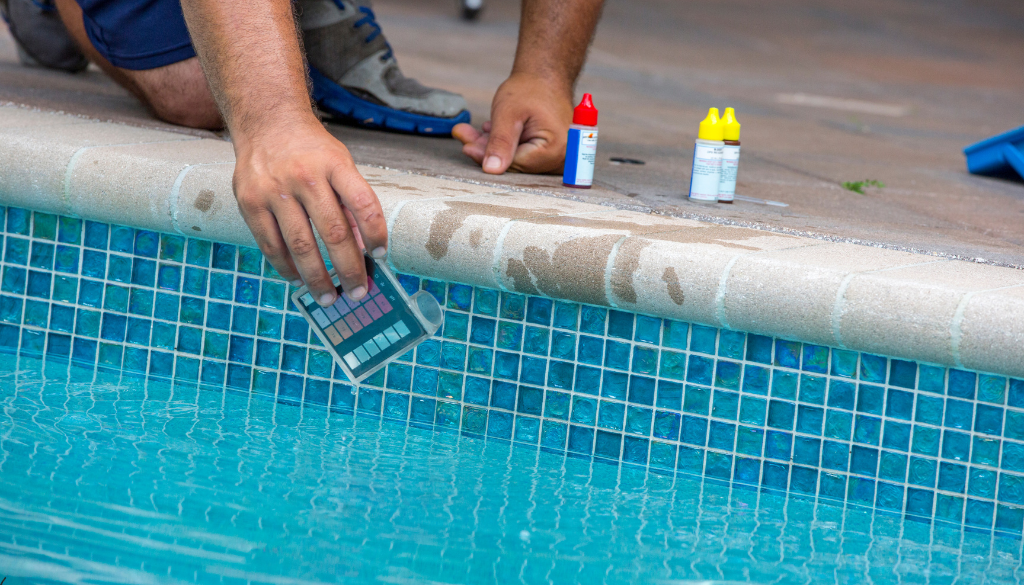
DIY kits provide a snapshot, but professional testing offers a full diagnosis. Experts don’t just measure water chemistry—they also:
- Inspect filters, pumps, and circulation systems
- Test for hidden metals and contaminants
- Adjust pH before chlorine testing for accuracy
- Provide customized treatment plans and clear reports
Regular professional water testing saves money on repairs, prevents long-term damage, and ensures your pool is always safe for swimmers.
Conclusion
Clear water doesn’t always mean safe water. Cloudiness, strong chlorine odors, surface stains, recurring algae, and inconsistent test results all point to deeper issues. With professional pool water testing, you can catch problems early, protect your equipment, and keep your family safe.
👉 Don’t wait for small issues to become costly repairs. Contact our Sterling, VA pool experts today and schedule your professional water test.



