
Sheer Descent Waterfalls vs. Traditional Waterfalls: Which Fits Your Pool?
Adding a waterfall to your swimming pool can improve its appearance, create relaxing water sounds, and make your backyard more inviting. However, choosing between sheer descent waterfalls and traditional waterfalls involves more than personal preference. Each option offers a different water flow, visual style, installation process, and maintenance requirements.
“Which waterfall style will work best with your pool’s design, available space, and budget?“
Sheer descent waterfalls create a smooth, even sheet of water that complements modern pool designs, while traditional waterfalls offer a natural, cascading appearance. Understanding their differences can help you choose a water feature that looks great, functions properly, and fits your long-term maintenance needs.
Key Takeaways
- Sheer descent waterfalls complement modern pools.
- Traditional waterfalls create natural cascading effects.
- Proper pump capacity ensures consistent flow.
- Regular maintenance prevents common waterfall problems.
- Installation costs depend on plumbing requirements.
What Is a Sheer Descent Waterfall?
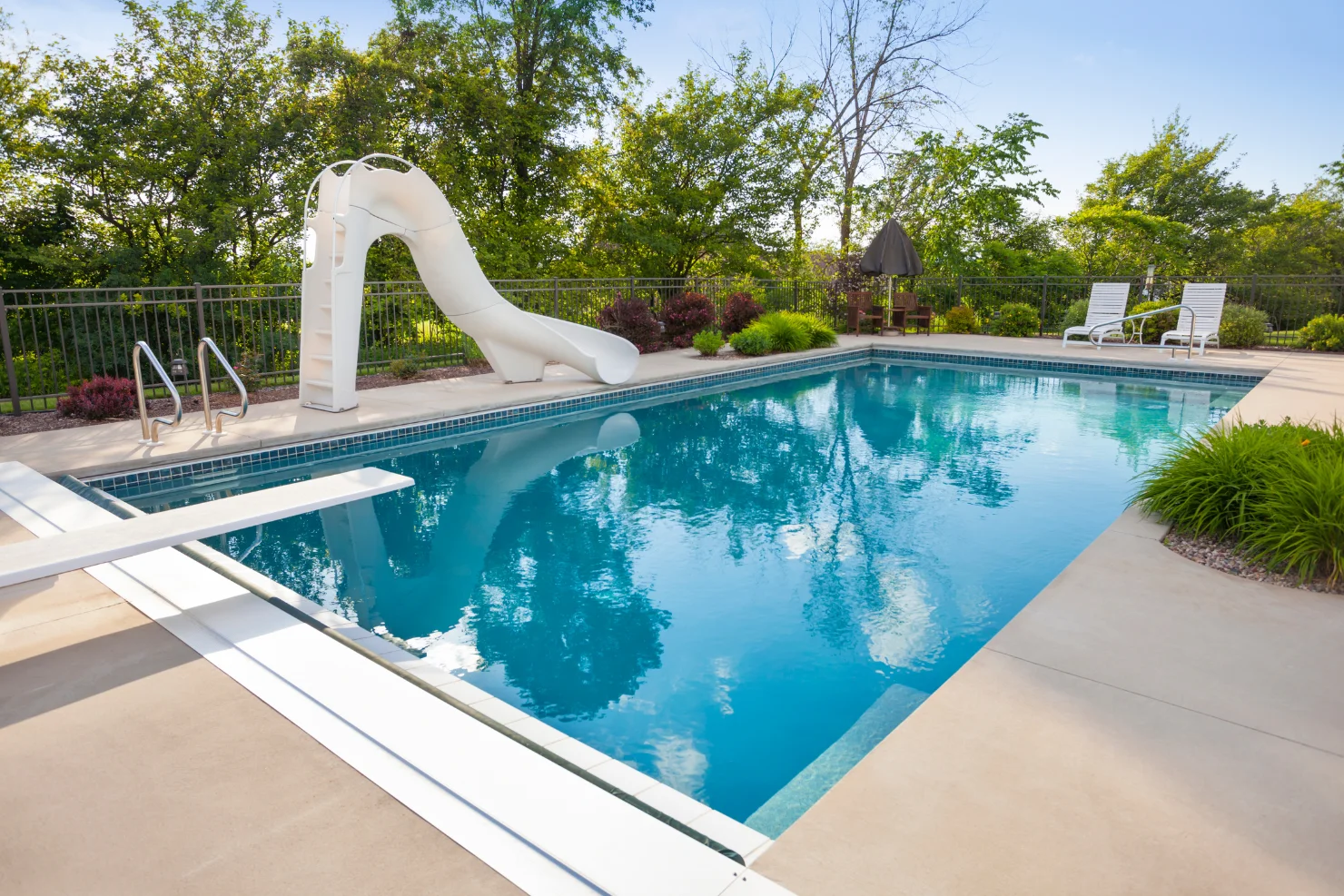
A sheer descent waterfall is a swimming pool water feature that produces a smooth, continuous sheet of water from a narrow horizontal opening. Water flows through a specially constructed spillway before falling into the swimming pool below.
These waterfalls are commonly installed in raised pool walls, decorative structures, and contemporary pool designs. Their straight, controlled water flow creates a clean appearance without requiring large rock formations.
The most recognizable characteristics include:
-
Smooth Water Flow: Produces a consistent sheet of water when properly installed and supplied.
-
Modern Appearance: Complements rectangular pools, geometric layouts, and minimalist landscaping.
-
Flexible Installation: Can be incorporated into raised walls and certain existing pool structures.
-
Adjustable Water Effects: Flow adjustments can change the sheet’s projection, appearance, and sound.
Sheer descent waterfalls require proper leveling and sufficient water flow to produce an even curtain. Insufficient pressure or debris inside the spillway can interrupt the water sheet.
What Is a Traditional Pool Waterfall?
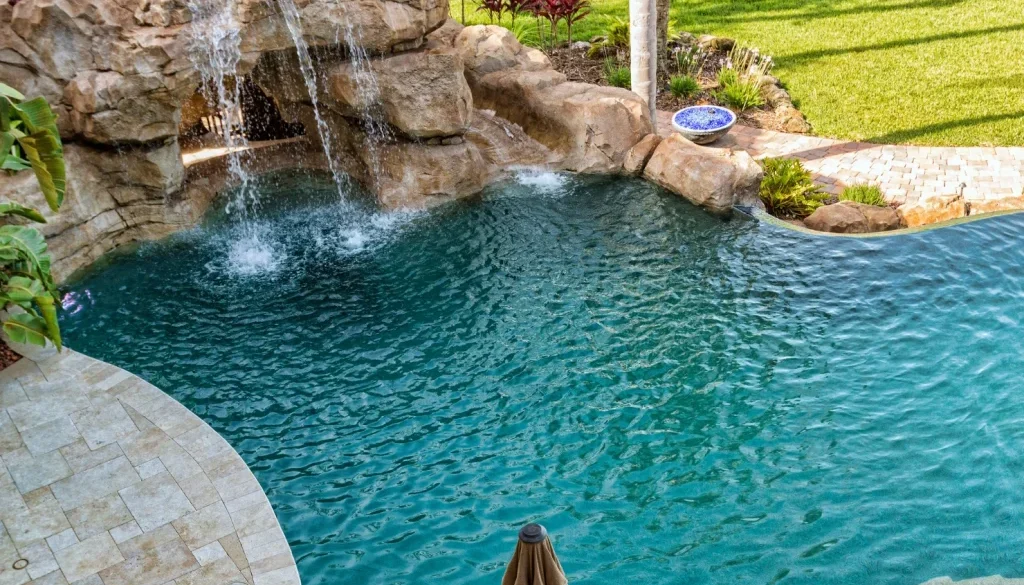
A traditional pool waterfall creates flowing water that cascades over rocks, ledges, or textured surfaces before entering the swimming pool. Unlike sheer descent waterfalls, the water often separates into multiple streams as it moves across uneven surfaces.
These features are commonly associated with natural-looking swimming pools, especially freeform designs surrounded by plants, stone decking, and outdoor landscaping.
Traditional pool waterfalls may use natural stone, manufactured rock, or specially constructed masonry structures. Their appearance depends on the height, arrangement of surfaces, and volume of flowing water.
Water moving across several rock levels can produce a more noticeable splashing sound. However, the final sound level depends on the waterfall’s height, flow rate, and landing surface.
Sheer Descent Waterfalls vs. Traditional Waterfalls: Key Differences
Both waterfall styles can improve a swimming pool’s appearance, but they differ in construction, maintenance, and overall design. Comparing these features helps homeowners understand which option fits their existing pool and backyard.
| Feature | Sheer Descent Waterfalls | Traditional Waterfalls |
|---|---|---|
| Appearance | Smooth, uniform sheet of water | Irregular, cascading water |
| Design Style | Modern, geometric pools | Natural, freeform pools |
| Water Sound | Gentle to pronounced, depending on flow | Often more varied splashing |
| Space Requirements | Can fit within a narrow raised wall | Rock formations may need more space |
| Installation | Requires a level spillway and proper plumbing | Requires stable structures and controlled water paths |
| Maintenance | Cleaning spillway openings and mineral deposits | Cleaning rock surfaces, joints, and debris |
| Customization | Different widths, projections, and lighting | Different rock layouts, heights, and cascading levels |
Neither waterfall is automatically the better option. The right choice depends on the pool’s existing structure, available equipment, desired appearance, and maintenance expectations.
Which Waterfall Works Better With Your Pool Design?
Your swimming pool’s shape and surrounding landscape should influence the waterfall you choose. Installing a feature that complements the existing design often creates a more balanced appearance than choosing one based on photographs alone.
Modern Pool Designs
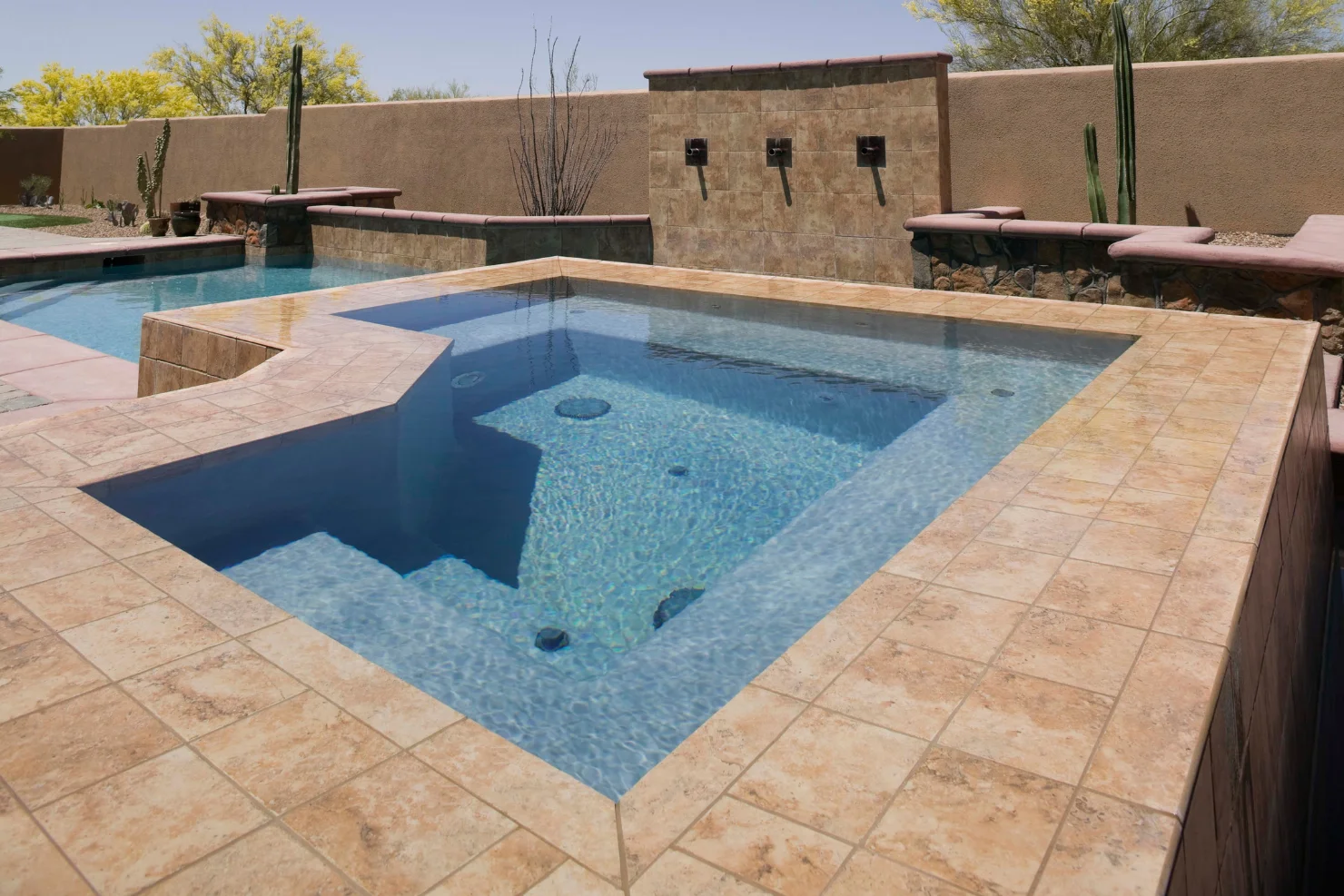
Sheer descent waterfalls work particularly well with rectangular pools, straight edges, and raised walls.
For example, a narrow sheet of water flowing from a raised tiled wall can complement a pool with geometric coping and simple landscaping. Homeowners can also incorporate compatible lighting to make the moving water visible during evening swimming.
Natural Pool Designs
Traditional waterfalls are generally better suited to freeform swimming pools with curved edges and natural landscaping.
A waterfall built using irregular rock formations can create the appearance of a small stream entering the pool. Surrounding plants and stone surfaces can help connect the feature with the rest of the backyard.
Smaller Backyard Pools
Limited backyard space does not necessarily prevent homeowners from installing a waterfall.
Compact sheer descent models can fit into certain raised walls without occupying significant deck space. Traditional waterfalls may also work in smaller yards, although their structures must be proportionate to the pool.
The important consideration is keeping water inside the swimming pool while maintaining safe access around the deck.
Installation Costs and Plumbing Requirements
The installation cost of a pool waterfall depends on more than the type of feature selected. Existing plumbing, construction materials, pump capacity, and structural modifications all influence the project’s overall expense.
Sheer descent waterfalls may require less decorative construction when a suitable raised wall already exists. Traditional waterfalls can involve additional labor for structural supports, rock placement, and waterproofing.
Before installation, homeowners should consider several factors:
-
Pump Capacity: The existing pump must provide adequate flow at the required operating pressure.
-
Plumbing Lines: Pipe sizing, fittings, and valves affect how efficiently water reaches the feature.
-
Structural Support: Raised walls and rock formations must support their materials and withstand water exposure.
-
Waterproofing: Properly constructed joints and surfaces help prevent unwanted water loss.
-
Electrical Work: Optional lighting or dedicated pumps may require additional electrical installation.
Some sheer descent waterfalls can operate using an existing circulation pump, provided the system can support the additional demand. Larger features may require separate plumbing or dedicated equipment.
Pro Tip: Before choosing a pool waterfall, have your pump’s available flow and plumbing configuration evaluated. A waterfall that looks suitable for your pool may still require equipment modifications. Checking these requirements before construction can help prevent weak water flow, unnecessary plumbing changes, and unexpected installation expenses.
Maintenance Differences Homeowners Should Know
Both waterfall styles require regular maintenance to keep water flowing properly. However, the cleaning process differs because of their construction materials and water distribution methods.
Homeowners should inspect waterfall surfaces and monitor changes in water flow, especially after extended periods without operation.
Sheer Descent Maintenance
The narrow opening of a sheer descent waterfall can collect debris or mineral deposits that interfere with its water sheet.
Common maintenance tasks include:
-
Removing accessible debris around the spillway opening.
-
Inspecting for calcium deposits along the lip.
-
Checking for uneven or interrupted water flow.
-
Monitoring connections for visible leaks.
Persistent irregular flow may indicate a blockage or plumbing problem that requires professional inspection.
Traditional Waterfall Maintenance
Traditional waterfalls often have more exposed surfaces where leaves, dirt, and minerals can accumulate.
Rock surfaces and joints should be inspected for deterioration, especially after winter weather. Water escaping through damaged joints can increase water loss around the pool.
Cleaning may also require additional attention because irregular rock formations contain crevices that are harder to reach.
Which Waterfall Uses More Water and Energy?
Neither waterfall style automatically uses more water or electricity. Operating costs depend on the pump’s power consumption, required water flow, waterfall height, and daily operating schedule.
A large sheer descent waterfall can require greater pump flow than a small traditional waterfall. Similarly, a tall rock waterfall with multiple cascading levels may place greater demands on the circulation system than a compact sheer descent feature.
Waterfalls also increase the water surface exposed to air. Depending on weather conditions and operation, this can increase evaporation and require more frequent pool refilling.
Homeowners can help manage operating costs by:
-
Running waterfalls primarily during pool use.
-
Using compatible timers or automation controls.
-
Ensuring pumps operate at appropriate speeds.
-
Keeping plumbing and waterfall openings clear.
-
Correcting excessive splashing outside the pool.
Another consideration is water chemistry. Waterfall aeration releases dissolved carbon dioxide, which can gradually raise pool water pH. Pools with frequently operated waterfalls may need closer pH monitoring and adjustments.
Common Mistakes to Avoid When Choosing a Pool Waterfall
A waterfall should be selected based on how it will function after installation, not simply how it looks in a design picture. Overlooking equipment and maintenance requirements can create unnecessary problems.
Common mistakes include:
-
Ignoring Pump Requirements: An undersized or overloaded system may not deliver sufficient water to the feature.
-
Choosing Excessive Waterfall Height: Higher drops can create unwanted splashing and noise.
-
Overlooking Wind Exposure: Wind can blow thin water sheets away from their intended landing area.
-
Poor Waterfall Positioning: Improper placement may interfere with swimming areas or splash onto surrounding decking.
-
Forgetting Maintenance Access: Concealed plumbing and difficult-to-reach openings can make future repairs more complicated.
Homeowners should also consider seasonal maintenance. In Sterling, VA, pool waterfalls with exposed plumbing or water-holding components may need specific winterization procedures to help prevent freezing damage.
Sheer Descent or Traditional Waterfall: Which Should You Choose?
The better waterfall depends on your design preferences and how you plan to use your pool. Reviewing the following considerations can help narrow your options.
Choose a Sheer Descent Waterfall If:
- You prefer modern pool designs with clean lines.
- Your pool has a suitable raised wall.
- You want a smooth, controlled sheet of water.
- You prefer a feature that does not require extensive decorative rockwork.
Choose a Traditional Waterfall If:
- Your swimming pool has a natural or freeform design.
- You prefer the appearance of flowing water over rocks.
- You enjoy varied cascading water sounds.
- You have adequate space for a larger waterfall structure.
Both styles can provide an attractive addition to your outdoor space. However, installation feasibility should always be confirmed before making a final selection.
Enhance Your Pool With Professional Water Feature Services in Sterling, VA
Choosing between sheer descent waterfalls and traditional waterfalls involves balancing appearance, installation requirements, maintenance, and operating costs. A properly planned feature can complement your pool while providing dependable performance.
At Residential Pool Service LLC, we help homeowners in Sterling, VA, with pool water feature needs. Contact Us to discuss your pool and explore suitable water feature options.



