
What Causes Clear Pool Water To Still Be Unsafe
“But what if clear water is still hiding chemical imbalance, harmful bacteria, or metals that can affect both swimmers and pool equipment?”
That is exactly why water quality testing matters.
Clear water can still have low sanitizer levels, improper pH, high dissolved solids, or contaminants that are not visible to the eye. Without proper testing, these hidden issues can lead to skin and eye irritation, unsafe swimming conditions, scaling, corrosion, and costly maintenance problems. Understanding what causes clear pool water to still be unsafe helps pool owners make smarter decisions about routine testing and treatment.
Key Takeaway
- Clear water can still hide hazards
- Testing reveals issues appearance cannot show
- Balanced chemistry protects swimmers and equipment
- Chlorine alone does not prove safety
- Professional analysis supports safer pool care
Why Clear Water Can Be Misleading
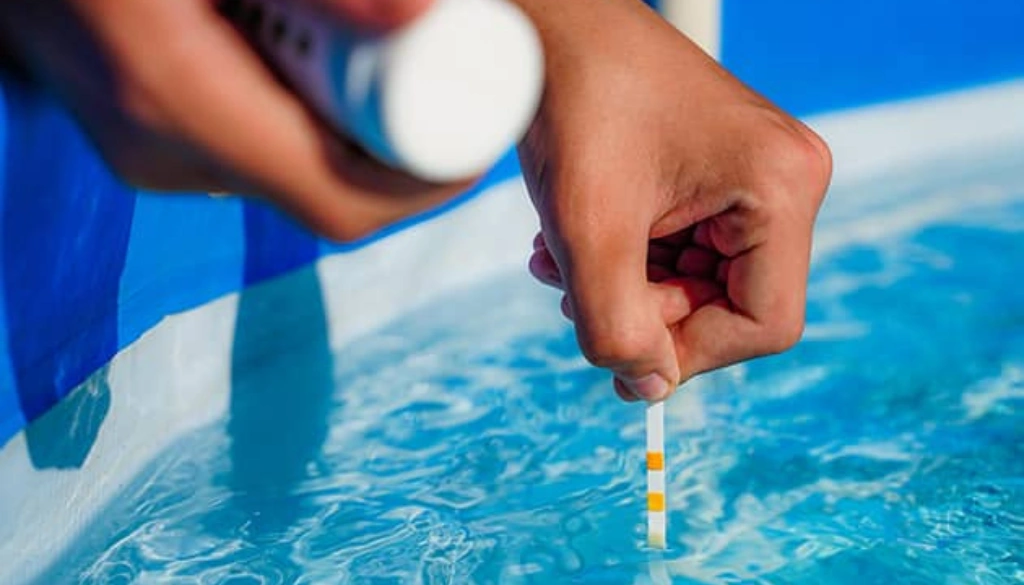
A pool can appear bright, blue, and inviting while still having hidden chemistry issues. That is why professional water testing is so important. It helps reveal problems that cannot be confirmed by sight, including sanitizer weakness, pH imbalance, metals, and dissolved solids that build up over time.
Clear Water Does Not Always Mean Balanced Water
Clear water can still have low free chlorine, poor pH balance, or excessive stabilizer that reduces chlorine’s ability to work effectively. CDC recommends a pool pH of 7.0 to 7.8 and at least 1 ppm free chlorine in pools, or at least 2 ppm when cyanuric acid is being used. Those numbers matter because chlorine is what helps kill germs, and pH affects how well that disinfectant performs.
Appearance And Water Quality Are Not The Same Thing
Water quality includes more than color and clarity. It also includes swimmer comfort, sanitizer performance, and the long-term condition of pool surfaces, heaters, plumbing, and circulation equipment. Modern pool guidance treats water balance as a bigger picture that includes pH, alkalinity, calcium hardness, temperature, and other factors that can make water either corrosive or scale-forming even when it still looks clean.
Hidden Problems That Can Exist In Clear Pool Water
A clear pool may still contain invisible issues that create safety risks or maintenance problems. Some affect swimmer health more directly, while others damage the pool slowly over time. The point is the same: clear water is not enough by itself to prove the pool is ready for safe swimming.
Low Chlorine Or Weak Sanitizer Residual
Chlorine is one of the main barriers against germs in pool water, but it does not work instantly and it must be maintained at the proper residual. A pool can remain visually clear even after chlorine drops too low, especially early in the problem. That means swimmers may enter water that looks clean but does not have enough sanitizer to provide the protection expected from a maintained pool.
Improper pH Levels
pH has a direct effect on both swimmer comfort and chlorine efficiency. When pH moves outside the recommended range, swimmers are more likely to notice eye or skin irritation, and disinfectant performance can suffer. Even if the water remains clear, poor pH control can leave the pool less comfortable and more difficult to maintain.
Total Alkalinity Imbalance
Total alkalinity helps buffer the water and makes pH less likely to swing up and down. When alkalinity is unstable, pool chemistry becomes harder to control, which often leads to repeated adjustments and inconsistent readings. This is one reason professional testing matters so much: a pool owner may focus only on pH, while the real issue is the water’s poor buffering capacity behind the scenes.
Calcium Hardness Problems
Calcium hardness plays a major role in water balance. Industry and government-style pool guidance commonly note that low calcium hardness can make water more aggressive, while high calcium hardness can contribute to scaling on surfaces and equipment. In other words, a pool can look clear and still be damaging plaster, tile, heaters, and metal parts if hardness is not being managed correctly.
High Cyanuric Acid Levels
Cyanuric acid is used as a stabilizer because it helps protect chlorine from being broken down by sunlight. That benefit is real, but too much cyanuric acid can reduce chlorine’s disinfecting power. Public-health guidance from CDC materials for aquatic venues specifically notes that elevated cyanuric acid can interfere with effective hyperchlorination and increases the need to understand the stabilizer level, not just the chlorine reading alone.
Metals In The Water
Iron, copper, and manganese are well-known troublemakers in pool water. PHTA materials note that these are among the metals that commonly cause pool and hot tub water problems. Metals may come from source water, fill water, old equipment, corrosion, or chemical additions, and they can contribute to staining, discoloration, and other water-quality issues even when the pool still looks clear from a distance.
High Total Dissolved Solids
Total dissolved solids, or TDS, refer to the dissolved material that remains in the water as chemicals, minerals, and contaminants accumulate over time. Pool guidance explains that TDS naturally increases and is associated with conductivity and contaminants. Rising TDS does not always create an immediate visual problem, but it can make water harder to manage and may contribute to ongoing balance and maintenance issues.
Why Unsafe Clear Water Is A Problem
The danger of unsafe clear water is that it often goes unnoticed until swimmers feel irritated, chlorine becomes difficult to control, or visible staining and scale start to appear. By then, the issue has usually been building for a while. That is why regular testing is not just a maintenance task. It is a prevention strategy.
Risks To Swimmers
When chlorine or pH are off, swimmers may deal with eye irritation, skin discomfort, or water that simply does not feel right. More importantly, proper disinfectant levels are necessary for preventing the spread of many pathogens in pools and similar recreational water settings. Clear water may look healthy, but without proper chemistry, it may not offer the level of protection swimmers expect.
Risks To Pool Equipment And Surfaces
Poorly balanced water can shorten the life of expensive pool components. Corrosive water can attack metals and finishes, while scale-forming water can leave deposits on tile, heaters, and plumbing. That can affect circulation, heat transfer, appearance, and repair costs. These problems often begin before the average homeowner notices anything unusual just by looking at the pool.
Key Pool Water Parameters That Should Be Tested
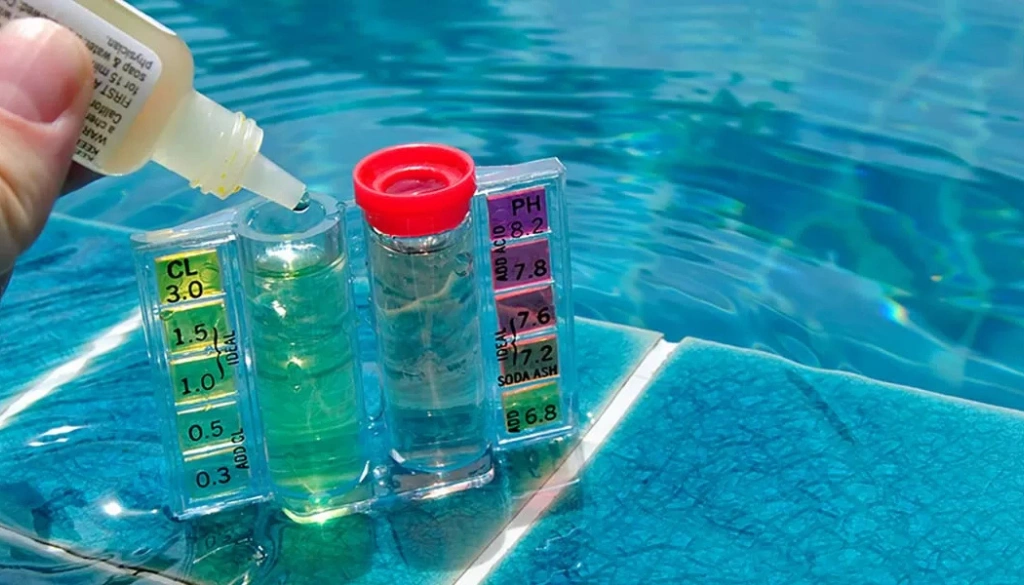
Safe pool water depends on regular testing of several parameters together, not just one strip reading or a quick guess based on appearance. Your service content is aligned with that approach because it focuses on collecting samples carefully, testing multiple readings, evaluating equipment, and using the results to plan treatment.
Essential Parameters To Check
Professional pool water testing often includes:
- pH
- Free chlorine
- Total alkalinity
- Calcium hardness
- Cyanuric acid
- Total dissolved solids
- Metals such as iron, copper, and manganese
- Water temperature
Looking at these together gives a much clearer picture of whether the water is safe, balanced, and likely to stay that way.
Common Hidden Issues In Clear Pool Water
A simple chart makes the idea easier to understand. The water may look perfect, but one invisible imbalance can still create a chain reaction that affects comfort, sanitation, and equipment.
| Hidden Issue | What It Affects | Possible Result |
|---|---|---|
| Low Free Chlorine | Sanitization | Water may be less effective at controlling germs |
| Improper pH | Comfort and chlorine efficiency | Eye irritation, skin irritation, weaker sanitizer performance |
| Low Calcium Hardness | Surfaces and metal parts | More aggressive water and corrosion risk |
| High Calcium Hardness | Tile, heaters, and plumbing | Scale buildup and reduced equipment efficiency |
| High Cyanuric Acid | Chlorine activity | Sanitizer becomes less effective |
| Metals In Water | Surfaces and water quality | Staining, discoloration, and recurring water issues |
| High Total Dissolved Solids | Overall balance | Harder-to-manage water and ongoing chemistry problems |
The main takeaway is that a visually clean pool can still have one or more of these hidden issues at the same time.
How Professional Water Testing Helps Detect The Real Problem
Professional testing goes beyond guessing and helps pool owners avoid chasing symptoms. Instead of adding chemicals based on appearance, trained technicians can evaluate the full water profile and determine what is actually causing the imbalance. That leads to better decisions and more consistent results.
Accurate Sampling Matters
Water should be sampled properly because one quick scoop from the surface may not represent the pool as a whole. Testing from different areas and evaluating the pool system more broadly can give a more reliable picture of what is going on. This matches your service approach of collecting samples from different depths and locations to capture overall water conditions.
Better Testing Leads To Better Treatment
CDC recommends documenting water testing results and responses, which supports a more disciplined and accurate maintenance process. When results are recorded and interpreted correctly, it becomes easier to spot patterns, prevent repeat problems, and create a treatment plan that fits the pool instead of relying on trial and error.
Signs Your Pool Water Should Be Tested Right Away
Even when the water still looks clear, these warning signs should not be ignored:
- Swimmers complain about eye or skin irritation
- Chlorine readings keep dropping or changing quickly
- Stains begin showing on surfaces or fixtures
- Scale starts forming on tile or equipment
- The pool has a strong chemical odor
- You keep adjusting chemicals without lasting improvement
These signs often point to an underlying water-balance issue rather than a simple one-step fix.
Pro Tip: Do not judge pool safety by clarity alone. A clear pool can still have low chlorine, poor pH control, excess stabilizer, metals, or rising dissolved solids. Consistent professional testing helps catch those problems early, before they affect swimmer comfort, sanitizer performance, or costly pool equipment.
How Regular Testing Supports A Safer Pool
Routine testing helps catch small problems before they turn into algae, staining, scale, corrosion, or swimmer complaints. It also makes chemical adjustments more intentional and efficient because the decisions are based on actual readings, not assumptions. For homeowners who want a safer and easier-to-manage pool, that kind of consistency matters.
Long-Term Benefits Of Consistent Testing
- Safer swimming conditions
- Better comfort for family and guests
- Earlier detection of hidden chemistry problems
- Better protection for surfaces and equipment
- More efficient chemical use
- Lower risk of expensive corrective work
Conclusion
Clear pool water can be misleading because it only reflects appearance, not the full condition of the water. A pool may still be unsafe if chlorine levels are too low, pH is outside the proper range, cyanuric acid is too high, metals are present, or dissolved solids have accumulated over time. Proper water testing reveals hidden issues and helps keep the pool safer, more comfortable, and easier to maintain.
If you want confidence that your pool water is truly safe and balanced, Residential Pool Service LLC is here to help. We provide detailed pool water quality testing in Sterling, VA, including checks for pH, chlorine, calcium hardness, total alkalinity, cyanuric acid, total dissolved solids, and metals. Contact our team today to schedule professional testing and get a treatment plan built around your pool’s actual needs.



