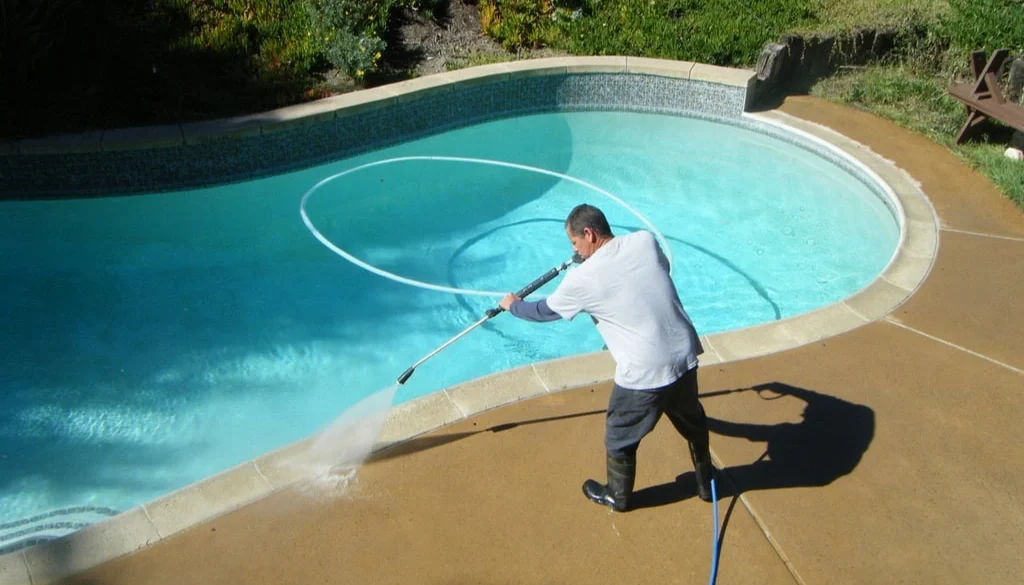
Why Pool Deck Pressure Washing Is More Than Surface Cleaning
Pool decks are exposed to water, heat, foot traffic, fallen leaves, sunscreen residue, dirt, and changing weather. Over time, that combination creates buildup that can settle deep into the surface and around textured areas.
Professional pressure washing is not only about making the deck look brighter. It is also about removing slippery organic growth, lifting stains, and helping reduce the substances that may wear down the deck material over time. Around a pool, that matters because the surface is already exposed to constant moisture, and damp areas often become the first place where algae and mildew begin to spread.
A professionally cleaned pool deck can make the whole outdoor area feel more maintained, more inviting, and easier to enjoy.
Signs Your Pool Deck Needs Professional Pressure Washing
Many pool owners wait until the deck looks obviously dirty, but the warning signs often show up earlier. Recognizing them can help prevent the surface from becoming more slippery, stained, or difficult to clean.
Visible Stains And Spots
Leaves, soil, standing water, and regular outdoor use often leave marks behind. These stains can make the deck look neglected even when the pool itself is clean and well cared for.
Slippery Surfaces
One of the biggest concerns around a pool deck is traction. Algae, mildew, and similar buildup can create slick spots that increase the risk of slipping, especially when the deck is wet.
Dull Appearance
When a deck starts looking faded, dingy, or uneven in color, it often means dirt and organic residue have built up across the surface. That dullness can affect the appearance of the entire backyard.
Mold Or Algae Growth
Green, black, or dark patches are common signs of moisture-related growth. If those areas are left untreated, they can spread and become harder to remove.
What Happens Before The Washing Starts
A professional service should begin with preparation, not with immediate spraying. This step helps protect the surrounding area and improves the overall result.
Before cleaning begins, the deck is usually checked for problem areas such as stained sections, mildew growth, stubborn grime, or more delicate surface spots. That inspection helps determine how much pressure is appropriate and whether a cleaner is needed.
Preparation may also include moving lightweight furniture, clearing obstacles, and protecting nearby features. Pool decks can sit next to landscaping, decorative elements, outdoor furniture, or other surfaces that should not be blasted directly with high-pressure water. Taking a few extra steps at the beginning helps prevent unnecessary mess and supports a more controlled cleaning process.
The Professional Cleaning Process
A good pressure washing service follows a sequence. It is not just about speed. It is about using the right approach for the surface.
Surface Check
The cleaning team first evaluates the deck material and its condition. This matters because different surfaces react differently to pressure and cleaning solutions.
Equipment Choice
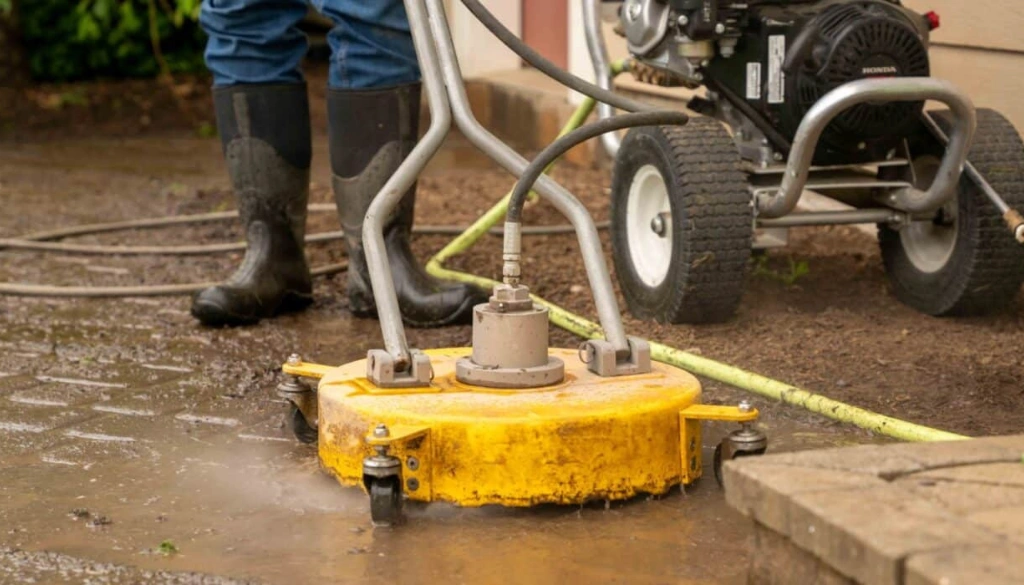
Professionals select the pressure washer settings, spray pattern, and nozzles based on the job. Using the wrong setup can lead to uneven cleaning or surface damage.
Pressure Test
Before full cleaning begins, pressure is often tested in a smaller area. This helps confirm that the settings are effective without being too aggressive.
Cleaner Use
If needed, an appropriate cleaning solution may be applied to help loosen algae, mildew, grime, or stubborn stains before full washing begins.
Full Washing
The deck is cleaned methodically rather than randomly. Consistent passes help remove buildup more evenly and reduce patchy-looking results.
Final Rinse
After the main cleaning is complete, the surface is rinsed to wash away loosened dirt and remaining residue.
What Professionals Are Trying To Remove
Pool decks collect more than ordinary dust. Because they stay close to water and outdoor debris, the buildup can be heavier and more varied than what you might see on a regular walkway or patio.
Professionals are often targeting:
- Dirt and tracked-in debris
- Leaf stains and organic marks
- Algae growth on damp areas
- Mildew that creates slippery film
- Mold in shaded sections
- General grime that dulls the surface
- Residue that affects the deck’s appearance
The goal is to clean the deck in a way that restores the surface without treating every stain as if it will disappear instantly. Some marks lift easily, while others may be older and more set into the material. A professional service improves the surface significantly, but results can also depend on the age of the stain, the material, and how long buildup has been left untreated.
What Homeowners Can Expect After Service
Once the job is done, the difference is usually easy to notice. The deck often looks brighter, cleaner, and more even in color. Areas that once looked dull or stained may appear refreshed, and the overall poolside environment can feel more inviting.
Safety is another major improvement. Removing algae and mildew helps reduce slick spots that make pool decks more hazardous. That matters for children, guests, and anyone walking barefoot around the pool.
Professional pressure washing can also help support the long-term condition of the deck by removing harmful buildup before it stays in place for too long. While it is not a substitute for repairs, it is an important part of regular outdoor maintenance.
How Often Should A Pool Deck Be Pressure Washed
The right cleaning schedule depends on the environment around the pool and how heavily the area is used. A shaded backyard with nearby trees may collect more leaves, moisture, and organic matter than a more open area. A deck that sees frequent gatherings, splashing, and foot traffic may also need more attention.
As a general guideline, many pool owners benefit from professional pool deck pressure washing at least once a year. In some cases, more frequent service makes sense, especially when algae, mildew, or stains return quickly.
Here is a simple way to look at common pressure washing factors: