
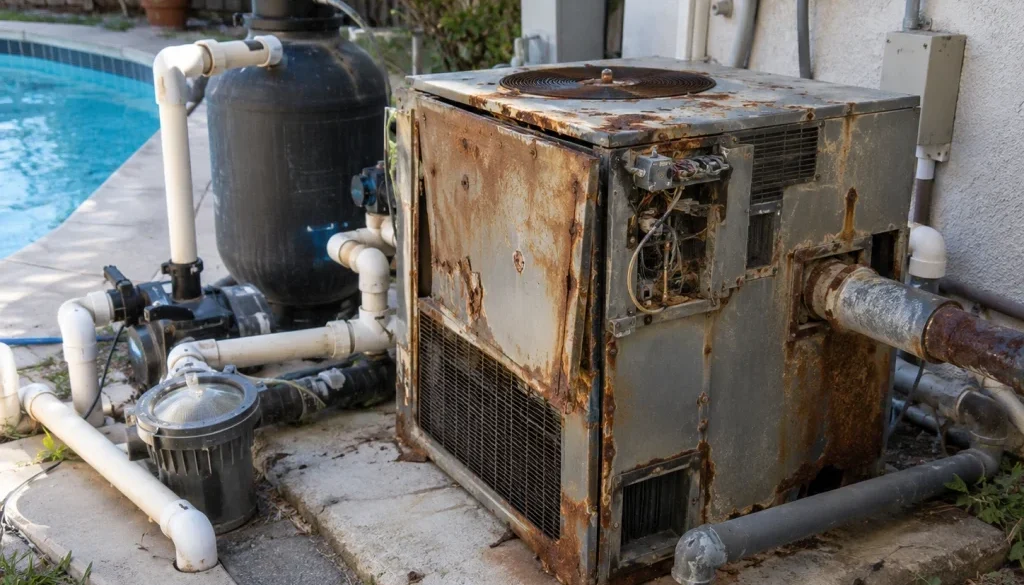
Choosing the Wrong Pool Heater Size Can Increase Monthly Costs
Choosing the right pool heater size affects far more than how quickly your water warms up. A heater that is too small may run for long periods trying to reach the desired temperature, while an oversized unit may add unnecessary upfront costs and provide more heating capacity than the pool actually requires.
“Could the wrong pool heater size be the reason your monthly energy costs keep climbing?”
Pool size, desired water temperature, local weather, heat loss, and heater type all influence proper sizing. Understanding these factors before installing or replacing a pool heater can help homeowners maintain comfortable water temperatures without wasting energy.
Key Takeaways
- Correct heater sizing reduces monthly costs.
- Undersized heaters may run excessively longer.
- Oversized heaters can raise upfront expenses.
- Pool covers significantly reduce heat loss.
- Professional evaluation prevents costly sizing mistakes.
Pool Heater Size Directly Affects Operating Costs
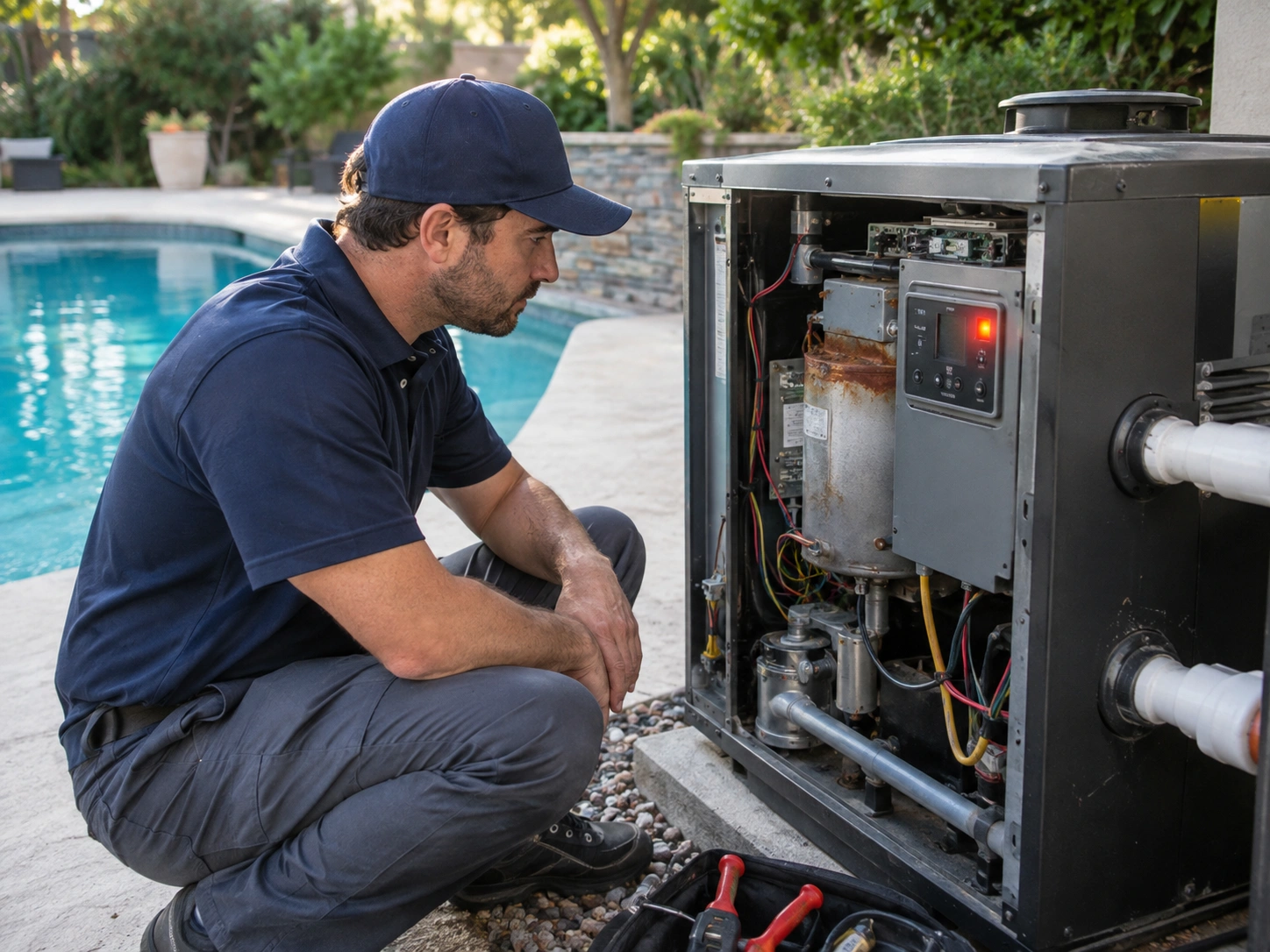
Pool heaters are commonly rated by their heating capacity. Gas heaters typically use British thermal units per hour, or BTU/h, while heat pumps may also be described by heating capacity and performance ratings.
Sizing matters because the heater must replace the heat a swimming pool continually loses. A unit that cannot keep up with that heat loss may operate for extended periods, while selecting far more capacity than necessary can increase equipment and installation costs without providing much practical benefit.
Heating Demand Matters
The correct size cannot be determined from pool gallons alone. Surface area is particularly important because a significant amount of heat is lost from the water surface through evaporation.
Outdoor temperature, humidity, wind exposure, desired pool temperature, and whether a cover is routinely used also affect heating demand.
Runtime Affects Expenses
A heater that operates for long periods consumes more fuel or electricity than one operating for a shorter period at the same input rate. However, homeowners should not assume that a larger heater automatically costs more each month.
A larger gas heater may consume fuel faster while operating but may also reach the target temperature sooner. Proper sizing focuses on balancing capacity, heating time, efficiency, and the conditions in which the pool will actually be used.
What Happens When A Pool Heater Is Too Small?
An undersized heater may work normally yet still fail to deliver the performance a homeowner expects. The problem becomes especially noticeable during cooler weather or when trying to raise the water temperature significantly.
Common symptoms can include:
- Long heating periods before swimming
- Difficulty reaching the thermostat setting
- Extended operation during cold evenings
- Slow recovery after the pool cools
- Difficulty maintaining temperature during windy weather
- Higher operating costs when excessive runtime is required
For example, a heater that handles mild summer conditions may struggle when a homeowner wants to extend swimming into spring or fall. The greater difference between outdoor conditions and the desired water temperature creates more heating demand.
An Oversized Pool Heater Can Also Create Problems
Choosing the largest available heater is not automatically the best solution. Extra capacity can be useful when rapid heating is important, but homeowners should have a specific reason for paying for it.
The biggest disadvantages of excessive capacity can occur before the heater even starts operating. A larger gas heater may require adequate gas supply, venting, plumbing, or electrical provisions depending on the equipment and installation.
Higher Upfront Costs
Larger heaters generally cost more than smaller models within the same product line. Installation requirements may also change as capacity increases.
For gas equipment, the available gas supply must be capable of serving the heater. Electrical and plumbing requirements must also comply with the manufacturer’s instructions and applicable codes.
Unneeded Heating Capacity
A homeowner who mainly maintains a stable pool temperature during warm weather may not need the same heater capacity as someone who frequently heats a cold pool quickly.
Extra capacity is therefore not necessarily bad, but paying for capacity that provides no useful advantage can make the overall heating system less economical.
Pool Size Is Only One Part Of Heater Sizing
Pool dimensions provide a starting point, but good heater sizing requires more information. Two pools containing similar amounts of water can have very different heating demands depending on their exposure and how they are used.
Important considerations include:
- Pool surface area
- Pool volume
- Desired water temperature
- Expected temperature increase
- Outdoor air temperatures
- Wind exposure
- Humidity
- Swimming season
- Pool cover usage
- Desired heating speed
- Heater technology
A homeowner who wants occasional weekend heating may have different needs from someone who keeps the pool warm every day.
Temperature Rise Changes Heater Requirements
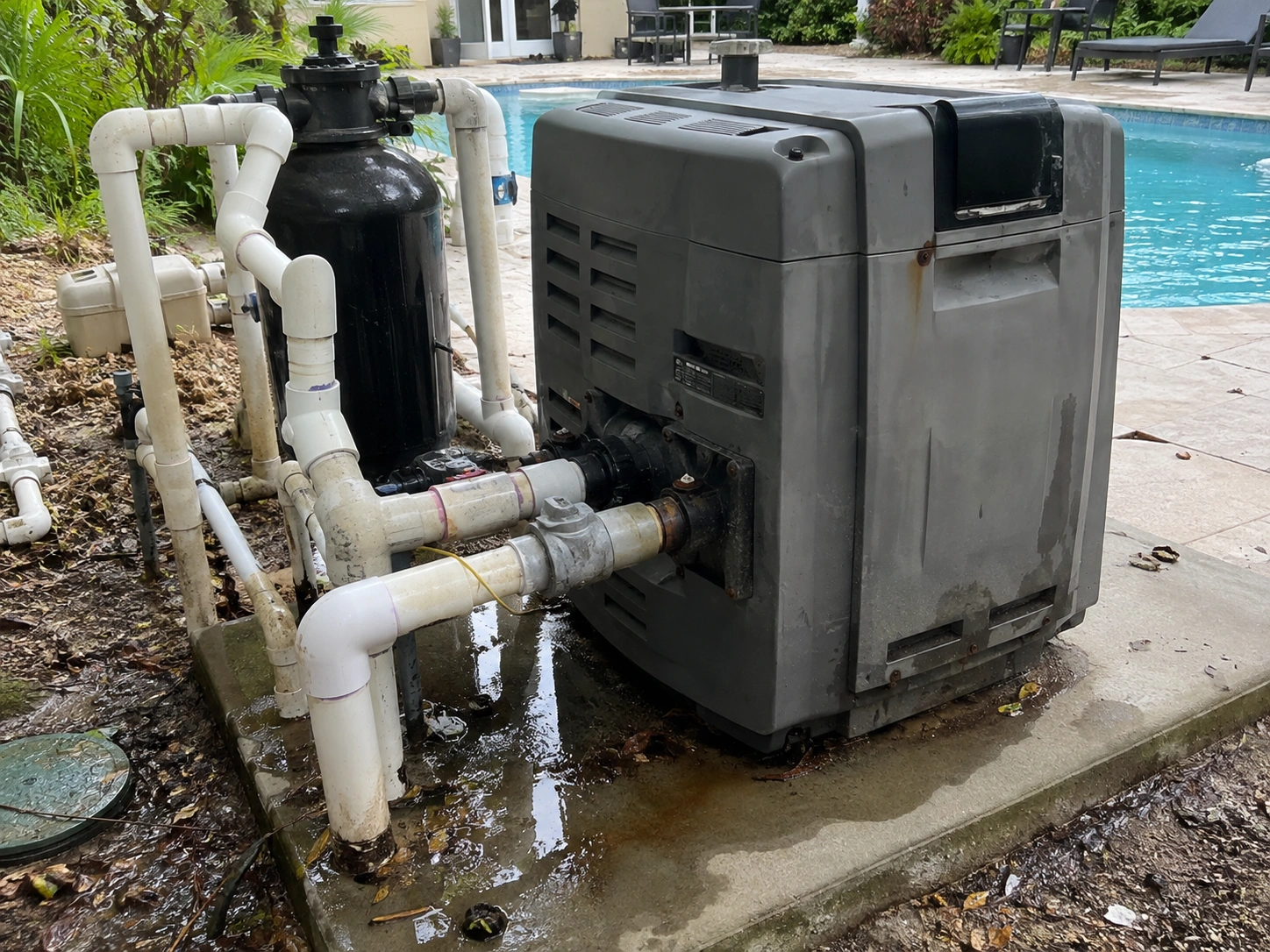
Temperature rise is the difference between the starting temperature and the desired water temperature. The greater that difference becomes, the more heat must be added.
This becomes particularly important when selecting a heater for an extended swimming season.
Smaller Temperature Changes
Maintaining water that is already close to the desired temperature generally places less demand on the heater than warming substantially colder water.
A properly selected heater should be able to replace ongoing heat losses while meeting the homeowner’s expected heating schedule.
Larger Temperature Changes
Heating a cool pool by several degrees requires significantly more energy than simply maintaining water that is already warm.
Homeowners who want quick temperature recovery should mention that priority during heater selection. Heating speed can influence the capacity that makes sense for the property.
Pool Heater Sizing Differences At A Glance
The effects of heater sizing become easier to understand when comparing the three general situations.
| Heater Sizing Situation | Typical Performance | Possible Cost Effect | Main Concern |
|---|---|---|---|
| Too Small | Slow heating and long runtime | Higher costs if excessive runtime is needed | May struggle during cooler conditions |
| Properly Sized | Meets expected heating demand | Better balance between comfort and operating expense | Must match actual pool conditions |
| Larger Than Needed | Faster heating may be possible | Higher purchase and possible installation costs | Extra capacity may provide little benefit |
The exact result depends on heater efficiency, energy prices, weather, pool temperature, usage habits, and heat loss. Heater size alone cannot predict a homeowner’s monthly bill.
Weather And Heat Loss Affect Monthly Costs
Even a properly sized pool heater can become expensive to operate if heat escapes from the pool faster than expected. Outdoor pools constantly exchange heat with the surrounding environment.
Evaporation is especially important because evaporating water carries heat away from the pool. Wind can accelerate evaporation, while cooler nights can increase the amount of heat the heater must replace.
Other conditions that can raise heating demand include:
- Leaving the pool uncovered overnight
- Maintaining unusually warm water
- Frequent windy conditions
- Running waterfalls or other features
- Heating during colder months
- Allowing large temperature drops between uses
Reducing unnecessary heat loss can sometimes have a greater effect on operating costs than simply installing a larger heater.
Heater Type Changes The Sizing Decision
Different pool-heating technologies deliver heat differently. The correct choice depends on climate, energy source, heating speed, and intended use.
Gas Pool Heaters
Gas heaters can provide high heating output and are often chosen when quick temperature increases are important. Capacity must still be matched to the pool, desired heating time, gas supply, and manufacturer requirements.
A higher BTU rating means greater heating output, but it also means a higher fuel input rate while the burner is operating.
Pool Heat Pumps
Heat pumps transfer heat from the surrounding air into the pool rather than generating heat through combustion. Their performance is influenced by outdoor temperature and humidity.
They are often well suited for maintaining comfortable water temperatures over longer periods, especially during warmer conditions. Sizing should account for local weather and the homeowner’s desired swimming season.
Signs The Current Heater May Be Undersized
Homeowners do not need to calculate heater capacity themselves to notice when performance seems wrong. Consistent patterns can indicate that the heating system deserves closer inspection.
Watch for signs such as:
- Water repeatedly fails to reach the desired temperature
- Heating takes considerably longer than expected
- The heater runs for very long periods
- Performance falls sharply during cooler weather
- The pool loses temperature faster than the heater restores it
- Seasonal heating expenses increase unexpectedly
These symptoms justify further evaluation, but they do not automatically prove that the heater is undersized.
Other Problems Can Mimic Incorrect Sizing
Poor heating performance does not always mean the heater needs to be replaced. Problems elsewhere in the pool system can make a correctly sized heater appear inadequate.
Restricted Water Flow
Dirty filters, circulation problems, incorrectly positioned valves, or other restrictions can affect the flow of water through a heater. Many heaters include safety controls that prevent normal operation when water flow is inadequate.
Heat Exchanger Problems
Scale, corrosion, or debris affecting the heat exchanger can interfere with heat transfer. The exact cause depends on the heater design and condition.
Control System Issues
A faulty temperature sensor, thermostat, control board, or related component can cause inaccurate temperature control or unexpected heater behavior.
Pro Tip: Before replacing a pool heater because it seems too small, have the entire heating and circulation system evaluated. Poor water flow, equipment problems, excessive heat loss, or incorrect controls can make a properly sized heater appear unable to keep up.
A Pool Cover Can Reduce Heating Demand
Controlling heat loss is one of the most practical ways to get better performance from a pool heater. Covering the water when the pool is not being used reduces evaporation and helps retain heat.
That can be particularly valuable overnight, when air temperatures drop and the pool may otherwise lose much of the heat added during the day. EPA recommends using a cover whenever practical to reduce evaporation and retain heat.
A cover does not correct an incorrectly sized heater, but it can reduce the amount of heat the system must continually replace.
Repair, Resize, Or Replace The Heater?
High heating costs do not automatically mean a homeowner needs new equipment. The correct solution depends on what is actually causing poor performance.
Repair May Work
Repair may be appropriate when the heater itself has adequate capacity but suffers from a failed component, ignition issue, circulation problem, control fault, scale buildup, or another correctable condition.
Resizing May Help
A different heater capacity may make sense when the existing system cannot meet the property’s heating requirements even while operating correctly.
This can also become relevant if swimming habits have changed, such as extending the season or maintaining a higher water temperature.
Replacement May Fit
An aging heater requiring frequent repairs may be worth comparing against newer equipment. Replacement also creates an opportunity to reassess heater capacity rather than automatically installing equipment identical in size to the old unit.
Professional Heater Sizing Prevents Guesswork
Selecting a heater based only on pool gallons or the capacity of the previous unit can overlook important factors. A better evaluation considers pool dimensions, heating goals, equipment type, weather conditions, energy source, circulation, and expected heat loss.
Correct sizing does not mean choosing the smallest heater that can technically warm the water. The goal is to select equipment capable of meeting the homeowner’s desired temperature and heating schedule without purchasing unnecessary capacity or forcing an inadequate heater to struggle.
Keep Pool Heating Comfortable Without Wasting Energy
The wrong pool heater size can create slow heating, excessive runtime, unnecessary installation expenses, or disappointing performance. However, heater capacity is only one piece of the cost equation. Pool covers, temperature settings, climate, circulation, heater efficiency, and swimming habits all influence how much energy the system uses.
If your heater takes too long to warm the pool, struggles during cooler weather, or your heating costs seem unusually high, it may be time for a professional evaluation.



