A Wobbly Diving Board Could Mean More Than Just Loose Bolts
A wobbly diving board can turn a fun afternoon in the pool into a serious safety concern. While loose bolts may seem like the obvious cause, the problem could involve worn mounting hardware, deteriorating anchors, or damage around the diving board base. Ignoring these warning signs may increase the risk of instability and accidents during use.
“But what if tightening the bolts doesn’t stop your diving board from wobbling?“
The issue may go deeper than a simple adjustment, especially if the board has been exposed to years of regular use, moisture, and changing weather conditions. Understanding the possible causes of a wobbly diving board can help homeowners recognize safety risks and determine when professional inspection or repairs are necessary.
Key Takeaways
-
Wobbly diving boards may indicate damage.
-
Loose bolts can compromise diving stability.
-
Corroded anchors can weaken structural support.
-
Cracked concrete requires careful professional inspection.
-
Proper installation helps prevent future instability.
What Causes a Pool Diving Board to Wobble?
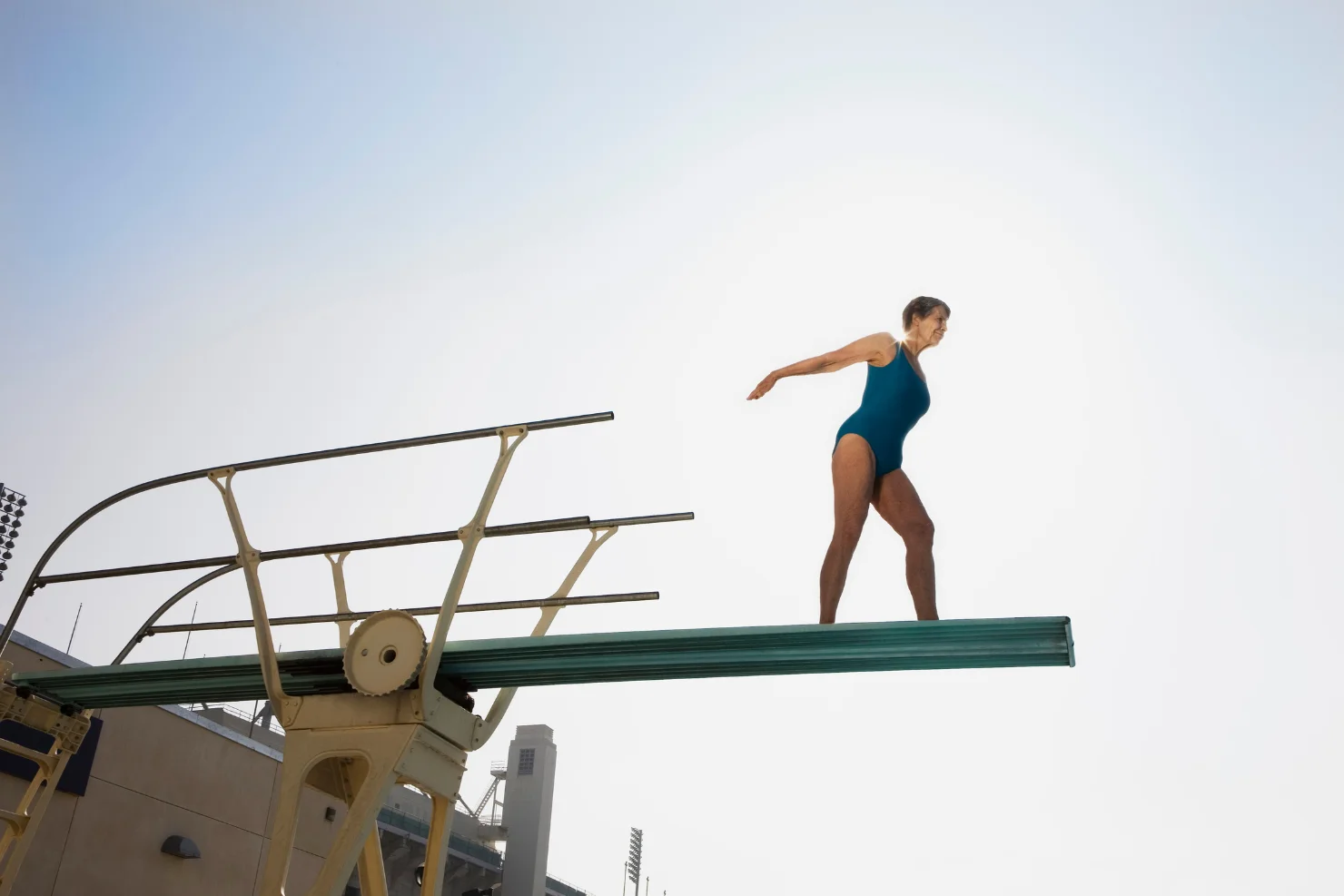
A diving board is supposed to flex during normal use, but its mounting system should remain securely attached. If the supporting stand shifts, rattles, or moves unexpectedly, the problem may involve more than the board itself.
Several components work together to keep a diving board stable, and damage to any of them can affect its performance.
Loose Mounting Hardware
Diving boards are secured using bolts, nuts, and other mounting components specified by the manufacturer. Over time, repeated loading, improper installation, or worn connections may contribute to looseness.
Loose hardware can allow movement between the board and its stand. However, tightening visible bolts without checking the entire assembly may leave other problems unresolved.
Corroded Diving Board Anchors
Metal anchors connect the diving board stand to its supporting concrete. These components are exposed to moisture, pool chemicals, and outdoor conditions that can contribute to corrosion.
Surface rust does not always indicate structural failure, but significant corrosion can reduce the strength of metal components. Rust around mounting points deserves professional evaluation, particularly when accompanied by movement.
Damaged Diving Board Base
The concrete supporting a diving board must withstand the loads transferred through its mounting system. Cracking, deterioration, or movement around the anchors may affect that support.
Small surface cracks do not automatically mean the base is unsafe. However, widening cracks, loose concrete, or visible separation around anchor locations can indicate more serious concerns.
Worn Board Components
Diving boards and their supporting assemblies experience repeated loading throughout their service life. Depending on the design, mounting components, fasteners, and the board itself may eventually show signs of deterioration.
Cracks, unusual flexing, or changes in movement should never be ignored. A qualified professional can determine whether the affected component requires repair or replacement.
Warning Signs Your Diving Board Is Becoming Unsafe
A diving board does not have to break completely before showing signs of trouble. Changes in movement, appearance, or sound can indicate that its mounting system needs attention.
Homeowners should watch for these warning signs:
-
Unusual side-to-side movement: The diving board or stand shifts sideways instead of remaining securely positioned.
-
Rattling or clicking sounds: Unusual noises near the mounting points may indicate movement between connected components.
-
Visible rust: Corrosion appears around bolts, anchors, or metal supports.
-
Cracked concrete: Cracks form near the diving board base, especially around anchor locations.
-
Loose mounting components: Fasteners appear displaced, missing, or no longer firmly connected.
-
Changes in board movement: The board bends, twists, or responds differently from its normal operation.
These symptoms do not always identify the exact source of the problem. More than one component may be affected, making a complete inspection important.
Loose Bolts vs. Structural Damage: Understanding the Difference
Not every wobbly diving board has the same underlying problem. Some issues involve mounting hardware, while others affect the anchors, supporting concrete, or diving board stand.
The following comparison explains common warning signs and their possible causes.
| Diving Board Problem | Common Warning Sign | Possible Concern |
|---|---|---|
| Loose mounting bolts | Rattling or movement around fasteners | Unsecured connections |
| Corroded anchors | Rust or deterioration near mounting points | Weakened anchoring components |
| Cracked concrete | Cracks spreading around the board base | Reduced structural support |
| Damaged mounting stand | Shifting, bending, or unusual movement | Compromised stand stability |
| Worn diving board | Cracks or unexpected changes in flex | Deteriorating board materials |
A visual inspection can help identify suspicious areas, but it cannot always reveal damage hidden inside concrete or beneath mounting hardware.
Professional evaluation is particularly important when the problem involves structural components rather than an isolated loose fastener.
Can a Wobbly Diving Board Be Dangerous Even if It Still Works?
A diving board may continue to support a swimmer even when parts of its mounting system are deteriorating. However, its ability to withstand previous use does not guarantee that it remains safe.
Unexpected movement can affect balance and increase the risk of falls. Loose connections may also experience additional movement under repeated loading, potentially worsening existing damage.
Problems involving anchors or supporting concrete can be particularly concerning because these components transfer forces from the diving board into the surrounding structure.
A person using the board may not recognize the extent of the instability until a component shifts unexpectedly.
A diving board showing unusual movement should remain out of use until a qualified professional confirms that it is safe. Continued testing by jumping on the board can expose swimmers to unnecessary risks.
What Should You Do When Your Diving Board Starts Wobbling?
Discovering an unstable diving board requires prompt attention. Homeowners can take several practical steps to reduce risk without attempting repairs that require specialized knowledge.
-
Stop Using the Diving Board: Prevent swimmers from stepping onto the board until its condition has been evaluated.
-
Check for Visible Damage: From a safe position, look for rust, cracks, missing hardware, or obvious movement around the mounting area.
-
Avoid Temporary Repairs: Do not install ordinary replacement bolts, add improvised supports, or apply makeshift fixes.
-
Schedule a Professional Inspection: Have an experienced pool professional examine the board, mounting stand, anchors, and supporting concrete.
-
Follow Manufacturer Requirements: Any approved repairs should use compatible components and the manufacturer’s installation specifications.
Avoid assuming that tightening a visible bolt will solve the problem. Different mounting systems have specific hardware and installation requirements, and incorrect adjustments can create additional concerns.
Pro Tip: Before opening your pool for the swimming season, visually inspect the diving board, mounting stand, and surrounding concrete for corrosion, cracking, or missing hardware. Never test a questionable board by bouncing on it. If anything appears loose or damaged, restrict access and arrange an inspection before allowing swimmers to use it.
When Does a Wobbly Diving Board Need Repair or Replacement?

A wobbly diving board does not automatically require complete replacement. The appropriate solution depends on which components are damaged, whether compatible replacement parts are available, and the condition of the supporting structure.
Understanding the difference can help homeowners avoid unnecessary replacements while addressing genuine safety concerns.
Repairable Hardware Problems
Some mounting problems may be corrected when the supporting structure is sound and approved replacement components are available.
A professional must verify the condition of the fasteners, stand, and anchors before determining whether replacing or securing specific hardware is appropriate.
Serious Structural Damage
Cracked concrete, compromised anchors, or a damaged mounting stand can require more extensive work.
Replacing visible bolts will not correct structural deterioration beneath the mounting system. Depending on the damage, repairs may involve engineered anchoring solutions, concrete restoration, or replacement of the affected support assembly.
Aging Diving Board Systems
Older diving boards may have deteriorated materials, worn mounting components, or parts that are no longer manufactured.
If the board itself is cracked or damaged, replacement is generally the safer option. Diving equipment manufacturer S.R.Smith advises replacing boards that show visible damage, including cracks or rusting hardware.
How Proper Diving Board Installation Helps Prevent Future Stability Problems
A stable diving board begins with appropriate equipment selection and installation. Even a new diving board can develop problems if its mounting system does not meet the manufacturer’s requirements.
Proper installation involves several important considerations:
-
Pool dimensions: Confirm that the pool provides the required water depth, length, width, and diving clearance for the selected equipment.
-
Compatible equipment: Choose a board and stand combination approved for the pool’s configuration.
-
Secure anchoring: Install anchors and mounting components according to the manufacturer’s specifications.
-
Concrete support: Verify that the supporting concrete meets the equipment’s structural requirements.
-
Approved hardware: Use the correct fasteners and components rather than interchangeable-looking substitutes.
-
Regular inspections: Check for deterioration, corrosion, and unexpected movement throughout the equipment’s service life.
Pool depth alone does not determine whether diving equipment can be installed safely. The Pool & Hot Tub Alliance residential inground pool standard addresses diving equipment compatibility and installation requirements, including the necessary diving water envelope.
Keep Your Pool Diving Board Stable and Safe
A wobbly diving board should never be dismissed as a minor inconvenience. Loose bolts may be responsible, but corroded anchors, damaged mounting stands, and deteriorating concrete can create similar symptoms.
Recognizing unusual movement early and arranging a professional inspection can help homeowners address potential hazards before they become more serious. Proper installation, compatible equipment, and routine maintenance are essential for keeping diving boards secure.
Concerned about a wobbly diving board? Residential Pool Service LLC can help you explore safe diving board installation and replacement options in Sterling, VA. Contact Us to discuss your pool’s needs.