
Why Chlorine Alone Is Not Enough For Pool Water Balance
“So why do some pools still turn cloudy, develop algae, or cause skin and eye irritation even when chlorine is being used regularly?”
The answer usually comes down to overall water balance. pH, alkalinity, calcium hardness, and stabilizer levels all work together to support chlorine and keep your pool water safe, clear, and comfortable. Understanding this balance helps pool owners avoid common problems and protect both their swimmers and their pool equipment.
Key Takeaway
- Chlorine needs balanced chemistry to work
- pH affects comfort and sanitizer performance
- Stabilizer changes how chlorine behaves outdoors
- Unbalanced water damages surfaces and equipment
- Professional testing prevents recurring water problems
Why Chlorine Alone Is Not Enough For Pool Water Balance
Many pool owners assume that as long as chlorine is present, the water should stay clean, clear, and safe. Chlorine is absolutely one of the most important pool chemicals because it helps kill germs and sanitize the water. However, chlorine does not work in isolation. Its performance depends heavily on the rest of the pool’s chemistry, including pH, total alkalinity, calcium hardness, and stabilizer levels. When those supporting factors are out of range, even a pool with chlorine can still become cloudy, uncomfortable, algae-prone, or damaging to surfaces and equipment.
What Chlorine Actually Does In Pool Water
Chlorine’s primary job is to disinfect the water by killing or inactivating many harmful germs and contaminants introduced by swimmers, debris, and the environment. It is a core part of routine pool maintenance because it helps keep the swimming environment sanitary. Even so, chlorine is not a cure-all. It does not automatically correct pH, prevent mineral scale, control calcium hardness, or solve every clarity problem. That is why balanced pool care requires more than just one sanitizer in the water.
Just as important, chlorine does not work at maximum efficiency under every water condition. The CDC recommends maintaining pool pH between 7.0 and 7.8 because disinfectant performance and swimmer comfort are closely tied to that range. If pH drifts too far in either direction, chlorine can become less effective, while swimmers may notice eye or skin irritation and the pool may become more difficult to manage. In other words, chlorine is essential, but it needs balanced water conditions to do its job well.
Why Total Pool Water Balance Matters
Pool water balance means keeping several chemistry factors working together instead of treating chlorine as the only number that matters. A balanced pool is easier to sanitize, more comfortable for swimmers, and less likely to develop recurring problems such as algae, cloudy water, scale deposits, staining, or corrosion. When water is unbalanced, chlorine may still be present on a test strip, but that does not guarantee the pool is properly protected or easy to enjoy.
Balanced water also helps protect the pool itself. Water that is too aggressive can contribute to corrosion of metal parts and surface wear, while water with scaling tendencies can leave mineral buildup on finishes, tile lines, heaters, and plumbing. That means proper chemistry is not only about swimmer comfort. It is also part of protecting the long-term condition of plaster, liners, pumps, heaters, filters, and other expensive components.
The Other Chemistry Levels That Support Chlorine
Pool owners get the best results when they understand that chlorine is only one part of a larger system. The following chemistry factors directly affect how stable, comfortable, and manageable the water will be over time.
-
pH affects swimmer comfort and sanitizer performance. The recommended pool range is generally 7.0 to 7.8, and drifting outside that range can make the water harsher or less effective to sanitize.
-
Total Alkalinity helps buffer the water against rapid pH swings, which makes the pool easier to control and supports more consistent chemical performance.
-
Calcium Hardness matters because low calcium can contribute to surface wear in certain pools, while high calcium can lead to cloudy water and scale buildup.
-
Cyanuric Acid Or Stabilizer helps protect chlorine from sunlight in outdoor pools, but too much can reduce chlorine’s disinfecting power.
Among these, stabilizer is often one of the most misunderstood. The CDC notes that when cyanuric acid is being used, pools should maintain a higher minimum free chlorine level than pools without it. That matters because stabilizer protects chlorine from UV degradation in outdoor settings, but excessive stabilizer can make chlorine less effective. This is one of the clearest reasons chlorine alone is not enough. The same chlorine reading can behave differently depending on the rest of the water chemistry.
Common Signs Your Pool Is Out Of Balance
A pool rarely stays silent when chemistry is off. Water problems usually show up in visible or physical ways before they turn into larger maintenance issues. That is why regular testing and careful dosing matter so much, especially during warm weather, after storms, or during periods of heavy use when chemistry can shift faster than many owners expect.
-
Cloudy Water can signal that sanitizer demand is high, filtration needs support, or balance issues such as poor pH or high calcium are affecting water clarity.
-
Algae Growth can still happen when chlorine is not being supported by balanced water conditions, proper circulation, and consistent treatment.
-
Eye And Skin Irritation is often linked to poor water balance, especially pH issues, not simply the presence of chlorine itself.
-
Scale, Stains, Or Corrosion usually point to mineral imbalance, aggressive water, or improper chemical management over time.
When homeowners respond to these warning signs by only adding more chlorine, they often miss the real cause. For example, a pool can remain dull or uncomfortable because alkalinity is unstable, calcium is too high, or stabilizer is interfering with chlorine performance in sunlight. Adding more sanitizer without understanding the broader chemistry can create a cycle of frustration, unnecessary product use, and repeat problems that never fully go away.
The Role Of Shock, Clarifiers, And Specialty Chemicals
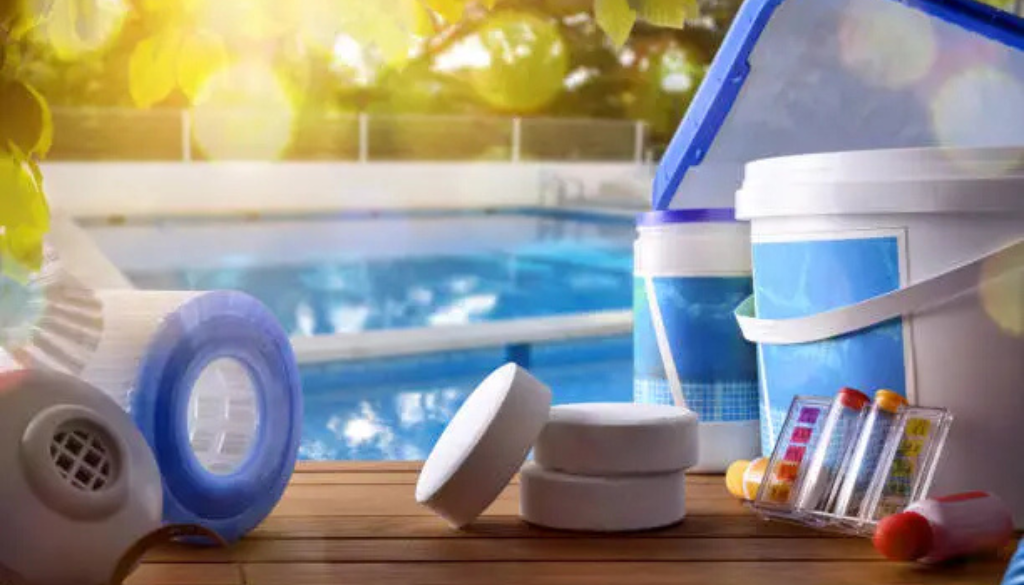
Routine sanitizing is important, but some pool conditions require more targeted treatment. That is where other chemicals enter the picture. Shock treatments are often used when the pool has experienced heavy bather load, significant contamination, algae pressure, or persistent dullness. Clarifiers can help small suspended particles combine into larger ones so the filter can remove them more effectively, while algaecides and metal sequestrants may help in specific situations involving algae prevention or staining from dissolved metals.
This does not mean every pool needs every product all the time. It means a properly maintained pool is treated according to test results and actual conditions, not guesswork. One week a pool may only need small balancing adjustments. Another week it may need shock after a storm, stabilizer adjustment during sunny weather, or a clarifier to restore sparkle. Professional pool care works better because the treatment matches the water’s current needs rather than relying on a one-chemical approach.
Why The Order And Dosage Of Pool Chemicals Matter
Even the right pool chemicals can create problems if they are added in the wrong amount or in the wrong order. The CDC emphasizes proper handling and testing because pool chemicals can be hazardous when misused. Safe and effective treatment starts with water analysis, followed by carefully measured additions based on what the pool actually needs. That approach reduces the risk of over-treatment, under-treatment, and adverse reactions caused by careless mixing or poor application practices.
Proper dosage matters just as much as product selection. Too little chemical can allow algae, cloudy water, and unsafe swimming conditions to develop, while too much can create irritation, surface damage, and unnecessary stress on equipment. This is why professional service has value. A trained pool team does not just add chlorine. They test, calculate, sequence, and apply treatment with the goal of keeping water consistently clean, comfortable, and protective of the pool system as a whole.
Pool Chemistry At A Glance
The table below shows why chlorine should be viewed as one part of a balanced system rather than the only number that matters.
| Pool Chemistry Factor | Main Purpose | What Can Happen If It Is Off |
|---|---|---|
| Chlorine | Sanitizes water and helps kill germs | Water may be unsafe or more likely to develop contamination issues |
| pH | Supports sanitizer performance and swimmer comfort | Eye irritation, reduced sanitizer efficiency, corrosion or scaling risk |
| Total Alkalinity | Buffers water and helps stabilize pH | Rapid pH swings, harder water management, possible cloudiness |
| Calcium Hardness | Helps protect surfaces and control scaling tendencies | Etching or surface wear when low, scale and cloudy water when high |
| Stabilizer (Cyanuric Acid) | Protects chlorine from sunlight in outdoor pools | Chlorine breaks down too fast when low, disinfecting power reduced when too high |
| Shock / Specialty Chemicals | Address specific water problems beyond routine sanitizing | Ongoing dull water, algae pressure, or unresolved contaminant load |
Pro Tip: If your pool still looks dull or starts developing algae even though chlorine is testing present, do not assume the answer is simply “add more chlorine.” Test pH, alkalinity, calcium hardness, and stabilizer first. In many cases, restoring the supporting chemistry helps chlorine work the way it is supposed to, which is often faster, safer, and more cost-effective than repeatedly shocking the pool without addressing the root imbalance.
Why Professional Pool Chemical Service Makes A Difference
Professional pool chemical service creates consistency that many homeowners struggle to maintain on their own. Water chemistry changes with weather, sunlight, swimmer load, debris, refill water, and equipment performance. A professional team can spot patterns before they become expensive problems, apply chemicals accurately, and help ensure the pool stays safe and visually appealing throughout the season. That kind of consistency matters because good pool care is about prevention, not just reacting after the water turns green or cloudy.
For homeowners in Sterling, VA, Residential Pool Service LLC provides that kind of structured approach. Your service-page content already reflects the right priorities: comprehensive water analysis, precise measurement, correct chemical order, and the use of essential treatment products such as chlorine, bromine, alkalinity increasers, calcium hardness increasers, algaecides, liquid shock, clarifiers, metal sequestrants, and stabilizers. That full-spectrum method is exactly why chlorine alone is not enough for pool water balance. Clean, comfortable, well-protected water comes from the right chemistry working together.
Conclusion
Chlorine remains one of the most important chemicals in any swimming pool, but it cannot deliver complete water balance by itself. Pool owners need pH, alkalinity, calcium hardness, and stabilizer levels to support chlorine and keep the water safe, clear, and comfortable. Specialty chemicals also have their place when specific problems arise. When pool chemistry is handled as a complete system instead of a single-number fix, swimmers enjoy better water, equipment lasts longer, and recurring problems become much easier to prevent.
If your pool in Sterling, VA needs reliable chemical balancing and consistent care, Residential Pool Service LLC can help keep your water properly tested, accurately treated, and ready for safe swimming.



