Why Pool Filter Maintenance Matters
Your filter does more than collect visible debris. It helps the entire circulation system work the way it should, and when the filter gets dirty or worn out, water quality often declines fast. Filtration also works alongside proper disinfectant and pH control, which public-health guidance treats as essential to keeping pool water safe and clear.
Cleaner Water
A functioning pool filter removes suspended dirt, organic matter, and fine particles that make water look dull or cloudy. When the filter is clean and operating at the correct pressure, it can hold more debris and keep particles from circulating back into the pool. That is one reason cloudy water is often one of the first warning signs of a dirty or overloaded filter.
Better Circulation
Pool water needs steady circulation to move debris toward the filter and distribute sanitizer throughout the system. As debris builds inside the filter, pressure rises and water flow can drop. Hayward and Pentair both note that cleaning is typically needed when filter pressure climbs about 8 to 10 psi above the clean starting pressure.
Less Equipment Strain
A clogged filter can force the circulation system to work harder than necessary. Reduced flow, rising pressure, and repeated dirty-filter conditions can create more wear on the system and make it harder to maintain consistent water clarity. Pentair specifically advises replacing worn or damaged parts promptly and emphasizes proper maintenance for safe operation.
How Often Should You Clean A Pool Filter
There is no single schedule that fits every pool. Filter type, swimmer load, windblown debris, pollen, storms, and water balance all affect how quickly a filter gets dirty. A pressure gauge reading that rises 8 to 10 psi above clean pressure is one of the most reliable service indicators across sand, cartridge, and DE systems.
Sand Filters
Sand filters are usually cleaned by backwashing rather than by removing media every time. Manufacturers commonly instruct owners to backwash when the gauge reads 8 to 10 psi above the clean starting pressure. In a well-maintained residential pool, the normal filter cycle may last several weeks, though new pools, storms, algae, or heavy debris can shorten that timeline. Filter sand itself often lasts around 3 to 5 years before replacement becomes necessary.
Cartridge Filters
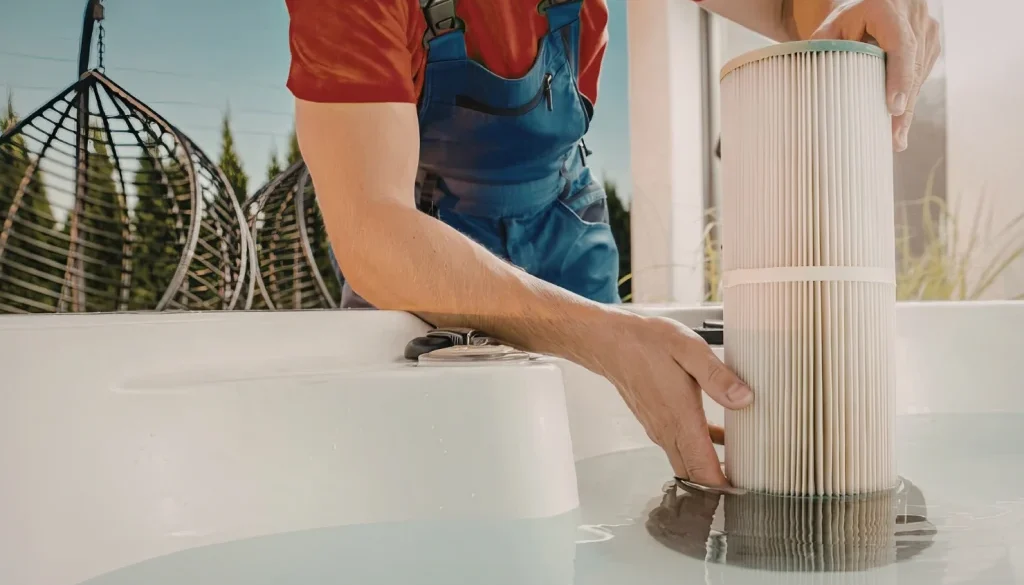
Cartridge filters are cleaned by removing the cartridge and rinsing or deep cleaning it. Pentair advises cleaning when the pressure gauge rises about 10 psi above starting pressure, while larger-capacity cartridge systems can sometimes go much longer between cleanings depending on debris load and filter size. Under normal conditions, cartridge media often lasts around 2 to 3 years, but damaged pleats, tears, or permanently clogged fabric can shorten that life.
DE Filters
DE filters can capture very fine particles, but they need proper servicing to keep doing that job well. Hayward and Pentair both advise backwashing or cleaning when pressure rises about 8 to 10 psi above clean pressure, and DE must be added back after backwashing or full cleaning. Over time, damaged grids or recurring leaks can mean the issue is no longer just maintenance.
Signs Your Pool Filter Needs Cleaning
Your pool usually gives warning signs before the filter fully stops doing its job. Catching those signs early can help avoid cloudy water, poor circulation, and more expensive repairs later.
- Cloudy or dull-looking water even after normal chemical adjustment
- Pressure gauge reading 8 to 10 psi above clean starting pressure
- Weaker return flow at the jets
- Dirt or fine debris returning to the pool
- Water taking longer than usual to clear after heavy use or vacuuming
- Repeated need to backwash or clean in a short time
- Visible buildup, flattening, or wear on a cartridge element
These symptoms line up with manufacturer guidance that rising pressure and reduced flow are key signs the filter needs service.
When Cleaning Is No Longer Enough
Regular maintenance can restore a lot of filter performance, but not every problem can be solved by another rinse or backwash. At some point, worn media or damaged internal parts can keep the system from filtering effectively no matter how often it is cleaned.
Worn Media
Filter media does not last forever. Sand becomes less effective over time, cartridge pleats can deteriorate, and DE grids can tear or fail. Pentair’s Clean & Clear owner’s manual notes a cartridge media life of about three years under normal conditions, while general pool maintenance guidance often places cartridge life around 2 to 3 years and sand life around 3 to 5 years.
Recurring Issues
If the same problems keep coming back right after cleaning, the filter may be past the point where routine service helps much. Common examples include pressure rising again too quickly, cloudy water that returns repeatedly, or a cartridge that still performs poorly after deep cleaning. Those patterns often point to worn media, hidden damage, or a filter that is undersized for the pool’s needs.
Aging Equipment
Older filter systems can become less dependable as seals, gauges, valves, and internal components wear down. Even if the tank itself is still sound, damaged parts should be replaced immediately for safety and performance. In some cases, replacing the filter or media is more practical than paying for repeated service visits on a failing setup.
What Affects How Often A Filter Needs Service
No two pools load a filter the same way. That is why one homeowner may go weeks between service while another needs attention much sooner.
Here are some of the biggest factors:
- Pool Use: More swimmers usually means more oils, debris, and contaminants entering the water.
- Nearby Trees: Leaves, pollen, seeds, and organic matter can fill a filter faster.
- Storms And Wind: Heavy weather can push fine debris into the pool in a single day.
- Water Balance: Poor chemical balance can contribute to algae and debris problems the filter cannot solve on its own. CDC guidance stresses that filtration works together with proper disinfectant and pH levels, not as a substitute for them.
- Filter Size: Larger cartridge filters may run longer between cleanings than smaller ones because they have more dirt-holding capacity.
- Pool Age And Condition: Construction dust, plaster dust, or persistent water issues can shorten cleaning intervals. Pentair notes that new pools may require daily backwashing at first because of initial debris loads.
Clean Or Replace? A Simple Comparison
This quick guide helps separate a maintenance issue from a replacement issue.